
The gift that nobody returns: how to customise an Ethera piece for someone else without getting it wrong
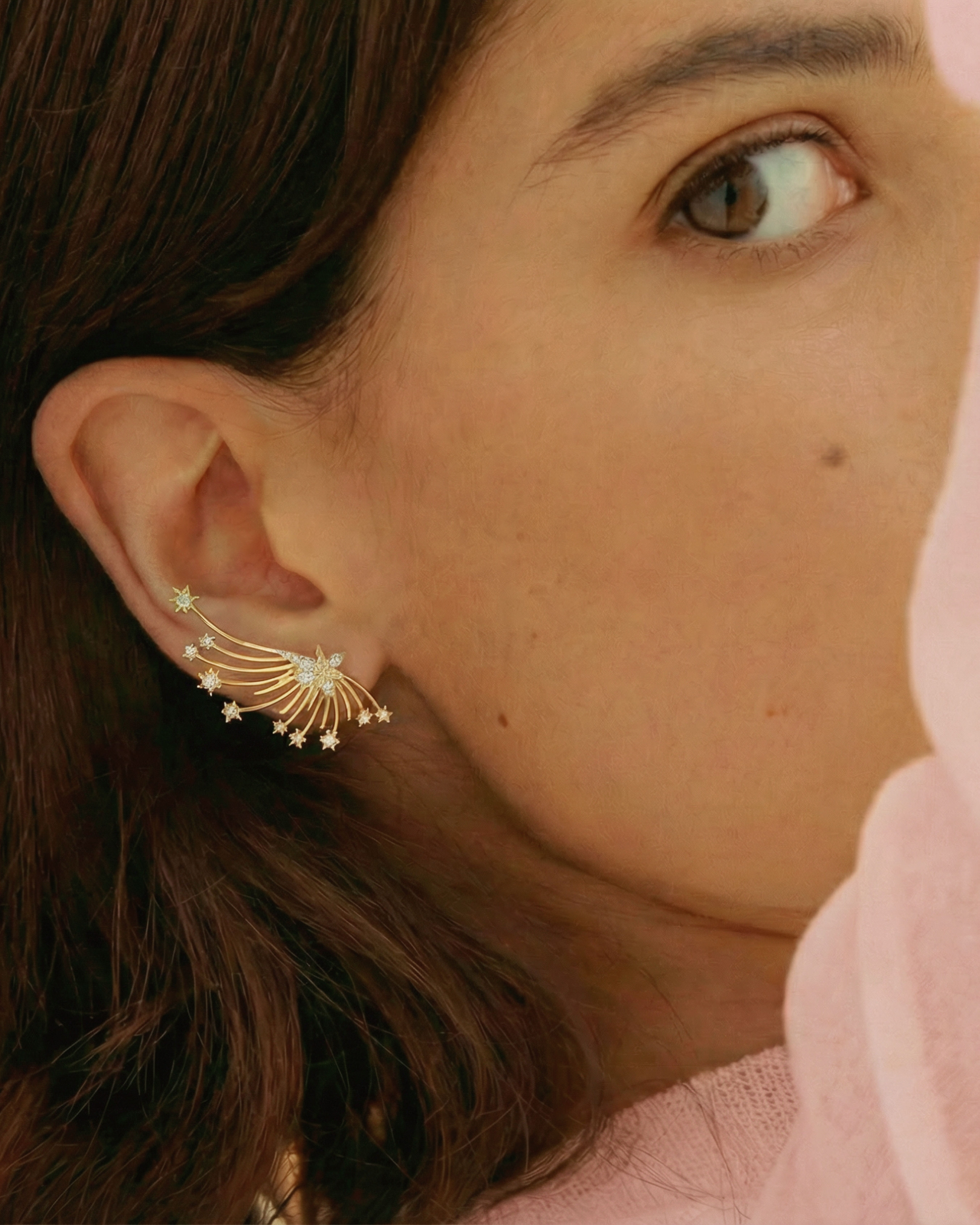
Custom diamond jewelry works best when the design reflects something you already know about the person, rather than something you hope they’ll suddenly like. The safest approach is to personalise one meaningful detail while keeping the shape, scale and overall style close to the jewellery they already wear.
That may sound less dramatic than secretly designing an elaborate necklace from scratch. It’s also much more likely to produce a piece they’ll reach for after the occasion photographs have disappeared into the camera roll.
The aim isn’t to create the most unusual piece possible. It’s to make something that feels unmistakably theirs.
Why custom diamond jewelry makes a memorable gift
Custom diamond jewelry feels more personal because its details are chosen for a specific person, relationship or memory.
A standard jewellery gift says, “I thought you’d like this.” A customised one can say, “I noticed this about you.”
That distinction matters. It might be her preference for white gold, the initial she writes on every notebook, the emerald-cut diamonds she always pauses to look at, or the date the two of you still disagree about.
Customisation also doesn’t have to mean beginning with a blank sheet of paper. You can take an existing design and change one part of it, such as the gold colour, diamond shape, chain length or engraving. This gives you the character of a bespoke gift without asking you to become a jewellery designer overnight.
Ethera’s customisation service allows you to share a design idea and work with its team to develop a piece around your preferences. Its lab grown diamonds are real diamonds, chemically and visually identical to mined diamonds, but created in a controlled environment rather than extracted from the earth.
Start with the jewellery they already wear
The jewellery someone wears repeatedly is the most reliable guide to what you should customise for them.
Don’t begin by asking what looks impressive in a display case. Begin with what survives their actual week.
Look at photographs from workdays, holidays, weddings and ordinary lunches. You’re searching for patterns. Do they wear delicate pieces or jewellery that can be spotted from the next table? Do they mix gold colours? Do their rings have clean lines or intricate details? Are their necklaces close to the collarbone or longer?
Their most-worn piece can tell you more than a Pinterest board labelled “dream jewellery”.
What you notice | What it may tell you |
They wear the same small pendant daily | Choose a light, versatile design rather than a large occasion piece |
Most of their jewellery is white gold | Keep the metal colour consistent unless they regularly mix metals |
They avoid rings | Consider earrings, a pendant or a bracelet instead |
They favour geometric shapes | Explore emerald, princess, baguette or angular settings |
Their jewellery is bold and layered | A tiny initial pendant may feel too quiet |
They rarely remove their jewellery | Prioritise comfort, secure settings and easy everyday wear |
Style isn’t the only clue. Pay attention to habits. Someone who types all day may prefer a low-profile ring that won’t catch against a laptop. Someone who travels constantly may get more use from stud earrings than a delicate bracelet with a complicated clasp.
The best customised gifts are designed for a real person with a real calendar.
Choose the right kind of personalisation
The safest personalised jewellery changes one or two details while preserving the wearer’s established style.
Customisation exists on a spectrum. At one end, there’s a discreet engraving inside a familiar ring. At the other, there’s an entirely original piece built around a sketch, story or reference.
Neither is automatically more meaningful.
A small modification can carry enormous emotional weight when the detail is well chosen. A pendant with two diamonds may represent siblings. A ring can incorporate a partner’s preferred diamond cut while hiding an anniversary date inside the band. A bracelet can use an existing motif in a different gold colour.
Here’s a useful way to judge how far to customise:
Level | What you change | Best suited to |
Light personalisation | Engraving, chain length or gold colour | Birthdays, Rakhi and first jewellery gifts |
Design adjustment | Diamond shape, setting, size or arrangement | Anniversaries, milestone birthdays and romantic gifts |
Fully bespoke design | Overall form, stone layout and symbolic details | Engagements, weddings and major family milestones |
For a surprise, light personalisation or a design adjustment is usually the sweet spot. Fully bespoke work is better when the recipient can participate, especially if the piece involves ring size, fit or a strong design preference.
What should you engrave on jewellery?
A good jewellery engraving is short, recognisable to the recipient and meaningful without needing a paragraph of explanation.
Initials and dates remain popular because they’re compact and personal. Still, they aren’t your only choices. Custom engraved jewelry can carry a nickname, a private phrase, coordinates, a word in another language or a symbol that belongs to your shared history.
The engraving doesn’t need to announce the relationship to everybody else. In fact, the best ones often don’t.
Consider these directions:
A name, nickname or pair of initials
A wedding, birthday or first-meeting date
A short phrase only the two of you use
The coordinates of a meaningful place
A single word such as “home”, “always” or “breathe”
A symbol, constellation or tiny line drawing
A handwriting or fingerprint-inspired detail, where technically possible
Before approving it, write the engraving exactly as it should appear. Check the spelling, date format, capitalisation and punctuation. “12.08.26” and “12 August 2026” carry the same information but create very different visual effects.
Keep the available surface in mind too. A slender ring can’t hold a sentence comfortably. Trying to squeeze too much text into a small space can turn a tender message into microscopic admin.
How to customise jewellery for a girlfriend or partner
Custom jewelry for a girlfriend or partner should reflect her personal style before it reflects the giver’s idea of romance.
Hearts, initials and anniversary dates can be lovely, but only when they belong in her jewellery box. Romance isn’t a design category. She may find a clean solitaire far more moving than a pendant covered in hearts.
Start with the type of jewellery she buys for herself. If she saves images of oval solitaire rings, don’t replace that clarity with an elaborate floral design simply because it feels more “special”. The personalisation could sit in the prong shape, gold colour, hidden halo or engraving instead.
For a personalised Valentine’s gift, you might adapt an everyday pendant with a private date on the back. For an anniversary, you could update a style she already wears with a different diamond arrangement. For an engagement ring, involve her unless you’re unusually confident about her size and preferences.
Customisable jewelry for her should still feel like her jewellery, not a costume selected for the occasion.
Personalised Rakhi gifts for a sister
Personalised Rakhi gifts for a sister work best when they acknowledge who she is now, rather than relying only on childhood nostalgia.
You can absolutely engrave the nickname you used when you were eight. Just make sure the rest of the design suits the person she has become.
A sister who wears minimal jewellery may appreciate a small diamond pendant with a discreet initial. Someone who stacks bracelets might prefer a slim diamond bracelet that can join the collection she already owns. If she likes rings, a clean band with a shared date or tiny inside joke engraved within it can feel personal without becoming overly sentimental.
Jewellery also works well for Rakhi because it doesn’t have to live in a drawer labelled “festive”. A thoughtfully chosen piece can move from family lunches to meetings, holidays and last-minute dinner plans.
The memory remains. The jewellery gets a social life.
Personalised Mother’s Day gifts that she’ll actually wear
Personalised Mother’s Day gifts are most successful when they suit your mother’s daily routine and taste, rather than presenting motherhood as her only identity.
A “Mum” engraving may be meaningful to her. It may also be something she’d never choose to wear outside the house. You know which version you’re dealing with.
You could use her initials, the birthstones or diamond arrangement associated with her children, a meaningful date, or a motif connected to something she loves beyond the family. If she has worn the same gold colour for decades, respect that preference. If she has recently started experimenting with contemporary jewellery, a cleaner lab grown diamond design may feel more current.
Women’s personalized jewelry doesn’t need to explain itself at first glance. A necklace can look beautifully simple to everyone else while carrying a detail only she understands.
Custom wedding jewelry without the matching-set trap
Custom wedding jewelry should support the outfit and remain wearable after the wedding rather than matching every decorative detail exactly.
It’s tempting to copy the embroidery from a lehenga into a necklace, earrings, bracelet and ring. The result may photograph well once and then become almost impossible to style again.
Instead, borrow one visual cue. That could be a curve from the blouse neckline, a repeated floral motif, the geometry of the border or the colour of the metalwork. Let the jewellery respond to the outfit without becoming its miniature replica.
Custom wedding jewelry also needs to be planned as a group. Statement earrings may reduce the need for a large necklace. A detailed blouse neckline may call for a cleaner pendant or no necklace at all. If several pieces are being created, decide which one leads and allow the others to play supporting roles.
For bridal rings, fit matters as much as appearance. Finger size can change with temperature, travel and wedding-week swelling, so leave time for fittings and adjustments.
How to choose the diamond and setting
The right diamond and setting depend on the wearer’s taste, lifestyle and preferred level of sparkle, not simply the largest carat weight available.
Diamond shape is the outline seen from above, such as round, oval, emerald, pear or cushion. The setting is the structure that holds the diamond in place.
Round and oval diamonds create a brighter, more classic look. Emerald-cut diamonds have long, stepped facets and a quieter, mirror-like character. Pear and heart shapes feel more distinctive. Cushion cuts sit somewhere between softness and structure.
The setting changes how that shape behaves. A high setting makes the centre diamond more prominent but may catch against clothing. A low-profile setting sits closer to the finger and can be easier for daily wear. Halos increase the visual spread, while solitaire settings keep attention on one central diamond.
For custom diamond jewellery, ask to see proportions rather than discussing carat weight alone. Two diamonds of the same weight can appear different in size because their dimensions and depth aren’t identical.
Ethera works with IGI-certified lab grown diamonds and BIS-hallmarked gold, and its bespoke process can include choices such as gold karatage, diamond colour and clarity.
The details you shouldn’t guess
Ring size, metal sensitivity, delivery timing and non-returnable conditions should be confirmed before a customised order is finalised.
Some surprises are charming. An unwearable ring isn’t one of them.
Borrow a ring that fits the intended finger, ask a close friend, or have the recipient measured under another pretext. Don’t assume every ring she owns is the same size. Fingers differ, and wider bands may fit more tightly than slim ones.
You should also confirm whether she has reacted to a particular metal in the past. Ask how the finished design will be approved, whether you’ll see a sketch or computer-aided design rendering, and what can still be changed after approval.
Before paying, clarify:
The final design specifications
The exact diamond details and certification
Gold purity and hallmarking
Estimated completion and delivery date
Resizing possibilities
Warranty and repair support
Exchange, cancellation and return terms for custom pieces
The spelling and placement of any engraving
Custom work often requires more lead time than an off-the-shelf purchase. Start early enough that the jeweller can refine the design without the entire process turning into a courier-tracking thriller.
How Ethera’s customisation process works
Ethera’s customisation process begins with your idea and develops it with guidance from a jewellery expert.
You don’t need a professional sketch. You can begin with a description, reference image, existing Ethera design or combination of details you’ve noticed the recipient loves.
The useful part of a consultation isn’t simply explaining what you want. It’s testing whether the idea will work at the intended scale, remain comfortable and hold up to regular wear.
Bring specific information where possible: the jewellery type, gold colour, approximate budget, preferred diamond shape, ring size or chain length, occasion and required date. Mention which parts are essential and which are flexible.
You can explore Ethera’s custom jewellery service, browse our lab grown diamond jewellery collection, or look through examples of women creating their own Ethera rings in the brand’s custom ring design guide.
The gift doesn’t need to reveal everything at once
The most personal jewellery often keeps something back. The outside belongs to the wearer’s style. The hidden detail belongs to the relationship.
That’s why the safest custom gift isn’t necessarily the loudest, cleverest or most complicated. It’s the piece that slips naturally into her life, then quietly reminds her that you were paying attention.
There are no universally perfect jewels. There’s only the right detail, chosen for the right person.
Frequently asked questions
Is custom diamond jewellery a good surprise gift?
Yes, custom diamond jewellery can be a strong surprise gift when you already understand the recipient’s style, preferred gold colour and usual jewellery type. Keep the main design familiar and personalise a smaller detail, such as an engraving, diamond arrangement or chain length, to reduce the risk of choosing something she won’t wear.
How do I choose custom diamond jewellery for someone else?
Start by studying the jewellery they wear most often, including its scale, metal colour, shapes and level of detail. Choose a similar foundation, then customise one meaningful feature. Avoid making assumptions about ring size, allergies or bold design preferences, as these details can determine whether the finished piece is comfortable.
What can be personalised in diamond jewellery?
Diamond jewellery can often be personalised through the gold colour, diamond shape, setting, stone arrangement, chain length, ring size, engraving or overall design. The available choices depend on the piece and its construction. A jeweller can explain which details are practical without affecting comfort, durability or the security of the diamonds.
What should I engrave on custom diamond jewellery?
Choose something short and immediately meaningful to the recipient, such as initials, a date, nickname, coordinate, symbol or private phrase. The engraving should fit the available space comfortably. Confirm every character before production, since punctuation, capitalisation and date format can noticeably change how the finished inscription looks.
Are lab grown diamonds suitable for customised jewellery?
Yes, lab grown diamonds are suitable for customised jewellery because they’re real diamonds with the same chemical and visual properties as mined diamonds. They’re created in a controlled environment rather than extracted from the earth and are available in the cuts, sizes and quality grades needed for bespoke rings, pendants, earrings and bracelets.
How long does customised diamond jewellery take to make?
The timeline depends on the complexity of the design, approvals, diamond selection, production and any resizing or engraving required. Ask for a written estimated completion date before confirming the order. For a wedding or fixed occasion, begin early enough to allow for design revisions and a final fit check.
Can personalised jewellery be returned or exchanged?
Return and exchange rules for personalised jewellery vary because an engraved or bespoke piece may not be resellable. Confirm the policy before approving the design or making payment. Ask separately about resizing, manufacturing defects, repairs, warranty coverage and whether any changes remain possible once production has started.
What are good personalised Rakhi gifts for a sister?
A pendant, bracelet, ring or pair of earrings can make a thoughtful Rakhi gift when the design matches your sister’s existing style. Personalise it with an initial, shared date, discreet engraving or symbolic diamond arrangement. Choose a piece she can wear regularly instead of limiting the design to visibly festive motifs.