
9KT Gold Jewellery in India: Price, Purity, Durability, and Why It's Having a Moment
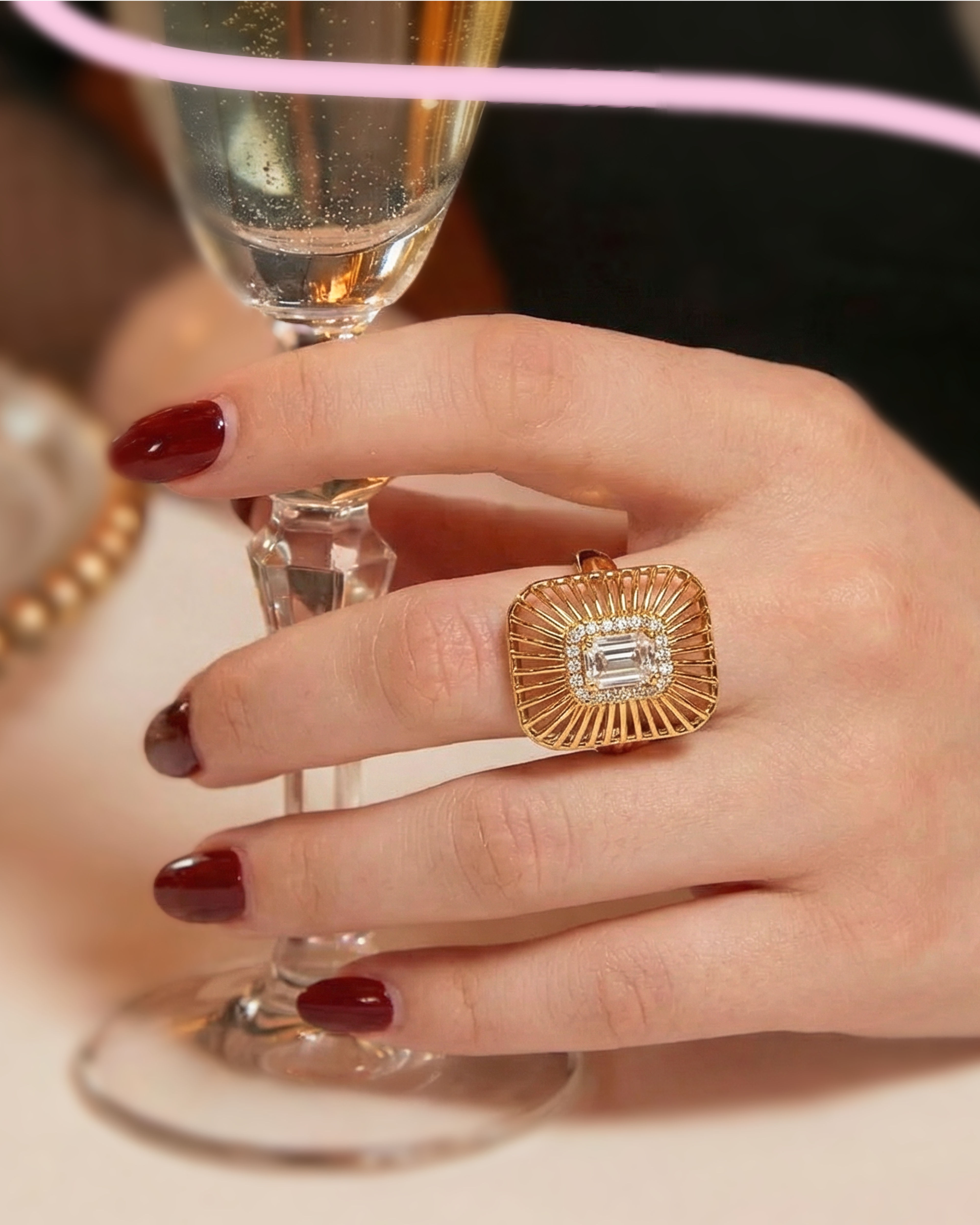
9KT gold jewellery in India costs less, lasts better, and is BIS hallmarked. A new generation is choosing it deliberately. Here's the full picture on purity, price, and wear.
9KT gold jewellery in India has historically been seen as the compromise option, something you choose when you can't afford 22KT or 18KT. That perception is changing, and it's changing because a new generation of buyers is choosing it deliberately, not by default. The reasons are practical and, on examination, fairly compelling.
Here's what 9KT gold actually is, how it compares to other purities you'll encounter in India, and why it's the metal of choice for fine jewellery brands like Ethera (browse collection here!) that prioritise daily wearability over display-case grandeur.
What 9KT Gold Actually Is — The Purity Numbers Explained
9KT gold, also written as 9 karat or 9K, contains 37.5% pure gold by weight, which is why it's stamped 375 under BIS hallmarking standards. The remaining 62.5% is alloying metals, typically copper, silver, zinc, or palladium, depending on the intended colour and use.
This is different from 22KT gold (91.6% pure, stamped 916), which is the traditional Indian standard for temple jewellery and heavy bridal sets, and 18KT gold (75% pure, stamped 750), which is the standard for most international fine jewellery. 14KT gold (58.5% pure, stamped 585) sits between 9KT and 18KT and is common in Western markets. The karat number simply tells you the ratio of pure gold to alloy. The higher the number, the more gold, and the higher the cost per gram.
How 9KT Gold Price Compares to Other Purities in India
The price difference between gold purities is roughly proportional to gold content. If 22KT gold is trading at a given market price, 9KT gold will generally cost around 40% of that amount per gram because it contains 37.5% pure gold. These figures fluctuate with the international gold price, but the ratio holds.
For a ring with 3 to 5 grams of metal, the difference between 9KT and 18KT is ₹9,000 to ₹15,000 on the metal alone. That's real money that can go toward a better diamond. This is why Ethera gives the option for 9KT gold. Not because it's cheap in some pejorative sense, but because the savings on metal allow the budget to be spent where it's more visible: on the stone. You can see the difference in Ethera's pricing compared to equivalent 18KT pieces from other brands.
Is 9KT Gold Durable Enough for Everyday Jewellery?
9KT gold is generally harder and more scratch-resistant than 18KT and 22KT gold due to its higher alloy content. 22KT gold is very close to pure gold and actually quite soft. This is why traditional Indian jewellery in 22KT is often kept in a box rather than worn daily. It marks and scratches easily. 9KT gold, by contrast, is designed for the rigours of a worn life.
A 9KT gold ring typically shows less scratching and surface wear than a comparable 22KT ring..The greater hardness of 9KT gold can help prongs resist wear and deformation over time. The trade-off is that 9KT gold is more likely to cause reactions in people with sensitivities to alloy metals, typically the copper content. For most people, this isn't an issue, but it's worth knowing before you buy. Ethera's team is happy to advise if you have any concerns about this.
BIS Hallmarking: What the Numbers on Your Gold Actually Mean
BIS hallmarking, administered by the Bureau of Indian Standards, is India's independent verification system for gold purity. A BIS-hallmarked piece carries a stamp that includes the BIS logo, the purity mark (375 for 9KT, 585 for 14KT, 750 for 18KT, 916 for 22KT), the jeweller's identification mark, and a HUID, which stands for Hallmark Unique ID, that links the piece to a national database.
BIS hallmarking is mandatory for most gold jewellery sold in notified regions across India. When Ethera says its 9KT gold is BIS hallmarked, the purity has been independently verified, not self-declared. The difference matters. Hallmarking helps protect buyers from purity discrepancies that can occur in unverified jewellery. A BIS stamp removes that risk. Every Ethera piece carries a BIS 375 hallmark with a HUID that can be traced.
Why 9KT Gold Is the Right Choice for Lab Grown Diamond Settings
When a diamond is set in gold, the visual story is primarily about the stone, not the metal. Whether the band beneath a 0.7-carat round brilliant is 9KT or 18KT has essentially no effect on how the diamond looks. The refractive index of the stone, the cut quality, the way it catches light: none of this changes with the metal grade beneath it.
This means the practical advantages of 9KT, which are lower cost, greater hardness, and equal BIS certification, apply without any aesthetic downside in a diamond jewellery context. The stone is the visual centrepiece. The gold is the structural support. Choosing 9KT gold for a lab grown diamond ring means more budget for the stone, better durability for daily wear, and no compromise on the look. It's a rational choice that more buyers are arriving at independently. It's also the choice Ethera has made for every piece in the collection.
9KT, 14KT, 18KT, 22KT: A Quick Decision Guide
Purity | Stamp | Gold Content | Best For |
9KT | 375 | 37.5% | Daily wear diamond rings, earrings, pendants |
14KT | 585 | 58.5% | Versatile everyday and occasion jewellery |
18KT | 750 | 75% | Occasion jewellery, statement pieces |
22KT | 916 | 91.6% | Traditional Indian gold jewellery, bridal sets |
Choose 9KT if you plan to wear the piece daily and want the most durable, cost-efficient option with a real lab grown diamond. Choose 18KT if you have a known sensitivity to alloy metals or if the piece is more statement than everyday. Stick with 22KT for traditional Indian jewellery where the gold itself is the design point.
9KT gold's moment in India is happening because the buyers choosing it understand what they're choosing. It's not the budget version of real gold. It's a different set of trade-offs: lower gold content, higher durability, lower cost, and BIS verified purity.
FAQs
What is 9KT gold purity and what does the 375 hallmark mean? 9KT gold is 37.5% pure gold, stamped 375 under BIS hallmarking standards. The remainder is alloy metals including copper, silver, and zinc. The 375 BIS stamp means the purity has been independently verified by a government-approved assaying centre, not self-declared by the seller. Ethera uses BIS-hallmarked 9KT gold on all its pieces.
Is 9KT gold good quality for everyday jewellery in India? Yes. The higher alloy content makes 9KT harder and more scratch-resistant than 22KT, making it well-suited for rings and bracelets worn daily. It holds diamond settings securely and requires minimal maintenance. For daily wear diamond jewellery specifically, 9KT is often the better practical choice over 18KT, and it's the metal Ethera uses across its entire collection.
What is the price difference between 9KT and 18KT gold in India? At current gold prices, 9KT gold costs approximately 50 percent less per gram than 18KT. On a 3-gram ring, this is a difference of ₹9,000 to ₹15,000 in metal cost alone. Ethera uses this saving to put more budget toward the lab grown diamond rather than the metal, which is where the quality difference is actually visible in the finished piece.
Is BIS hallmarking mandatory for 9KT gold jewellery in India? BIS hallmarking is mandatory for gold jewellery sold in most regions of India, including 9KT pieces. A 375 BIS stamp confirms the purity has been independently verified. Always check for the BIS logo, the 375 purity mark, and the HUID number when buying. Ethera provides all of these as standard on every piece.
How does 9KT gold compare to 14KT and 18KT for diamond rings? For diamond rings, 9KT and 14KT deliver the same visual result as 18KT because the stone dominates the look, not the metal. 9KT is harder and more scratch-resistant than 18KT but has more alloy content. All three are suitable for daily wear, but 9KT offers the best durability-to-cost ratio for a diamond ring worn constantly. That's why it's Ethera's standard.
Why does Ethera use 9KT gold? Ethera uses 9KT gold because it's better for daily wear, BIS hallmarked for verified purity, and allows more of the budget to go toward the lab grown diamond, where the quality difference is actually visible. The finished product can look remarkably similar to an 18KT equivalent while offering greater scratch resistance and a lower overall cost. Browse the collection here.