
The ‘I just got my first salary’ jewellery guide, for the woman who’s finally buying for herself
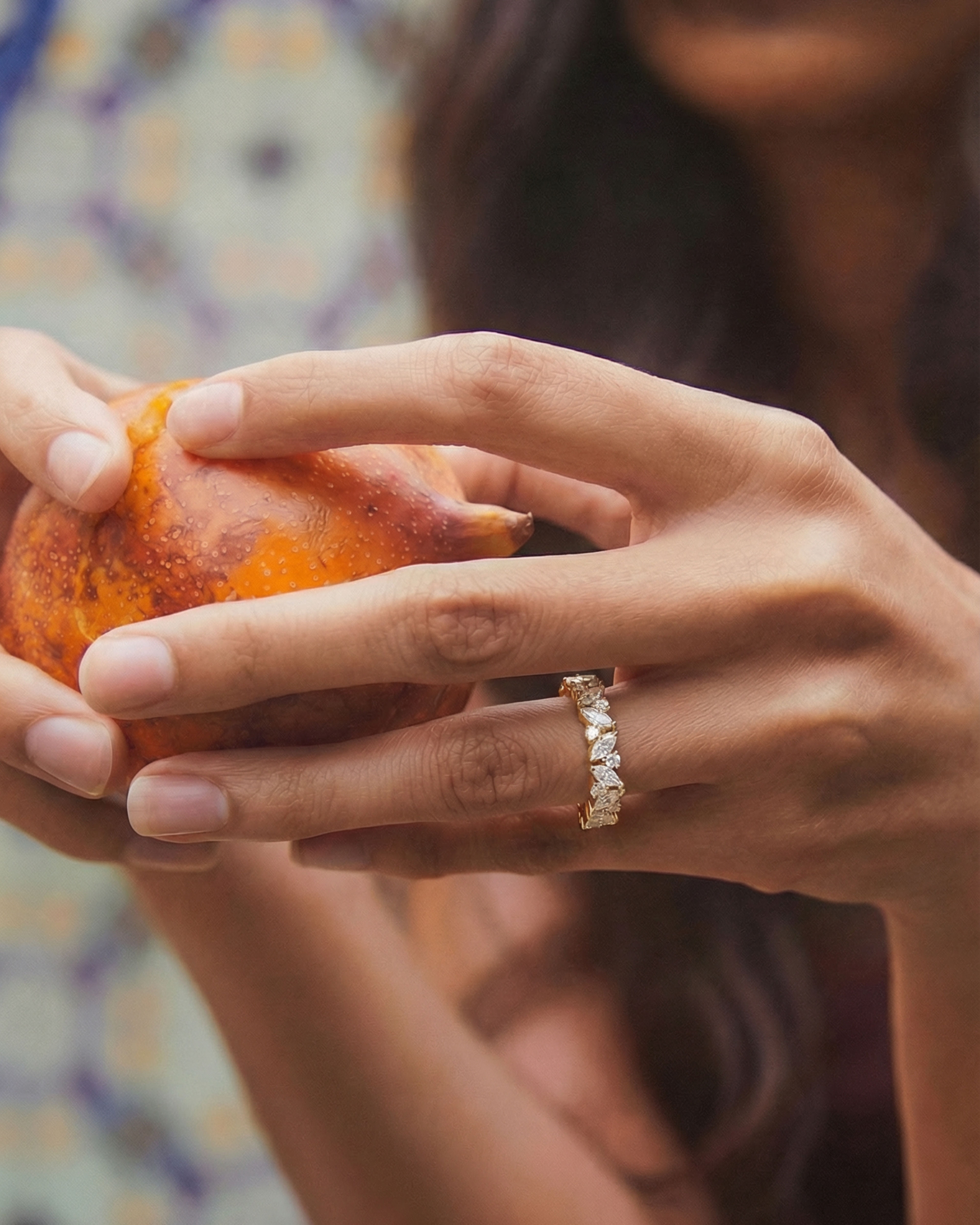
Financial independence for women can begin with one joyful purchase. Ethera’s guide helps you choose affordable diamond jewellery from your first salary.
Financial independence for women isn’t only about savings accounts, tax plans and learning what a mutual fund actually does. It’s also about being able to buy yourself something beautiful without waiting for a birthday, a wedding or someone else’s approval.
Your first salary may not stretch to every piece you’ve saved on Instagram. It doesn’t need to. The point isn’t to spend recklessly or prove that you’ve “made it” before your probation period ends. It’s to choose one piece that marks a very specific shift: this time, you’re not receiving the jewellery. You’re buying it for yourself.
That changes the meaning of the box.
Financial independence for women can include buying something purely for joy
Financial independence means having the freedom to make your own money decisions, including decisions that aren’t based only on necessity.
Your first salary will probably disappear faster than expected. There may be rent, travel, family responsibilities, a long-overdue dinner and several small purchases that somehow unite into one surprisingly large bank notification.
Saving should come first. So should anything essential. But responsible spending doesn’t mean every rupee left over must be assigned to a serious adult purpose.
A self-bought piece of jewellery can be both emotional and sensible when you set a budget before you begin. You’re not buying it because diamonds are a financial investment. You’re buying it because the piece represents the first time your work paid for something you chose entirely for yourself.
That distinction matters.
A gift tells you that someone thought of you. A self-purchase tells you that you thought of yourself.
Decide what this purchase is meant to remember
Your first-salary jewellery should represent the moment without being forced to carry your entire life story.
You don’t need a complicated design filled with symbols unless that genuinely suits you. The memory may come from the purchase itself: the first payment notification, the first office ID card, the first month you stopped asking before spending your own money.
Some women want a piece they can wear every day as a quiet marker. Others want something more visible because the occasion feels worth celebrating properly. Neither approach is more mature.
Ask yourself what you want the jewellery to do.
Should it become part of your daily routine? Should it feel noticeably different from what you already own? Do you want something classic enough to wear for years, or a playful design that captures who you are right now?
The best choice is rarely the piece that sounds most meaningful in theory. It’s the one you’ll enjoy seeing on yourself after the salary-day excitement settles.
Set a budget before opening ten jewellery tabs
A first-salary jewellery budget should come from the amount left after your essential expenses and savings, not from the full salary credited to your account.
Start by separating what you need to pay, what you want to save and what you can spend without creating stress later in the month. Your jewellery budget lives in that final category.
There’s no correct percentage. Your salary, responsibilities and existing savings matter far more than a neat rule created for social media. The purchase should feel celebratory when you make it and still feel comfortable two weeks later.
Your priority | What to focus on | Where you can stay flexible |
Daily wear | Comfort, secure settings and simple proportions | Diamond size |
Visible sparkle | Diamond coverage and face-up appearance | Intricate metalwork |
Personal meaning | Engraving, initials or a symbolic motif | Carat weight |
Long-term versatility | Clean design and easy styling | Current trends |
A statement piece | Distinctive shape or stronger scale | Frequency of wear |
Compare the complete price, including the gold, diamonds, making charges and any customisation. A piece that appears inexpensive at first can move outside your budget once those details are added.
The aim is not to buy the largest diamond available. It’s to buy without turning the rest of the month into an endurance sport.
Affordable diamond jewellery doesn’t have to feel like a compromise
Affordable diamond jewellery can still use real diamonds, precious gold and considered design when you understand where the value comes from.
Lab grown diamonds are real diamonds that are chemically and visually identical to mined diamonds. They’re created in a controlled environment rather than extracted from the earth. Their different origin usually means a different price, giving you more room to choose the design, size or diamond coverage you prefer.
This can be especially useful for a first-salary purchase. You may be able to choose a pair of diamond earrings, a visible pendant or a more interesting ring without directing several months of income towards one purchase.
Affordable shouldn’t mean poorly made. Check that the diamond origin is clearly disclosed, the gold is hallmarked and the settings feel secure. Certification matters for understanding what you’re buying, while good craftsmanship determines how comfortably and confidently you can wear it.
Ethera uses IGI-certified lab grown diamonds and BIS-hallmarked gold, so you can focus on choosing a piece that fits your style rather than wondering whether the basic information has been left conveniently vague.
Diamond earrings are the easiest first-salary purchase
Diamond earrings are usually the simplest first fine-jewellery purchase because they’re easy to wear and don’t require exact sizing.
Studs are the most straightforward option. A small solitaire feels classic, while a butterfly, floral or geometric motif gives the same ease with more personality. Diamond huggies, which are compact hoops that sit close to the earlobe, add more visible sparkle while remaining practical for work.
Think about your existing habits. If you already wear the same earrings for several days, choose a comfortable design with a secure backing. If you like changing your jewellery with every outfit, a more playful shape may earn more use than a traditional round stud.
Earrings also move easily between office shirts, kurtas, dresses and weekend clothes. They don’t need a particular neckline or a carefully planned stack.
You can put them on at 8:42 in the morning while wondering whether breakfast is still possible. That’s the kind of versatility everyday jewellery needs.
A pendant can become your everyday marker
A diamond pendant works well as first-salary jewellery because it feels personal without carrying the assumptions that sometimes come with a ring.
Choose a short or medium-length chain that sits near the collarbone. This position keeps the pendant visible with shirts, T-shirts, dresses and many kurta necklines. A solitaire pendant is easy to repeat, while an initial, heart, star or abstract motif gives the piece a clearer identity.
Pay attention to scale. A pendant that looks delicate in a close-up product image may appear much smaller once worn. Check the dimensions and look for photographs that show it on the body.
The chain deserves equal attention. It should feel light enough for regular wear but secure enough to support the pendant. An adjustable chain gives you more freedom to change the length according to the neckline.
A pendant can quietly follow you through the years after your first salary. New jobs, new cities and new versions of your wardrobe can all arrive around it.
A ring can elevate any outfit
A ring can make a powerful self-purchase because you’ll see it throughout the day, but it needs to fit both your finger and your expectations.
You don’t have to choose a design associated with engagements. Slim diamond bands, open rings, stackable styles, initials and contemporary clusters all work as jewellery bought purely for yourself.
Decide which finger you’ll wear it on before ordering. Ring sizes vary between fingers, and even the same finger can change slightly with temperature. Measure a ring you already wear comfortably on the intended finger or use a proper ring sizer.
Low-profile settings are easier for daily use because the diamond sits closer to the hand and is less likely to catch on sleeves or bags. If you type for long hours, hold the ring against your keyboard before deciding whether the design feels practical.
There’s something particularly satisfying about looking down during a long workday and seeing the first diamond you bought with money you earned. It’s a small morale department, operating from your hand.
A bracelet works best when it fits your daily routine
A diamond bracelet makes sense as a first-salary purchase when you enjoy visible jewellery and already wear something on your wrist.
Slim chain bracelets and delicate tennis-style designs are easier to combine with watches. A bangle creates a cleaner, more structured line, though the sizing needs to be right so it doesn’t slip over your hand or sit uncomfortably tight.
Think about how much your wrists interact with desks, laptop edges and bags. A delicate bracelet may look beautiful but require more awareness than earrings or a pendant. Secure clasps and well-finished settings matter because bracelets move constantly throughout the day.
You’ll also see a bracelet more often than earrings, which can make it feel especially connected to the purchase. Every coffee, email and dramatic refresh of your banking app brings it back into view.
Personalisation can make a small piece feel significant
Personalised jewellery can carry more emotional weight without requiring a larger diamond or a more expensive design.
An initial is the simplest choice. It may be your own, which feels particularly appropriate when the purchase celebrates independence. You could also choose the first letter of a parent, sibling or someone who helped you reach this point.
Engraving offers quieter options. A joining date, a short word, the month and year of your first salary or a tiny private phrase can sit inside a ring or on the back of a pendant.
Keep the message brief. Small jewellery surfaces don’t reward ambitious speeches.
Customisation can also happen through design. You might select a particular diamond shape, change the metal colour or combine two motifs that mean something to you. Before ordering, check whether personalised pieces can be exchanged or resized, since custom work often comes with different return terms.
Choose jewellery for the woman you are now
Your first-salary jewellery doesn’t need to look serious enough to impress a future version of you.
You’re allowed to choose a butterfly because it makes you happy. You’re allowed to buy hoops instead of studs, even if someone has declared studs the sensible foundation of every jewellery wardrobe. You’re allowed to prefer yellow gold this year and discover white gold later.
Taste changes. That doesn’t make the original choice a mistake.
A classic design may stay in your collection for decades. A playful piece may always remind you of the age at which you bought it. Both forms of longevity are valid.
Look at what you already wear rather than what a first fine-jewellery purchase is supposed to look like. If your wardrobe is minimal, you may want one sculptural piece to add interest. If your clothes are colourful and detailed, a clean solitaire may fit more easily.
The jewellery should recognise you, not an imaginary woman with a perfectly organised wardrobe and a mysterious abundance of beige tailoring.
Your first purchase doesn’t have to build a complete collection
A jewellery collection is better built slowly than purchased according to a compulsory checklist.
You may eventually want studs, a pendant, a bracelet and several rings. That doesn’t mean your first salary needs to begin the whole programme at once.
Choose one piece that performs a clear role. It could be the earring you wear to work, the ring you never remove or the pendant that makes a plain outfit feel complete. Once you understand how often you wear it, your next purchase becomes easier.
You may discover that you prefer earrings to necklaces, or that rings bring you more joy than anything worn near your face. Your habits will create a more useful collection than a generic list of essentials.
Buying for yourself means you’re allowed to take your time. There’s no gifting deadline and no anxious boyfriend asking the sales associate whether women still like hearts.
Let the purchase mark the beginning, not the finish line
The real significance of first-salary jewellery isn’t the size of the diamond. It’s the shift behind the decision.
You worked. You earned. You saved what you needed to save. Then you chose something simply because it would make your own life a little more beautiful.
That’s financial independence in its most wearable form. Not a grand declaration, but a private decision you can fasten around your neck before work.
The jewellery doesn’t have to prove you’ve arrived. It only has to remind you that you’ve begun.
Frequently asked questions
What jewellery should I buy with my first salary?
Choose jewellery that fits your current routine and budget, such as diamond studs, a small pendant, a slim ring or a delicate bracelet. Your first-salary piece should be comfortable enough to wear regularly and meaningful because you chose it, not because it follows a traditional gifting rule.
How does buying jewellery relate to financial independence for women?
Buying jewellery can reflect financial independence for women when the decision comes from their own income, priorities and preferences. The purchase shouldn’t replace saving or essential expenses. It becomes meaningful because you’re choosing how to use your money, including setting aside a responsible amount for personal joy.
Is affordable diamond jewellery made with real diamonds?
Yes, affordable diamond jewellery can be made with real lab grown diamonds. Lab grown diamonds are chemically and visually identical to mined diamonds, but they’re created in a controlled environment rather than extracted from the earth. Always check certification, gold hallmarks and the quality of the setting before buying.
How much of my first salary should I spend on jewellery?
There’s no fixed percentage you should spend on first-salary jewellery. Pay essential expenses, meet family commitments and set aside savings before deciding what feels comfortable. The right budget is an amount you can spend without borrowing, delaying important payments or feeling anxious for the rest of the month.
What is the best affordable diamond jewellery for daily wear?
Diamond studs, huggies, compact pendants and low-profile rings are strong choices for daily wear because they’re comfortable and easy to style. Look for secure settings and proportions that suit your routine. A smaller, well-made piece you wear often offers more value than a larger design left in its box.
Are lab grown diamonds good for a first-salary gift to myself?
Yes, lab grown diamonds are a practical choice for a first-salary self-gift because they’re real diamonds and can offer more design flexibility within your budget. Choose an IGI-certified diamond, BIS-hallmarked gold and a piece you’ll genuinely wear rather than focusing only on the largest possible carat weight.
Should my first diamond be a ring, pendant or earrings?
Earrings are easiest when you don’t want sizing concerns, while a pendant feels personal and works with many outfits. A ring is highly visible and emotionally satisfying but requires accurate sizing. Choose the category you already wear most, since familiar jewellery is more likely to become part of your routine.
Can first-salary jewellery be personalised?
Yes, first-salary jewellery can be personalised with your initial, joining date, first-salary month or a short word that captures the moment. Keep engravings concise and check the brand’s resizing and return policy before ordering. Personalisation can make a modest design feel more meaningful without requiring a larger diamond.