
Pear Shaped Lab Grown Diamonds: Why This Cut Is Having Its Biggest Moment Yet in India
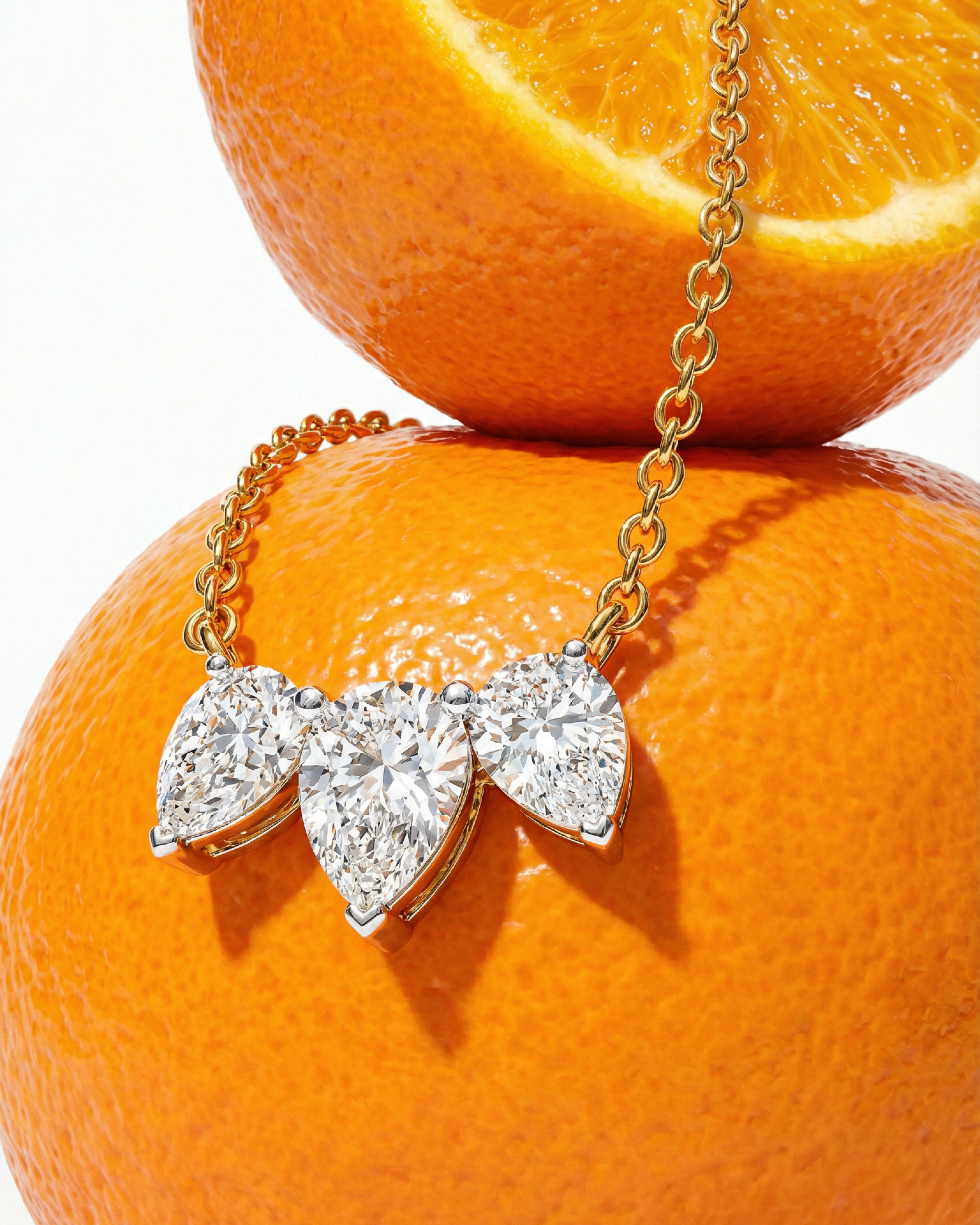
Pear shaped lab grown diamonds are suddenly everywhere in India. Discover why this elegant cut is winning over a new generation, with insights from Ethera.
Pear shaped lab grown diamonds are having a genuine breakthrough moment in India right now. What was once a niche choice reserved for people who wanted something slightly unconventional has become one of the most searched, saved, and shared diamond cuts among women shopping for engagement rings and fine jewellery.
Part of the appeal is visual. Part of it is cultural. And part of it comes down to timing.
For years, the round solitaire dominated the conversation. It was the default answer. But today's jewellery buyer doesn't necessarily want the default. She wants something distinctive without feeling dramatic, elegant without feeling traditional, and timeless without looking identical to everyone else's ring.
That's exactly where the pear cut sits.
Why Pear Shaped Lab Grown Diamonds Feel Different From Other Diamond Cuts
Pear shaped lab grown diamonds combine the brilliance of a round diamond with the elongating silhouette of a marquise, creating a shape that feels both classic and unexpected.
The cut itself is easy to recognise. One end is rounded while the other tapers into a soft point, creating a teardrop silhouette that catches the eye from almost every angle. Because of this unique shape, pear diamonds often appear larger than round diamonds of the same carat weight.
There's also a sense of movement built into the design. Round diamonds feel symmetrical and balanced. Emerald cuts feel architectural. Pear cuts introduce a little asymmetry, and that's often what makes them memorable.
Many women describe the shape as feminine without feeling overly delicate. It has character. You notice it immediately, but it doesn't demand attention in the way some trend-driven designs do.
How Pear Cuts Compare to Other Popular Shapes
Shape | Visual Character | Finger Appearance | Style Personality |
Balanced and brilliant | Neutral | Classic | |
Soft and elongated | Lengthening | Modern classic | |
Rounded corners | Balanced | Romantic | |
Clean lines | Structured | Sophisticated | |
Tapered teardrop shape | Lengthening | Distinctive and elegant |
The Rise Of The Pear Cut Has Coincided With A Shift In How Women Buy Jewellery
The rise of the pear cut has happened alongside a broader change in how women approach diamond jewellery.
A decade ago, engagement rings often followed a fairly predictable formula. Today, women are far more involved in the selection process. They're researching cuts, comparing settings, saving inspiration boards, and choosing designs that feel aligned with their personal style.
That shift naturally benefits cuts like the pear.
When you're actively choosing rather than simply following tradition, subtle individuality becomes more attractive. A pear diamond feels different enough to stand apart while still carrying the timeless qualities most buyers want from fine jewellery.
Social media has amplified this effect. Scroll through engagement announcements, jewellery creators, or fashion-focused content and you'll notice far more shape diversity than you would have seen even five years ago.
The result is a market where shaped diamonds are no longer alternative options. They're increasingly becoming the first choice.
Pear Cut Diamonds Create A Distinctive Look Without Feeling Trend-Driven
Pear cut diamonds manage to feel current without being tied to a specific fashion cycle.
That's a surprisingly rare balance. Some jewellery trends arrive quickly and disappear just as fast. Others feel so traditional that they can seem disconnected from contemporary style.
The pear cut sits comfortably between those extremes.
Historically, the shape dates back centuries. Yet when placed in modern settings, it feels remarkably fresh. A simple solitaire pear ring can look contemporary today while still feeling relevant decades from now.
This is one reason the cut appeals to women making significant jewellery purchases. You're not choosing something because it's trending on your feed this month. You're choosing a shape that has already proven its longevity while still feeling individual.
That's a powerful combination.
Why Pear Shaped Lab Grown Diamonds Work So Well In Engagement Rings
Pear shaped engagement rings have become particularly popular because they combine visual impact with everyday wearability.
The elongated silhouette creates the illusion of longer, slimmer fingers, which many buyers appreciate. The shape also tends to maximise visible surface area, meaning the diamond can appear larger than other cuts with a similar carat weight.
There's another advantage that often gets overlooked.
Pear diamonds can be worn in different orientations. Some people prefer the pointed tip facing outward toward the fingertip. Others wear the point facing inward toward the hand. Both approaches have devoted supporters, and each creates a slightly different visual effect.
This flexibility gives the ring a personal quality before you even begin thinking about the setting itself.
Popular engagement ring styles featuring pear diamonds include:
Solitaire settings
Hidden halo designs
Three stone rings
East-west orientations
Yellow gold settings
Platinum settings
Vintage-inspired designs
Each approach highlights a different aspect of the shape while preserving the distinctive silhouette that makes pear diamonds so recognisable.
The Two Stone Pear Ring Has Become One Of The Most Requested Modern Designs
The two stone pear ring has emerged as one of the defining engagement ring trends of the past few years.
The concept is straightforward. Instead of featuring a single centre diamond, the design places two stones together. These stones can represent partnership, shared journeys, or simply a preference for a more distinctive aesthetic.
Pear diamonds work exceptionally well in this format because of their directional shape.
When paired with another pear, oval, emerald, or round diamond, they create visual tension and balance at the same time. The result feels artistic rather than traditional, yet still elegant enough for everyday wear.
What makes the design particularly interesting is that no two combinations look exactly alike. Stone proportions, orientation, and spacing can dramatically change the overall appearance.
That's helped make the two stone pear ring especially popular among women looking for something personal rather than conventional.
Lab Grown Diamonds Have Made Unusual Shapes More Accessible
Lab grown diamonds have expanded the range of cuts and designs that many buyers are willing to consider.
A lab grown diamond is a real diamond that is chemically, physically, and visually identical to a mined diamond. The difference is that it's created in a controlled environment rather than extracted from the earth.
This matters because shape exploration becomes easier when buyers feel less constrained by traditional expectations around diamond purchasing.
Instead of focusing exclusively on the safest possible choice, many women are spending more time considering cuts that genuinely suit their style. That has created favourable conditions for pear diamonds.
The shape has always existed. The difference is that more people are now giving themselves permission to choose it.
If you're exploring shaped diamond engagement rings, this shift has created far more variety in the market than previous generations ever had access to.
Pear Shaped Lab Grown Diamonds Photograph Exceptionally Well
Pear shaped lab grown diamonds tend to stand out in photographs because their silhouette is immediately recognisable.
Round diamonds can sometimes blend together visually in images, particularly on small screens. Pear diamonds create a clearer outline, making them easier to identify even from a distance.
That's become increasingly relevant in a world where jewellery is often first encountered through photos, videos, and social content.
The shape also interacts beautifully with movement. As the hand turns, the pointed end and curved edge catch light differently, creating dimension that translates particularly well on camera.
Of course, nobody should choose a diamond purely because it photographs well.
But when a shape looks elegant both in person and on screen, it naturally gains visibility. And visibility often drives curiosity.
The Biggest Appeal Of Pear Diamonds Isn't The Shape
The biggest appeal of pear diamonds isn't actually the teardrop silhouette. It's what the shape represents.
For years, jewellery choices were surprisingly narrow. Today, women are building collections that reflect their own taste rather than inherited expectations.
The pear cut fits naturally into that shift. It's recognisable but not predictable. Elegant but not conventional. Distinctive without trying too hard.
That's why its current popularity feels less like a passing trend and more like a reflection of how jewellery buying itself is changing.
If you're drawn to pear shaped lab grown diamonds, you're probably not choosing them because they're having a moment. You're choosing them because they feel like you.
FAQs
Are pear shaped lab grown diamonds more expensive than round diamonds?
Not usually. Pear shaped lab grown diamonds are often priced competitively compared to round diamonds of similar quality and carat weight. Because the shape can appear larger face-up, many buyers feel they're getting a stronger visual impact without needing to increase carat size.
Is a pear cut diamond a good choice for an engagement ring?
Yes, a pear cut diamond is an excellent engagement ring choice if you want something elegant, timeless, and slightly distinctive. The elongated shape flatters many hand types and offers a balance between classic diamond brilliance and individual style.
Why are pear shaped lab grown diamonds becoming popular in India?
Pear shaped lab grown diamonds are becoming popular because Indian buyers are increasingly exploring shaped diamonds instead of defaulting to round solitaires. The cut feels modern, photographs beautifully, and offers a unique look while remaining sophisticated enough for long-term wear.
What is the difference between a pear cut and an oval diamond?
The difference between a pear cut and an oval diamond is the pointed tip. Oval diamonds have continuous curves, while pear diamonds combine a rounded end with a tapered point. This creates a more directional silhouette and often a slightly more distinctive appearance.
What is a two stone pear ring?
A two stone pear ring is a design featuring two centre stones instead of one traditional solitaire diamond. The stones can be identical or different shapes, creating a symbolic and visually interesting engagement ring that has become increasingly popular in recent years.
Do pear shaped lab grown diamonds look bigger than other diamonds?
Yes, pear shaped lab grown diamonds often appear larger than round diamonds of the same carat weight. Their elongated shape creates more visible surface area, which can make the stone seem bigger when viewed from above.
Which direction should a pear shaped engagement ring face?
Both orientations are accepted. Most people wear the pointed end facing toward the fingertip because it visually elongates the finger. Others prefer the point facing inward toward the hand. The choice comes down entirely to personal preference and aesthetic style.
Are pear shaped diamonds timeless or trendy?
Pear shaped diamonds are timeless shapes that happen to be experiencing renewed popularity. The cut has existed for centuries and has repeatedly returned to prominence across different eras, which suggests lasting appeal rather than a short-lived trend.