
The new Indian trousseau isn't gold-heavy. It's this.
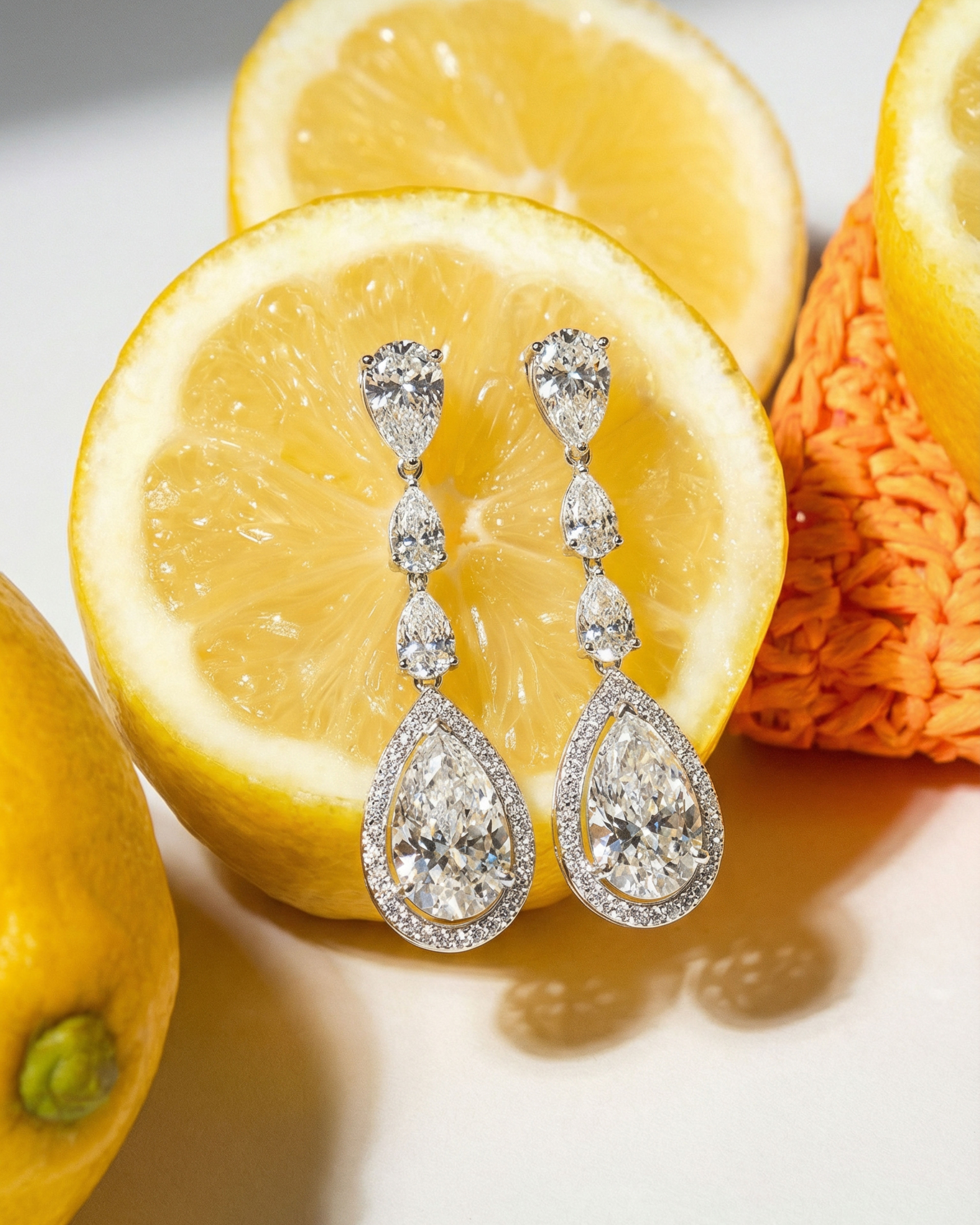
The new Indian trousseau is lighter, more personal and made to be worn again. See Ethera’s guide to building yours beyond the wedding day.
The new Indian trousseau isn’t a locker full of heavy gold jewellery waiting for the next family wedding. It’s a carefully chosen collection of pieces that can move from your pheras to your first week back at work, without spending most of their lives wrapped in velvet.
That doesn’t mean Indian brides are abandoning tradition. They’re simply becoming more selective about what deserves a place in their jewellery boxes. One spectacular wedding set may still belong there, but so do diamond hoops, a slim tennis bracelet, a pendant you can wear with a shirt and a ring you chose because it felt like you.
The trousseau is no longer built for the bride you’ll be for three days. It’s being built for the woman you’ll be afterwards.
The new Indian trousseau is built around wearability
A new Indian trousseau prioritises jewellery that can be worn repeatedly instead of reserving the entire budget for a few ceremonial pieces.
Traditionally, a bridal jewellery collection was expected to look substantial. Weight mattered. Matching sets mattered. The number of boxes arriving with the bride often mattered too.
The problem appeared after the wedding. A necklace designed for a heavily embroidered lehenga rarely felt right with a dinner dress, office sari or linen kurta. Large matching sets stayed together because nobody quite knew how to separate them. Beautiful pieces became permanent residents of the bank locker.
A modern bridal trousseau starts with a different question: how will you wear this once the wedding photographs are done?
A versatile piece should work with more than one outfit, occasion and version of your life. Diamond studs can sit beside your maang tikka during a smaller ceremony and return later with workwear. A tennis bracelet can accompany a cocktail sari, a black dress and an ordinary Tuesday lunch. A solitaire pendant doesn’t need a wedding invitation at all.
That repeat wear doesn’t make the jewellery less special. It gives the memory somewhere to go.
It includes one bridal statement, not ten matching sets
A modern bridal trousseau can include a grand wedding-day piece without making every jewellery purchase equally elaborate.
Your main bridal look deserves its moment. If you’ve always imagined a sweeping necklace, layered polki or a dramatic diamond choker, minimalism doesn’t need to arrive with a clipboard and cancel it.
The shift is in what surrounds that piece.
Instead of purchasing several heavy sets simply because different functions require different outfits, you can choose one hero piece and build the remaining looks through styling. Statement earrings can replace a necklace at the sangeet. A diamond choker can be worn alone for one event and layered with a longer family necklace for another. Bangles can be divided into smaller stacks instead of always appearing as a full set.
This gives each look a distinct identity without requiring five versions of the same jewellery idea.
It also leaves room for a piece inherited from your mother or grandmother. Heritage jewellery carries a presence that doesn’t need to be recreated from scratch. Pairing it with contemporary diamond pieces can make it feel more like yours while keeping the original design intact.
The result isn’t less bridal. It’s simply better edited.
Everyday diamonds have entered the bridal jewellery trousseau
Everyday diamond jewellery now belongs in a bridal trousseau because it carries the wedding memory into clothes and occasions that come afterwards.
This is where lab grown diamonds have changed the conversation. Lab grown diamonds are real diamonds, chemically and visually identical to mined diamonds, but created in a controlled environment rather than extracted from the earth. They allow you to consider greater design variety or a more noticeable diamond presence within the same overall budget.
Instead of concentrating everything into one necklace, you can build a small diamond wardrobe.
Piece | Wedding-week role | How you’ll wear it later |
Haldi, intimate puja or morning ceremony | Work, flights, errands and daily dressing | |
Welcome lunch or after-party | Shirts, kurtas, dresses and co-ords | |
Smaller function or layered bridal look | Everyday necklines and officewear | |
Cocktail or reception | Watches, evening looks and festive outfits | |
Engagement stack or wedding jewellery | Worn alone or with your engagement ring | |
Sangeet or reception | Future weddings and occasion dressing |
These pieces don’t all have to match. In fact, they’re often more useful when they don’t. A collection that includes different proportions and silhouettes gives you far more styling possibilities than one complete set divided into separate boxes.
Ethera’s lab grown diamond jewellery is designed around this kind of repeat wear, with pieces that can hold their own at a celebration without looking stranded when you wear them afterwards.
The modern bridal trousseau mixes old and new
The strongest modern bridal trousseau combines inherited jewellery, contemporary diamonds and pieces chosen for the bride’s own style.
You don’t need to decide between tradition and modernity as though they’re competing wedding guests who can’t be seated at the same table. They usually look more interesting together.
An heirloom gold necklace can be paired with slim diamond earrings instead of its original matching pair. Your mother’s bangles can sit beside a modern diamond bracelet. A traditional sari can be styled with a clean solitaire necklace, while a contemporary lehenga can carry an older temple-jewellery piece.
The contrast keeps both sides from feeling predictable.
It also removes the pressure to buy a new version of something your family already owns. Before shopping, look through the jewellery available to you and identify what it does well. Perhaps there’s already a strong wedding necklace but no comfortable earrings. Maybe the family collection is rich in yellow gold but has few pieces that work with Western clothes.
Your trousseau can fill those gaps rather than repeat what’s already there.
Personal style should have the final vote. If you never wear elaborate necklaces now, marriage is unlikely to transform you into someone who reaches for one every Friday. Spend more on the categories you naturally enjoy.
It isn’t restricted to complete matching sets
A bridal jewellery trousseau doesn’t need matching necklaces, earrings, bracelets and rings to feel considered.
Matching sets are convenient when you genuinely love every component. They’re less useful when you buy the necklace for its design, tolerate the earrings and never remove the bracelet from its packaging.
Building piece by piece lets you choose proportions that suit you. You may prefer smaller earrings with a statement necklace, or no necklace at all when the blouse already has a detailed neckline. You might wear white gold rings but favour yellow gold around your neck. None of this makes your collection incomplete.
Mixed metals can make a trousseau easier to wear. Yellow gold connects naturally with traditional Indian jewellery and warmer festive colours. White gold gives diamond pieces a clean, contemporary finish. Rose gold can soften minimal designs and pair well with muted wardrobes.
You don’t need equal amounts of each. Think about the clothes you already own and the jewellery you reach for without planning. Your trousseau should extend those instincts, not replace them with a ceremonial personality you borrow for the wedding.
A well-built collection looks connected because it belongs to the same person, not because every clasp arrived in the same box.
Your engagement ring should lead to a wearable ring wardrobe
A modern bridal ring collection begins with the engagement ring and adds bands or statement rings that can be worn in several combinations.
The engagement ring is often the most frequently worn piece in the entire trousseau. It deserves more thought than choosing the largest diamond the budget permits.
Consider how it will sit with a wedding band, whether the setting catches on clothing and whether the shape still feels right when you’re wearing jeans instead of bridal couture. A high setting may create space for a straight band beneath it, while a lower or unusual setting may pair better with a curved band.
You can then build a ring wardrobe around it rather than treating every ring as a separate occasion purchase.
A slim diamond band can sit beside your engagement ring, move to the other hand or be worn alone while travelling. A bolder cocktail ring can anchor reception and festive looks. A delicate open ring can become an everyday piece that doesn’t compete with the main stack.
Customisation is useful here because small design changes can make the combination more comfortable and personal. Ethera offers custom diamond jewellery for brides who want to adjust the stone shape, setting or details rather than choosing a ring that almost works.
The right pieces can move across Indian and Western wardrobes
Versatile trousseau jewellery works with saris, lehengas, kurtas, dresses, shirts and denim without looking like it wandered in from another event.
This versatility usually comes from proportion rather than plainness.
A pair of earrings can still be distinctive, but shouldn’t depend on an embroidered neckline to make sense. A necklace can have enough presence for a festive outfit without covering half the blouse. A bracelet should sit comfortably beside a watch instead of requiring an entire bangle arrangement around it.
Some pieces cross wardrobes particularly well.
Diamond ear climbers can sharpen a cocktail sari and add interest to a simple black dress. A slim necklace with a movable pendant works with both a V-neck kurta and an open shirt. Geometric rings pair easily with Indian textiles because their clean lines create contrast. A tennis necklace can sit close to the neck with a strapless gown, then reappear inside the collar of a silk shirt.
When trying on a piece, don’t imagine only the wedding outfit it’s being purchased for. Picture three other outfits you already own. If nothing comes to mind, the jewellery may be more costume than collection.
Gold purity should match how you plan to wear the jewellery
Gold purity affects the price, durability and everyday practicality of bridal jewellery.
Indian bridal jewellery is often associated with higher gold purity, but the most appropriate option depends on the design and how frequently you’ll wear it.
18KT gold contains a higher percentage of pure gold and is widely used for fine diamond jewellery. 14KT offers greater hardness and can work well for rings, bracelets and other pieces exposed to frequent contact. 9KT gold contains 37.5 per cent pure gold and provides another option for lighter, accessible everyday designs.
Lower-karat gold isn’t a lesser version of the same jewellery. The alloy composition changes its hardness, tone and price. The best choice depends on whether you’re selecting a ceremonial piece, a daily ring or a delicate design that needs structural strength.
Whatever purity you select, look for BIS hallmarking when purchasing gold jewellery in India. A hallmark verifies the declared fineness of the gold, while a recognised diamond grading report records characteristics such as carat weight, colour and clarity.
The metal should support the life of the piece. It shouldn’t be selected only because a wedding checklist says every bridal purchase must use the same purity.
A personal piece belongs beside the traditional ones
The new Indian trousseau includes at least one piece that reflects the bride’s story rather than only her bridal status.
This could be a pendant carrying initials, a ring engraved with a private phrase, a diamond shape you’ve loved for years or a piece bought with your first major bonus. It may have nothing visibly “bridal” about it.
That’s exactly why it belongs.
A wedding trousseau has traditionally represented family, continuity and a new chapter. There’s room within that idea for your individual life too. Jewellery chosen by you can sit alongside jewellery gifted by your parents, partner or extended family without competing with its emotional value.
You could redesign an inherited diamond into a setting that suits your taste, add an engraving hidden inside a band or choose a motif connected to a place, person or shared joke. Customisation works best when it’s subtle enough to live with you for years.
Not every memory needs to announce itself across the room.
How to build a new Indian trousseau without overbuying
A practical new Indian trousseau starts with your real wardrobe, covers distinct jewellery functions and avoids buying several pieces that perform the same job.
Before shopping, separate what you need for the wedding ceremonies from what you want for the years after them. There will be some overlap, but not every wedding look needs to create a permanent jewellery purchase.
A useful collection might include:
One main bridal necklace or inherited statement piece
One pair of wedding or reception earrings
One versatile pair of diamond studs
One pair of hoops or modern drop earrings
One everyday pendant or light necklace
One tennis bracelet or slim diamond bangle
One engagement ring and wearable wedding band
One personal or customised piece
This isn’t a compulsory checklist. It’s a way to stop six similar necklaces from quietly eating the budget while the jewellery you’d wear every week remains an afterthought.
Try every piece for comfort. Check the backs of earrings, the movement of bracelets, the height of ring settings and the way necklaces sit when you turn. Bridal shopping often happens under bright showroom lights and a small cloud of family opinions. Your body will give you the clearer answer.
You should also ask how the piece will be maintained, resized or repaired. Certification, hallmarking, warranty and exchange policies may not create the sparkle, but they make living with fine jewellery easier.
The trousseau should outlive the bridal version of you
Your wedding jewellery will always belong to that chapter, but it doesn’t have to remain trapped inside it.
The new trousseau isn’t anti-gold, anti-tradition or determined to make every bride wear tiny studs. It’s simply against buying by default. It leaves space for the family necklace, the spectacular wedding piece, the diamonds you’ll wear to work and the ring that makes sense only to you.
Years later, the most meaningful pieces may not be the heaviest ones. They’ll be the ones that kept appearing: at your first anniversary dinner, beside your watch on an ordinary morning, with a sari at someone else’s wedding and on the days when there was no occasion at all.
That’s what a trousseau was always meant to do. Travel with you.
Frequently asked questions
What should a new Indian trousseau include?
A new Indian trousseau should include one key bridal piece, versatile diamond earrings, an everyday necklace, a bracelet or bangle, wearable rings and something personal. The exact mix should reflect your wardrobe, wedding functions and lifestyle rather than a fixed checklist inherited from somebody else’s wedding.
How is a modern bridal trousseau different from a traditional one?
A modern bridal trousseau focuses more on repeat wear, personal style and mix-and-match jewellery. Traditional trousseaus often centred on heavy gold sets and ceremonial value. Today’s collection can still include heirlooms and bridal statements, but balances them with diamonds and lighter pieces for everyday life.
Can lab grown diamonds be included in an Indian bridal trousseau?
Yes, lab grown diamonds work beautifully in an Indian bridal trousseau because they’re real diamonds with the same chemical and visual properties as mined diamonds. They’re created in a controlled environment rather than extracted from the earth and can be used in solitaires, necklaces, bangles, earrings and bridal designs.
How much jewellery should a bride have in her trousseau?
There’s no ideal number of jewellery pieces for a bridal trousseau. A smaller collection covering different functions is usually more useful than several similar matching sets. Begin with your wedding looks, existing family jewellery and everyday wardrobe, then buy only what fills a genuine styling gap.
Does a bridal jewellery trousseau have to contain only gold?
No, a bridal jewellery trousseau doesn’t have to contain only traditional gold pieces. It can combine yellow, white or rose gold with diamonds, inherited jewellery and contemporary designs. The metals and styles should suit your wardrobe and how you plan to wear each piece after the wedding.
Which everyday diamond pieces belong in a modern bridal trousseau?
Diamond studs, hoops, a solitaire pendant, a tennis bracelet and a slim diamond band are useful everyday additions. Each can be worn during smaller wedding functions and restyled later with officewear, kurtas, dresses or occasion outfits, giving the bridal purchase far more life beyond the wedding.
Should bridal jewellery be matching or mixed?
Bridal jewellery can be mixed as long as the proportions and overall styling feel intentional. A statement necklace may look better with smaller earrings, while inherited bangles can sit beside a modern diamond bracelet. Choosing pieces individually also prevents you from paying for parts of a set you won’t wear.
How can I build a bridal trousseau on a practical budget?
Build your bridal trousseau by choosing one statement piece and prioritising jewellery you’ll wear repeatedly. Use inherited pieces where possible, compare diamond specifications, consider different gold purities and avoid buying similar sets for every function. Spend most on the pieces whose beauty and comfort you’ll notice regularly.