
A First-Time Buyer's Guide to Lab Grown Diamond Jewellery (From Someone Who Was Confused Too)
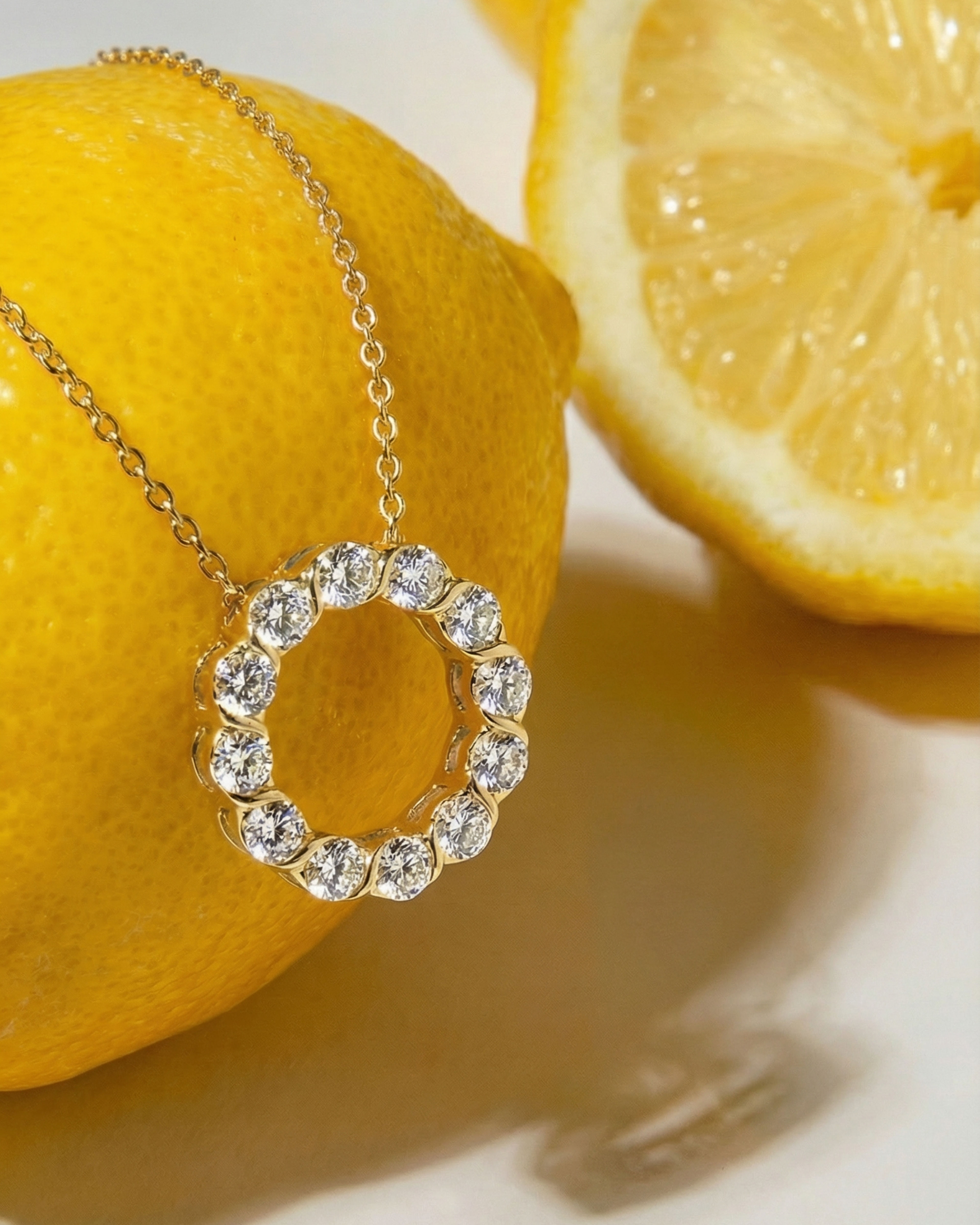
A first-time buyer's guide to lab grown diamond jewellery from someone who found it confusing too. What to ask, check, and safely ignore.
Buying lab grown diamond jewellery for the first time is much simpler than the jewellery industry often makes it sound. You don't need to become a diamond expert, memorise every grading term, or spend weeks comparing certificates. You just need to know which details matter and which ones are mostly noise.
Because the first time you start researching diamonds, everything seems important.
One website tells you to obsess over clarity. Another says carat is everything. Someone on Reddit is debating HPHT versus CVD as though you're choosing between two different gemstones. Ten tabs later, you're more confused than when you started.
If that's where you are, this guide is for you.
What Lab Grown Diamonds Are (in short)
A lab grown diamond is a real diamond.
It has the same chemical composition, the same crystal structure, and the same sparkle as a mined diamond. The only difference is where it was formed. Instead of developing underground over billions of years, it's grown in a controlled environment using advanced technology.
This means a lab grown diamond isn't an imitation, a simulant, or a different category of stone. It's simply a diamond with a different origin story.
You'll also come across the phrase "IGI-certified lab grown diamond." This means the diamond has been independently graded by the International Gemological Institute (IGI), which evaluates its quality and confirms that it's a lab grown diamond.
Think of the certificate as the diamond's report card. It tells you exactly what you're buying.
The Two Documents That Matter, and What Each One Covers
The two documents that matter are the diamond certificate and the gold hallmark.
Everything else is secondary.
The first document is the diamond's grading report, usually issued by IGI or GIA. This certificate verifies whether the diamond is natural or lab grown and records its cut, colour, clarity, and carat weight.
The second is the BIS hallmark on the gold.
The Bureau of Indian Standards (BIS) hallmark confirms the purity of the gold used in your jewellery. It's your assurance that the metal is exactly what the retailer claims it is.
If a piece of jewellery has both of these, you're already covering the most important checks as a buyer.
At Ethera, every piece comes with both as standard.
The 4Cs Simplified: What Actually Matters for a Daily Wear Ring
The 4Cs are cut, colour, clarity, and carat.
If you're buying a ring you'll wear every day, cut is the one category that deserves your attention first.
Cut
Cut determines how much a diamond sparkles. An Excellent or Very Good cut will usually make a smaller diamond look more beautiful than a larger diamond with poor proportions.
Colour
Colour refers to how white a diamond appears.
For most buyers, a colour grade between D and H looks bright and colourless once the diamond is set in jewellery. Moving higher than this often means paying more for a difference that most eyes won't notice.
Clarity
Clarity measures the tiny internal characteristics found inside a diamond.
Grades between VS1 and SI1 generally contain inclusions that aren't visible without magnification. For daily wear jewellery, this range often offers the best balance between appearance and price.
Carat
Carat refers to weight, not sparkle.
A well-cut 0.40-carat diamond can look more impressive than a poorly cut 0.60-carat diamond. Bigger isn't automatically better.
It's usually smarter to prioritise cut first and carat second.
Gold Purity: What the Numbers on Your Ring Mean
The numbers stamped inside your ring indicate the purity of the gold.
You'll often see numbers like 375, 585, or 750.
Here's what they mean:
Stamp | Gold Purity | Karat |
375 | 37.5% pure gold | 9KT |
585 | 58.5% pure gold | 14KT |
750 | 75% pure gold | 18KT |
Ethera gives an option to choose from 9KT, 14KT, and 18KT.
Many buyers are moving towards 9KT, and the reason to pick is practical. Because it contains a higher proportion of alloy metals, 9KT gold is lighter, durable, and well suited to jewellery that's designed to be worn regularly.
The number isn't hidden industry jargon. It's simply a purity marker.
The Things You Can Safely Ignore
A lot of diamond information sounds important but won't change your experience of owning the jewellery.
Growth method
You'll see debates about HPHT and CVD diamonds.
HPHT stands for High Pressure High Temperature, while CVD means Chemical Vapour Deposition. These are simply two ways of growing a real diamond.
The finished diamonds look the same to the naked eye.
Fluorescence
Fluorescence refers to the way some diamonds react under ultraviolet light.
Most buyers will never notice it during everyday wear. Unless you're purchasing a very specific stone and have particular preferences, it's not something worth worrying about.
Resale value
This is the uncomfortable truth nobody in jewellery marketing likes to discuss.
Most jewellery, whether mined or lab grown, resells for less than its purchase price.
Jewellery is best bought because you love wearing it, not because you expect it to behave like an investment product.
How to Buy Online Without Getting It Wrong
Buying jewellery online feels risky until you know what to check.
Start with the product page.
Look for the diamond's IGI report number and confirm that the certificate is available. Then verify the report number directly on the IGI website. This takes less than a minute and confirms that the grading information is genuine.
Next, check that the jewellery carries a BIS hallmark.
Finally, read the return, exchange, and resizing policies before paying.
A good online jewellery experience is built on trust, and transparency.
Ethera displays the IGI report number on every product listing and clearly outlines the information buyers usually want to know before making a decision. If anything isn't clear, ask the team before purchasing.
The right brand should make buying jewellery feel simpler, not more confusing.
The funny thing about buying your first diamond is that once you understand a few fundamentals, the mystery disappears. You're left with a much nicer question to answer:
Do you actually love the piece?
Because that's the only question you'll still care about years from now.
FAQs
What is a lab grown diamond and is it a real diamond?
Yes, a lab grown diamond is a real diamond. It has the same chemical and physical properties as a mined diamond and is independently verified through grading laboratories like IGI.
What should a first-time buyer look for when buying lab grown diamond jewellery?
The three things to look for are an IGI certificate, a BIS hallmark, and an Excellent or Very Good cut grade. These details tell you the diamond has been independently graded and that both the stone and the gold match what you're paying for.
What is the best carat size for a first lab grown diamond ring?
For many first-time buyers, a diamond between 0.30 and 0.50 carats offers an excellent balance of size, sparkle, and price.
Does HPHT or CVD matter when buying a lab grown diamond?
For most buyers, it doesn't. HPHT and CVD are simply two methods of growing a real diamond, and the finished stones look identical to the naked eye. Cut quality, colour, and clarity will have a much bigger impact on how the diamond looks.
Why is the BIS hallmark important when buying jewellery?
The BIS hallmark confirms the purity of the gold used in your jewellery. It protects you from buying jewellery with lower gold content than advertised and serves as an important quality check when shopping online.
Can I return or resize a lab grown diamond ring from Ethera if it doesn't fit?
Yes. Ethera offers returns for eligible products. It's always a good idea to read the exact terms on the website before placing your order so you understand the timelines and conditions that apply.