
Why "investment jewellery" is mostly a story jewellers tell, and what to buy if you actually want value
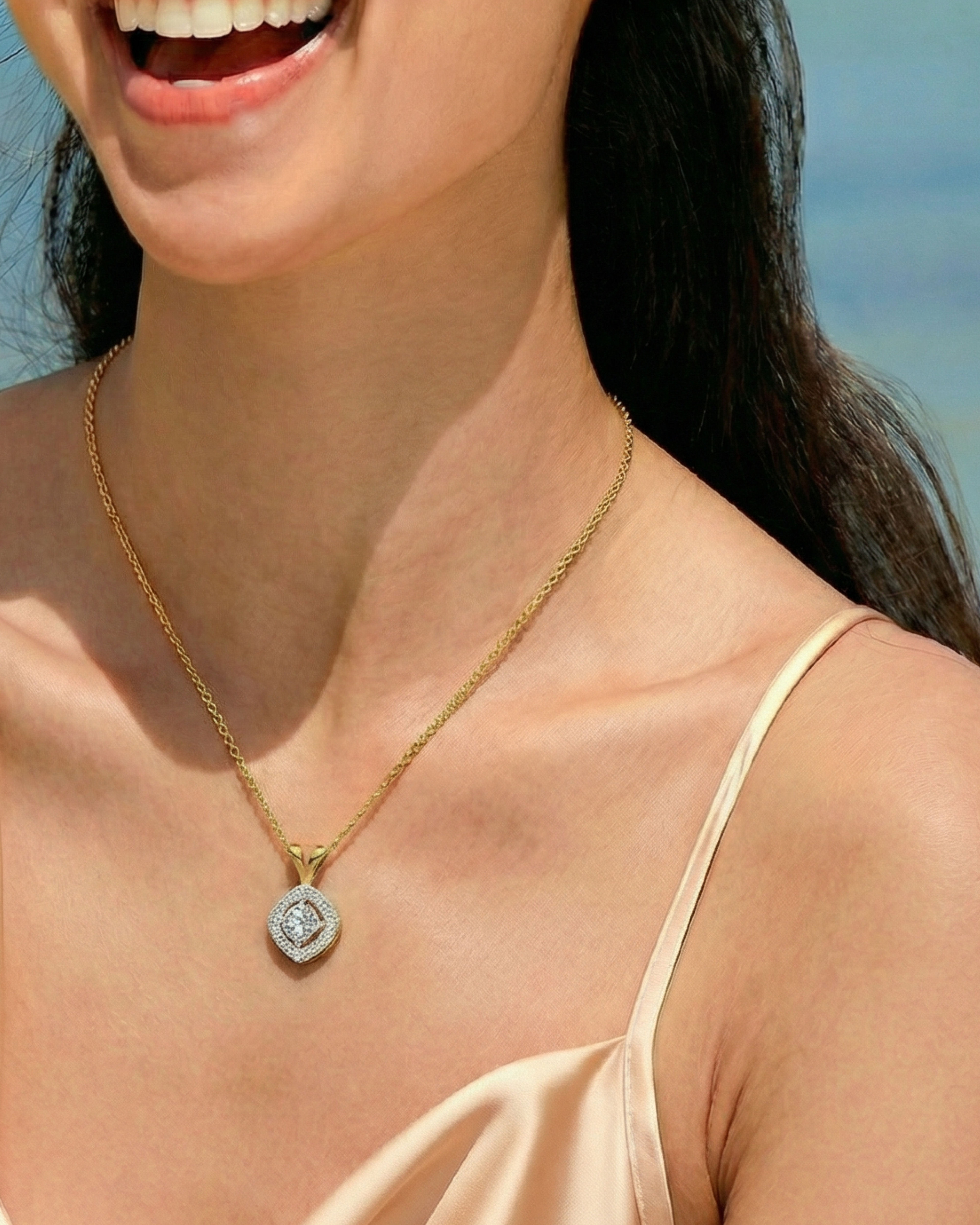
Most investment jewellery isn't an investment at all. Here's what actually holds value, and where Ethera’s lab grown diamond jewellery fits in.
If you're buying jewellery purely as an investment, the uncomfortable truth is that most pieces won't make you money. In fact, many lose value the moment you walk out of the store. The better question isn't whether jewellery is an investment. It's whether you're buying something that gives you value while you own it.
That's where the conversation gets interesting.
For decades, jewellery has been sold using two different promises. The first is emotional: a piece that marks a milestone, a relationship, or a personal achievement. The second is financial: the suggestion that what you're buying today will somehow become more valuable tomorrow.
The emotional promise is often true. The financial one is usually much more complicated.
The reality is that most jewellery purchases sit somewhere between consumption and value preservation. Understanding the difference can save you a significant amount of money and help you buy pieces you'll actually feel good about wearing years from now.
Most investment jewellery doesn't behave like an investment
Most jewellery does not appreciate in value the way stocks, businesses, real estate, or other productive assets can.
When a jeweller talks about investment jewellery, they're often referring to the intrinsic value of the materials inside the piece. Gold has an internationally recognised market price. Diamonds have a resale market. Precious metals and gemstones carry value because they're scarce and desirable.
The problem is that the retail price you pay includes much more than raw materials.
You're paying for design, branding, labour, packaging, marketing, retail overhead, and margins. The moment you attempt to resell the piece, those costs disappear.
Imagine purchasing a gold necklace for ₹1 lakh. A large portion of that price may consist of making charges and retail markups. If you sell it the next day, a buyer is unlikely to reimburse those costs. They're interested primarily in the underlying gold content.
The same principle applies to most diamond jewellery. What feels like an investment at purchase often behaves more like a luxury consumption item when it comes time to sell.
That's not necessarily a problem. The issue begins when jewellery is marketed as something it rarely becomes.
The difference between investment jewellery and value retention
The difference between investment jewellery and value retention is that an investment is expected to grow, while value retention simply means preserving some of what you paid.
This distinction changes how you evaluate a purchase.
A share in a growing company can generate profits. Real estate can produce rental income. A business can create cash flow. These assets produce economic value over time.
Jewellery generally doesn't.
What jewellery can do is preserve purchasing power through its material value. Gold is particularly notable because it has maintained demand across centuries and cultures. This means gold jewellery often retains a portion of its worth even when fashion trends change.
That doesn't mean every gold piece is a great financial decision.
Heavy making charges, intricate designs, and premium branding can significantly affect resale outcomes. Two pieces containing the same amount of gold may have very different purchase prices, yet similar scrap values.
If you're thinking practically, value retention is a far more useful framework than investment potential.
Gold jewelry for investment is often misunderstood
Gold jewelry for investment is frequently confused with investing in gold itself.
Physical gold jewellery includes craftsmanship costs that don't always translate into future resale value. When investors buy gold for purely financial reasons, they often choose gold bars, coins, or financial gold instruments because these minimise additional costs.
Jewellery serves a different purpose.
You get to wear it. You enjoy it. It becomes part of your life. That's a benefit gold bars sitting in a locker can't provide.
This means the question shouldn't be whether jewellery is the most efficient way to invest in gold. It usually isn't.
Instead, ask whether you're comfortable paying a premium for something that combines personal enjoyment with some degree of underlying material value.
For many people, the answer is yes.
The mistake happens when enjoyment is presented as investment performance.
Where diamonds fit into the conversation
Diamonds have historically been marketed as assets, but their resale reality is often very different from their retail presentation.
Unlike gold, there isn't a universally visible daily market price that consumers can easily reference. Diamond pricing depends on multiple factors including cut, colour, clarity, carat weight, certification, and market demand.
The result is a resale market that can be difficult for ordinary buyers to navigate.
Many people are surprised to discover that diamond jewellery often resells for substantially less than its original retail price. This isn't because the diamonds aren't real or valuable. It's because retail markups, manufacturing costs, and dealer margins don't necessarily transfer into the secondary market.
The highest-value diamonds in the world can appreciate under specific circumstances, particularly rare stones with exceptional provenance. Most consumer diamond jewellery doesn't operate in that category.
For the average buyer, diamonds are better viewed as luxury purchases rather than financial investments.
Why lab grown diamond jewellery changes the value equation
Lab grown diamond jewellery offers a different type of value because it separates personal enjoyment from speculative investment expectations.
Lab grown diamonds are real diamonds that are chemically, physically, and visually identical to mined diamonds. The difference is that they're created in a controlled environment rather than extracted from the earth.
This changes the economics dramatically.
Because production is more efficient, buyers can often choose larger stones, higher specifications, or better designs for the same budget. Instead of paying a premium based on rarity narratives, you're paying primarily for beauty, craftsmanship, and wearability.
Here's how it works:
Factor | Mined Diamond Jewellery | Lab Grown Diamond Jewellery |
Diamond Origin | Extracted from the earth | Created in a controlled environment |
Chemical Composition | Diamond | Diamond |
Visual Appearance | Diamond | Diamond |
Typical Budget Efficiency | Lower | Higher |
Focus of Purchase | Luxury and symbolism | Luxury, symbolism, and value optimisation |
This doesn't mean lab grown diamond jewellery is an investment asset. It means you're often getting more jewellery for the same money.
For many modern buyers, that's a far more compelling proposition.
What actually matters when you're trying to get value
Value in jewellery comes from buying something you'll genuinely enjoy wearing for years. This sounds obvious, yet it's surprisingly easy to lose sight of.
Many purchases are driven by assumptions about future worth rather than present usefulness. The irony is that the most satisfying jewellery purchases tend to be the ones people wear repeatedly, not the ones stored away waiting for appreciation that may never come.
When evaluating value, consider:
Material quality
Craftsmanship
Certification
Wearability
Personal significance
Cost relative to alternatives
An IGI certificate that Ethera, for example, provides independent verification of a diamond's characteristics. IGI stands for International Gemological Institute, one of the world's largest diamond certification organisations. Certification helps you understand exactly what you're purchasing and makes quality comparisons easier.
These factors often matter more than speculative resale assumptions.
A ring worn every day for ten years can deliver enormous personal value regardless of what someone else might pay for it later.
Buying jewellery with clear eyes is the smartest investment of all
Buying jewellery with realistic expectations almost always leads to better decisions.
When you stop treating jewellery like a stock portfolio, you can focus on what it actually offers: beauty, craftsmanship, self-expression, celebration, and lasting memories.
That's where lab grown diamond jewellery has found its place with a growing number of buyers. Rather than chasing uncertain future appreciation, they're choosing pieces that maximise quality, design, and everyday enjoyment today.
If you're looking for a lab grown diamond solitaire ring, a pair of diamond studs, or a meaningful milestone piece, Ethera's collection is a good place to start. The focus isn't on promising future profits. It's on creating jewellery you'll genuinely want to wear.
And that's often where the best value lives.
Frequently Asked Questions
Is lab grown diamond jewellery a good investment?
Not in the traditional financial sense. Lab grown diamond jewellery is best viewed as a luxury purchase that offers strong value for money. Because lab grown diamonds are real diamonds, you receive the same visual beauty and durability while often paying significantly less than you would for a comparable mined diamond.
What is the difference between investment jewellery and regular jewellery?
The difference is expectation. Investment jewellery is marketed with the idea that it may increase in value, while regular jewellery is primarily purchased for wear, enjoyment, and personal meaning. In reality, most jewellery retains some value but does not consistently generate investment-like returns.
Is gold jewelry for investment better than diamond jewellery?
Gold jewelry for investment generally retains value more predictably because gold has a widely recognised market price. Diamond jewellery can be harder to resell because pricing depends on several quality factors. Neither should be viewed as a guaranteed wealth-building asset.
Does lab grown diamond jewellery have certification?
Yes, many high-quality lab grown diamonds such as Ethera’s are independently certified. An IGI certificate confirms characteristics such as cut, colour, clarity, and carat weight. This allows you to compare diamonds objectively and understand exactly what you're purchasing.
Do lab grown diamonds hold value?
Lab grown diamonds can retain some value, but they shouldn't be purchased with expectations of significant appreciation. Their strongest advantage is that they allow buyers to access larger or higher-quality diamonds for the same budget, creating better immediate value.
Are lab grown diamonds real diamonds?
Yes, lab grown diamonds are real diamonds. They have the same chemical composition, physical properties, and visual appearance as mined diamonds. The only difference is origin: they're created in a controlled environment rather than extracted from the earth.
How can I get the best value when buying diamond jewellery?
Start by focusing on quality, certification, craftsmanship, and wearability rather than resale potential. Compare specifications carefully, verify certification through organisations such as IGI, and choose a piece you'll genuinely enjoy wearing for years. That's where most long-term value comes from.