
Why Indian women are spending less on weddings and more on themselves
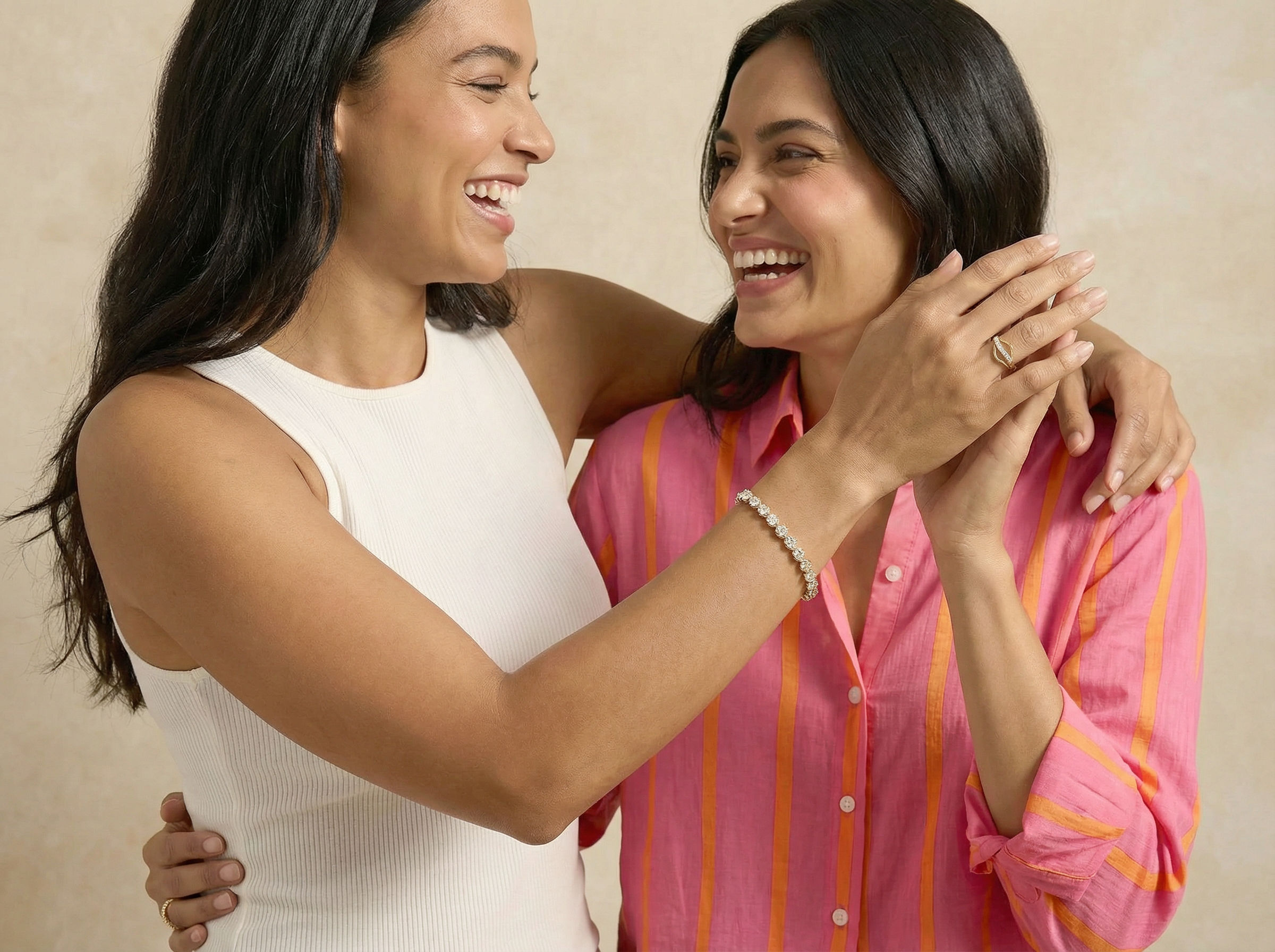
Women buying jewellery for themselves is reshaping Indian jewellery habits. Ethera looks at why more women are choosing self-gifting over wedding spend.
For a growing number of women buying jewellery for themselves, the big jewellery purchase isn’t waiting for a wedding anymore. Indian women are increasingly choosing pieces for birthdays, promotions, first salaries, ordinary Tuesdays and sometimes for no reason beyond, I like it and I can buy it.
That doesn’t mean weddings have suddenly stopped mattering. Far from it. What’s changing is the idea that your largest jewellery moments must belong to marriage.
For generations, jewellery buying in India was built around milestones that involved somebody else: a wedding, an anniversary, a child, a family occasion. Now there’s another occasion competing for space in the jewellery box.
You.
And that small shift changes almost everything about what women buy, how much they wear it and what they expect from fine jewellery.
Women buying jewellery for themselves are changing what jewellery is for
Women buying jewellery for themselves are moving fine jewellery from the category of ceremonial possession into something they can actually wear as part of everyday life.
The old jewellery calendar was fairly predictable. Wedding approaching? Buy jewellery. Major anniversary? Buy jewellery. Family function? Bring out jewellery that was bought years ago.
Self-purchasing works differently because there’s no committee.
You don’t necessarily need your mother to approve the design, your aunt to declare it “substantial enough” or a future outfit to justify it. You’re choosing according to your own wardrobe, budget and taste.
That changes the design brief.
A woman buying something for her wedding may ask, “Will this work with my lehenga?”
A woman buying it for herself is more likely to ask, “Will I actually wear this?”
That question is quietly reshaping jewellery trends among Indian women.
Heavy sets still have their place, but smaller diamond earrings, bracelets, stackable rings, pendants and pieces that move easily between a kurta, office shirt and dinner dress suddenly make much more sense.
The jewellery isn’t waiting in a locker for its annual performance review. It has a job.
The wedding jewellery budget is no longer the only big jewellery budget
Modern Indian women are increasingly spreading jewellery spending across different life stages instead of concentrating every significant purchase around marriage.
A wedding used to create a fairly obvious financial logic: save for years, buy several important pieces at once and treat them as jewellery for the future.
But if you’re earning your own salary at 24, 27 or 31, waiting until marriage to buy the pieces you genuinely want can start to feel arbitrary.
Your first meaningful purchase might happen after a promotion.
Then another when you move cities.
Another after a particularly good year.
Another because you’ve worn the same hoops approximately 173 times and would like some new company for them.
That’s the interesting change in modern Indian women’s jewellery buying habits. Jewellery spending hasn’t disappeared. The timing has fragmented.
Instead of one giant jewellery moment, there can be several smaller ones that actually correspond to your own life.
Earlier jewellery mindset | Emerging jewellery mindset |
Save major purchases for weddings | Buy across different personal milestones |
Jewellery chosen for traditional occasions | Jewellery chosen around everyday wardrobe |
Family heavily influences the purchase | Personal taste plays a larger role |
Bigger often feels more valuable | Wearability can matter as much as size |
Jewellery is preserved for later | Jewellery is expected to be worn now |
The shift isn’t anti-wedding. It’s simply pro-more-than-one-day.
Financial independence has changed who gets the final say
Jewellery for independent women increasingly reflects the taste of the person wearing it because she may also be the person paying for it.
That sounds obvious until you consider how unusual it is historically.
When someone else funds a purchase, their opinion naturally enters the room. When it’s your salary, the conversation becomes much shorter.
You can buy white gold even if everyone in your family prefers yellow. You can choose a smaller diamond with an unusual setting rather than a heavier traditional design. You can spend on earrings because you wear earrings constantly, instead of buying another necklace because necklaces are what a jewellery collection is apparently “supposed” to contain.
Financial independence doesn’t automatically mean spending more. Often, it makes women more selective.
When the money is yours, “Will I wear it?” becomes a remarkably efficient filter.
That’s also why self gifting jewellery can feel different from receiving jewellery. A gift carries someone else’s memory of you. Something you buy yourself records your own judgement at a particular point in your life.
Your first diamond bought from your own salary can matter even if nobody else knows when you bought it.
Especially then.
Self gifting jewellery has become its own kind of milestone
Self gifting jewellery gives women a way to mark personal achievements without needing a socially recognised occasion to validate the purchase.
There’s a slightly strange hierarchy attached to celebrations.
Getting married? Jewellery makes sense.
Completing your master’s degree? Maybe dinner.
Getting promoted after two difficult years? Cake in the office if someone remembers.
Paying off a loan, moving into your first apartment, starting a business or simply reaching a salary that once seemed impossible don’t come with established jewellery traditions.
So women are making their own.
And sometimes there isn’t even a milestone. That’s perhaps the more interesting development.
You saw a ring. You loved the ring. You could comfortably buy the ring.
End of case.
Self-purchasing removes the idea that jewellery needs an emotional permission slip.
For brands, that means the language around jewellery has to change too. If every diamond is described as something for your engagement, wedding day or anniversary, you’re ignoring the woman who wants to wear one to a Monday morning meeting.
Everyday wear is influencing jewellery trends among Indian women
Jewellery trends among Indian women are increasingly influenced by pieces that work across office wear, Indian clothing, weekends and evenings rather than a single formal occasion.
If you’re buying jewellery yourself, cost-per-wear becomes surprisingly persuasive.
A spectacular necklace worn twice in five years may be emotionally valuable, but a diamond bracelet worn three days a week occupies a completely different place in your life.
This is one reason smaller pieces aren’t necessarily viewed as lesser purchases anymore.
A slim diamond ring can sit beside a watch. Studs can survive your 9 a.m. meeting, 7 p.m. dinner and the kurta you put on the next morning. A pendant doesn’t demand that the rest of your outfit rise to the occasion.
The jewellery adapts to you rather than requiring you to build an event around it.
That has opened the door for more experimentation too. Women can mix yellow and white gold, stack rings purchased years apart or wear a diamond piece alongside costume jewellery without worrying whether everything belongs to a matching “set”.
Your jewellery box starts looking less like a coordinated wedding trousseau and more like a record of your taste.
Which is much more interesting.
Lab grown diamonds have made the self-purchase equation different
Lab grown diamonds give women another route into fine jewellery because they are real diamonds made in a controlled environment rather than extracted from the earth.
Chemically and visually, lab grown diamonds are identical to mined diamonds. The difference is their origin.
That distinction matters when you’re buying for yourself because you’re often evaluating the piece without the expectations attached to a traditional family purchase.
You may care more about design, diamond size, how often you’ll wear it and whether the price makes sense for your current life.
Lab grown diamonds can make those calculations more flexible.
Instead of waiting several years for the one “important” diamond purchase, you might choose pieces that fit into your actual wardrobe now.
That’s where brands such as Ethera naturally sit in this shift. Its lab grown diamond rings for women, for instance, make more sense when you stop thinking of diamond rings as something another person is supposed to choose for you.
A ring can mean engagement. It can also mean payday.
Modern Indian women’s jewellery buying habits are becoming more personal
Modern Indian women’s jewellery buying habits are being shaped less by a universal checklist and more by individual lifestyle, taste and frequency of wear.
There used to be a recognisable sequence to building a jewellery collection. Certain earrings. Certain bangles. Certain necklaces. Pieces you were expected to own because they formed part of a “complete” collection.
There’s nothing wrong with that collection if it happens to be yours.
The important part is the if.
You might prefer six rings and almost no necklaces. Someone else might wear the same diamond studs for a decade and spend everything else on bracelets. Another woman may mix pieces inherited from her grandmother with something she bought online after seeing it at midnight.
None of those jewellery boxes needs fixing.
When you’re choosing for yourself, completeness stops being the goal. Recognition becomes more important.
You open the box and everything inside should feel unmistakably yours.
Spending on yourself doesn’t mean weddings matter less
Choosing to spend more on yourself doesn’t necessarily mean Indian women value weddings less; it means marriage no longer has to absorb every major jewellery purchase.
This distinction matters because cultural shifts are rarely clean replacements.
A woman can want a beautiful wedding necklace and buy herself diamond earrings six months before the wedding.
She can enjoy receiving jewellery from her family and still prefer choosing some pieces herself.
She can wear traditional jewellery at Diwali and a tiny diamond pendant to work the following morning.
The new behaviour doesn’t need to destroy the old one to be meaningful.
It simply widens the story.
For decades, jewellery has been exceptionally good at remembering relationships. Who gave you something, when you received it, which family occasion it belonged to.
Now it can remember independence too.
The salary you negotiated.
The birthday you spent exactly how you wanted.
The year you finally stopped asking whether buying something beautiful for yourself required a better reason.
That may be the biggest change of all.
The modern Indian jewellery box isn’t necessarily getting smaller because wedding spending is changing. It’s becoming more personal because the woman wearing the jewellery increasingly gets to decide what deserves a place inside it.
And sometimes, “I wanted it” is the whole occasion.
FAQs
Why are more Indian women buying jewellery for themselves?
More Indian women are buying jewellery for themselves because greater financial independence gives them more control over when, why and what they purchase. Instead of waiting for weddings or anniversaries, they’re increasingly choosing fine jewellery around personal milestones, everyday wear and individual taste.
Is self gifting jewellery becoming common in India?
Yes, self gifting jewellery is becoming a more visible part of how Indian women shop, particularly among women earning and managing their own money. A jewellery purchase may now mark a promotion, birthday, first salary or personal achievement rather than depending entirely on traditional gifting occasions.
What jewellery do independent women usually buy for themselves?
Jewellery for independent women often leans towards pieces that can be worn frequently, such as diamond studs, rings, pendants, bracelets and lighter everyday designs. The exact category matters less than wearability because self-purchasers can choose according to their own routine rather than building a conventional jewellery collection.
How are jewellery trends among Indian women changing?
Jewellery trends among Indian women are becoming more individual and everyday-focused, with greater interest in versatile pieces, mixed metals, stacking and designs that work with both Indian and Western wardrobes. Women are also increasingly choosing jewellery based on personal style instead of saving their most significant purchases exclusively for weddings.
Why are women spending less of their jewellery budget on weddings?
Some women are spreading their jewellery spending across several years and personal milestones rather than reserving most of it for marriage. This allows them to buy pieces they can enjoy before and after a wedding, particularly designs that fit their everyday wardrobe and current lifestyle.
Are lab grown diamonds good for women buying jewellery for themselves?
Yes. Lab grown diamonds can suit self-purchasers because they are real diamonds, chemically and visually identical to mined diamonds, but created in a controlled environment. They give you more flexibility when comparing design, diamond size and budget, particularly when you want jewellery you’ll wear regularly rather than reserve for one occasion.
Does buying your own jewellery make it less meaningful?
No. Jewellery you buy yourself can carry a different kind of meaning because it can represent a personal decision, achievement or stage of independence. A ring bought after your first promotion may hold a memory just as strongly as jewellery received for a wedding or anniversary.