
Heart Jewellery That Feels Personal, Not Predictable
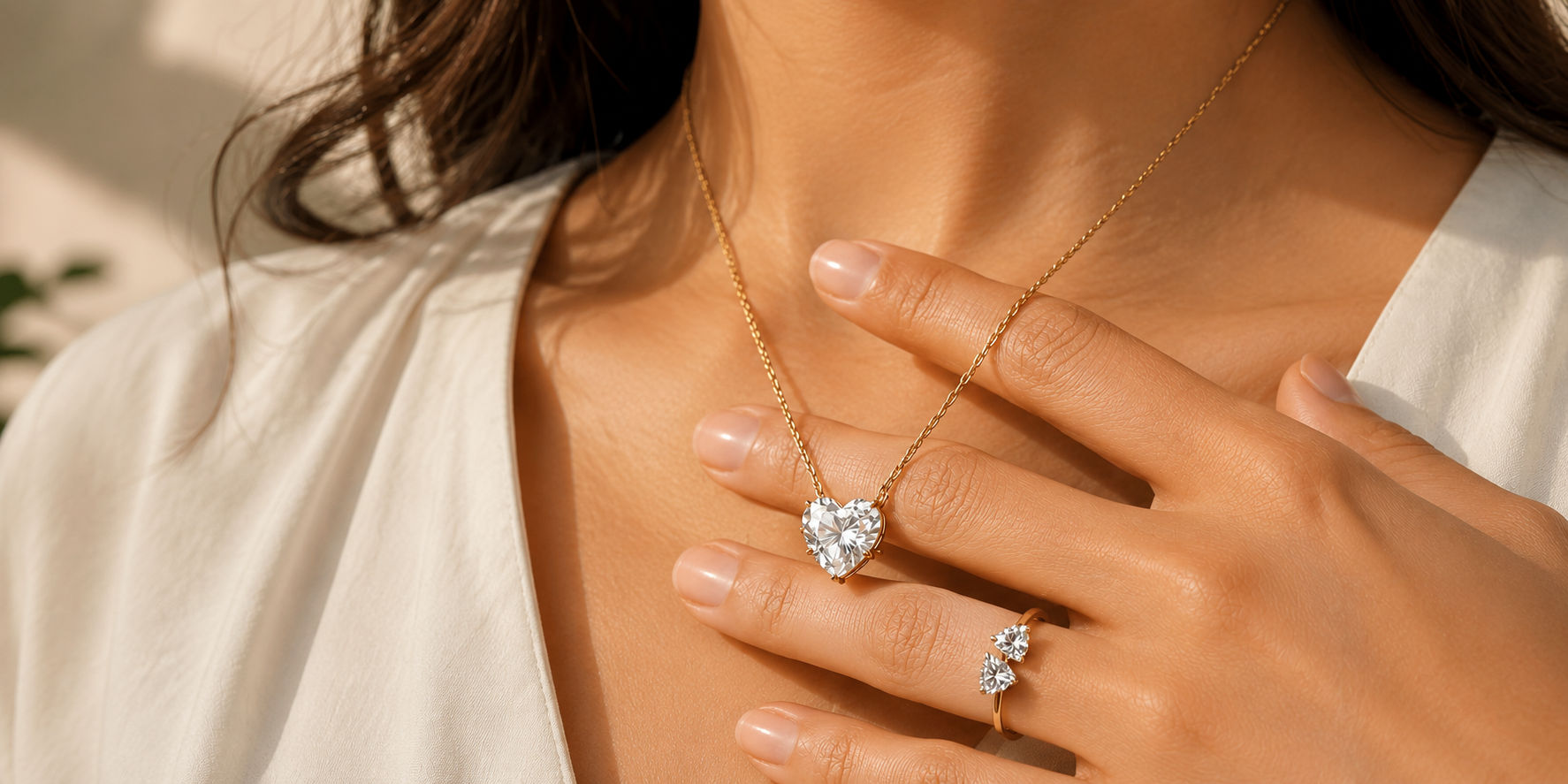
Heart jewellery doesn’t have to be sugary, obvious or saved for Valentine’s Day. When the shape is simplified, broken apart or worked subtly into a design, it can feel personal without announcing your relationship status to the room.
The problem was never really the heart. It was what jewellery design kept doing to it.
Too many pieces combined the motif with red stones, elaborate inscriptions, matching gift boxes and enough sentiment to make the wearer feel as though she’d wandered into the final scene of a romantic comedy. A heart surrounded by more hearts rarely leaves much room for personal interpretation.
Ethera’s approach is more subtle. The shape appears through diamond arrangements, negative space, interlocking lines and small details that reveal themselves gradually.
Why heart jewellery can sometimes feel cringe
Heart jewellery feels predictable when the symbolism is louder than the design.
The heart is one of the most instantly recognisable shapes in jewellery. That gives it emotional clarity, but it can also make it difficult to use without slipping into cliché. Add bright red enamel, an oversized outline and the word “love”, and the meaning becomes so specific that the wearer has little left to bring to it.
Thoughtful jewellery works differently. It can hold meaning without explaining it to everyone who looks at it.
A heart may remind you of your partner, but it might just as easily represent your sister, your daughter, a friend, a place or a version of yourself you worked hard to become. The jewellery doesn’t need to tell anyone which.
When a heart feels obvious | When a heart feels considered |
The motif is oversized and literal | The shape is reduced or abstracted |
Every detail repeats the same message | One heart detail anchors the design |
The piece relies on occasion-led symbolism | The piece works with ordinary clothes |
The design looks made only for gifting | You’d happily choose it for yourself |
The heart dominates the wearer | The heart becomes part of her style |
This distinction is why the same motif can look juvenile in one design and remarkably polished in another.
How little heart jewellery becomes modern
Little heart jewellery feels modern when designers treat the heart as a shape rather than a slogan.
A heart is essentially a composition of curves, symmetry and a central point. Once those elements are separated, tilted or combined with other forms, the motif becomes much more versatile.
An open heart uses negative space, meaning the empty area intentionally left inside or around a design. This reduces visual weight and makes the piece feel lighter. An asymmetric heart interrupts the familiar balance of the shape, while an interlocking design can suggest connection without looking like traditional couple jewellery.
Diamond placement changes the mood too. A full pavé heart creates continuous sparkle, while two strategically placed diamonds can imply the outline without tracing every edge. Marquise and pear-shaped diamonds are particularly useful because their pointed ends and rounded sides can be arranged into subtle heart-like compositions.
Ethera’s Marquise Drift Heart Pendant, for example, uses elongated diamond shapes to build movement into the motif rather than relying on a plain, solid outline. The Twin Bloom Heart Pendant and Hearts Entwine Pendant also approach the shape through layered or connected forms.
The result still has feeling. It simply has better posture.
The heart designs that feel easiest to wear
The easiest heart designs to wear are compact, visually clean and capable of blending into an existing jewellery wardrobe.
You don’t need to avoid recognisable hearts completely. A small heart can look charming when its scale feels deliberate and the rest of the piece is restrained.
Heart design | Why it feels contemporary | Best worn as |
Open outline | Light, minimal and easy to layer | |
Diamond cut | Lets sparkle define the shape | |
Interlocking hearts | Suggests connection without text | |
Asymmetric heart | Feels less formal and expected | |
Hidden heart detail | Meaning is visible mainly to the wearer | |
Statement piece | Clean when the setting remains simple | Ring or solitaire pendant |
Heartfelt dew earrings turn several diamonds into a compact motif, allowing the stones to create the shape instead of surrounding a large metal heart, while the Serene curve pendant uses the heart as part of a broader abstract design rather than treating it as a decorative badge.
These pieces work because they don’t require a themed outfit. They can sit beside your watch, plain gold hoops or favourite everyday rings without making the rest of your jewellery look as though it missed a memo.
A heart shape nose stud can be surprisingly understated
A heart shape nose stud works best when the motif is tiny enough to read first as a point of light and only later as a heart.
A nose stud occupies very little visual space, so even familiar shapes take on a different character at that scale. From a distance, a diamond design may look like a subtle flash. The heart becomes visible only when someone is closer, making it feel more like a personal detail than a declaration.
The setting is crucial. A heavy metal border can make a small motif appear bulky, while carefully placed diamonds or a fine outline keep it delicate. The point of the heart should be softened so it doesn’t catch easily or feel sharp against the skin.
When choosing a nose stud, look beyond the front-facing shape. The post style, fit and method of fastening should suit your piercing and comfort preferences. A piece you wear regularly should sit securely without constantly rotating or projecting too far from the nose.
Heart jewellery doesn’t have to be romantic
A heart can represent affection without being limited to romantic love.
That may sound obvious, yet much of the category is still marketed as though hearts exist solely between couples on anniversaries. In real life, jewellery carries far more varied stories.
A small heart pendant can mark a friendship that survived three cities and several terrible haircuts. A pair of studs can be a gift from a parent to a daughter. A heart ring can celebrate recovery, independence or the decision to start choosing things simply because you like them.
It can also mean nothing deeper than “this looked good on my hand”. That’s allowed.
The most thoughtful gift doesn’t force a ready-made story onto the recipient. It leaves enough openness for her to decide what the piece represents. This is particularly useful when buying for sisters, close friends, mothers or daughters, where romantic design language can feel misplaced.
Who it’s for | A less predictable heart-jewellery idea |
A close friend | |
A sister | |
A mother | |
A daughter | |
Yourself | |
A partner | A design linked to a private memory rather than Valentine’s Day |
Meaning becomes more convincing when it comes from the relationship, not from the product description.
How to style heart jewellery without making it look themed
Heart jewellery looks most sophisticated when you style it as an ordinary part of your jewellery wardrobe rather than building an entire look around the motif.
Start with contrast. A curved heart pendant can sit well beside a sharper chain or geometric earrings. Heart studs look more grown-up when worn with a clean blazer, oversized shirt or simple kurta rather than an outfit full of equally romantic details.
Mixing motifs also helps. There’s no requirement to pair a heart pendant with heart earrings and a heart bracelet. In fact, not doing so usually creates a stronger look.
Your main heart piece | Pair it with |
Heart pendant | Plain hoops or diamond studs |
Heart studs | A fine chain with no pendant |
Heart ring | Slim bands or one structured ring |
Heart bracelet | A watch or simple bangle |
Heart shape nose stud | Minimal earrings or a bare neckline |
Heart-shaped solitaire | Clean, unembellished surrounding jewellery |
You can mix metals too. A rose-gold heart doesn’t require every other piece to be rose gold. Combining it with yellow or white gold can make the motif feel collected over time rather than purchased as a matching set.
Scale matters more than strict coordination. If the heart piece is detailed, keep its closest neighbour simpler. If it’s tiny, you can afford to layer it.
How to choose a heart-shaped diamond
A well-cut heart-shaped diamond should have a clearly defined cleft, balanced lobes and a point that sits in line with the centre of the stone.
The cleft is the inward curve at the top of the heart. The lobes are the two rounded sections on either side. If they’re uneven, the diamond may appear tilted even when it’s set correctly.
Shape preference is subjective, but extremely narrow heart diamonds can look more like arrowheads, while very broad stones may lose definition. The surrounding setting also changes how the outline appears. A halo can increase the visible size, while a fine three-prong setting keeps attention on the diamond itself.
Because the heart is a fancy diamond shape, meaning any shape other than round brilliant, its cut quality isn’t expressed through one universal cut grade in the same way as a standard round diamond. This makes the visual outline, symmetry and light return particularly important when comparing stones.
A heart-shaped centre diamond already has plenty of personality. It rarely needs an elaborate band, multiple halos and decorative side motifs simultaneously. Give the shape some breathing room.
Why lab grown diamonds suit heart designs
Lab grown diamonds suit heart jewellery because they allow the design to focus on proportion, shape and visible sparkle without changing what the diamonds are.
Lab grown diamonds are real diamonds with the same chemical, physical and optical properties as mined diamonds. The difference is origin: they’re created in a controlled environment rather than extracted from the earth. Ethera uses lab grown diamonds across its design-led jewellery collections, with IGI certification and BIS-hallmarked gold.
In heart jewellery, this opens up more design possibilities. You might choose a defined heart-shaped centre stone, a broader diamond cluster or several fancy-cut diamonds arranged into an abstract motif.
Ethera’s Amora Heart Ring places the heart clearly at the centre of the design, while the Piece of Heart Round Bangle works the motif into wristwear. Wagging Hearts Earrings offer a more playful interpretation for someone who wants visible movement rather than a minimal stud.
The choice isn’t between meaningful jewellery and modern jewellery. Good design lets you have both.
The real test is whether you’d buy it for yourself
Heart jewellery stops feeling cringe when it no longer depends on being given to you.
You should be able to look at a heart ring, pendant or nose stud and want it for its shape, proportion and the way it sits on you. Any emotional meaning can arrive afterwards.
That’s the more interesting version of the heart. Not a compulsory symbol of romance, but a familiar shape made personal through how you choose it, wear it and interpret it.
Ethera’s heart designs range from recognisable diamond motifs to quieter, more abstract pieces. Pick the one that feels least like a message written for everyone and most like a detail meant for you.
Frequently Asked Questions
How do you wear little heart jewellery without looking childish?
Choose little heart jewellery with clean lines, restrained proportions and limited decorative detail. Open outlines, small diamond clusters and asymmetric motifs tend to feel more modern than large solid hearts. Pair the piece with simple jewellery and structured clothing rather than repeating the heart motif across your entire look.
Is a heart shape nose stud suitable for everyday wear?
A heart shape nose stud can work for everyday wear when it’s small, lightweight and smoothly finished. The design should sit close to the nose without projecting sharply or rotating constantly. Check that the post and fastening suit your piercing, particularly if you plan to wear it for long periods.
Is heart jewellery only meant for romantic gifts?
No, heart jewellery can represent any kind of affection, memory or personal connection. It can be gifted to a friend, sister, mother or daughter, or bought for yourself without marking an occasion. A less literal design leaves the wearer free to give the heart her own meaning.
What type of heart jewellery looks the most modern?
Open hearts, asymmetric forms, interlocking lines and diamond-built motifs usually look the most modern. These designs use the structure of the heart without turning it into a large decorative symbol. Mixed diamond shapes and negative space can also make the familiar motif feel more architectural and less predictable.
Can heart jewellery be worn after Valentine’s Day?
Yes, heart jewellery can be worn throughout the year when the design isn’t dependent on Valentine’s Day styling. Small heart studs, subtle pendants and diamond rings work naturally with everyday clothes. Treat the heart as you would any other geometric or organic motif rather than saving it for romantic occasions.
Are lab grown diamonds real diamonds?
Yes, lab grown diamonds are real diamonds with the same chemical, physical and optical properties as mined diamonds. They’re created in a controlled environment rather than extracted from the earth. They can be cut into heart shapes or arranged into heart motifs just as mined diamonds can.
What should you check when buying a heart-shaped diamond?
Check that the two rounded lobes appear balanced, the upper cleft is clearly defined and the bottom point aligns with the centre. The diamond should return light evenly without large dark areas. Since heart shapes vary considerably, compare their actual appearance rather than choosing through carat weight alone.
Can Ethera customise a heart jewellery design?
Yes, Ethera offers jewellery customisation for customers who want to adapt an existing idea or create a new piece. You can discuss the jewellery type, gold purity, gold colour, diamond quality and design details. This can be useful for creating a smaller heart nose stud or a more abstract motif.