
Why you should stop saving your good jewellery for special occasions, and what to wear today instead
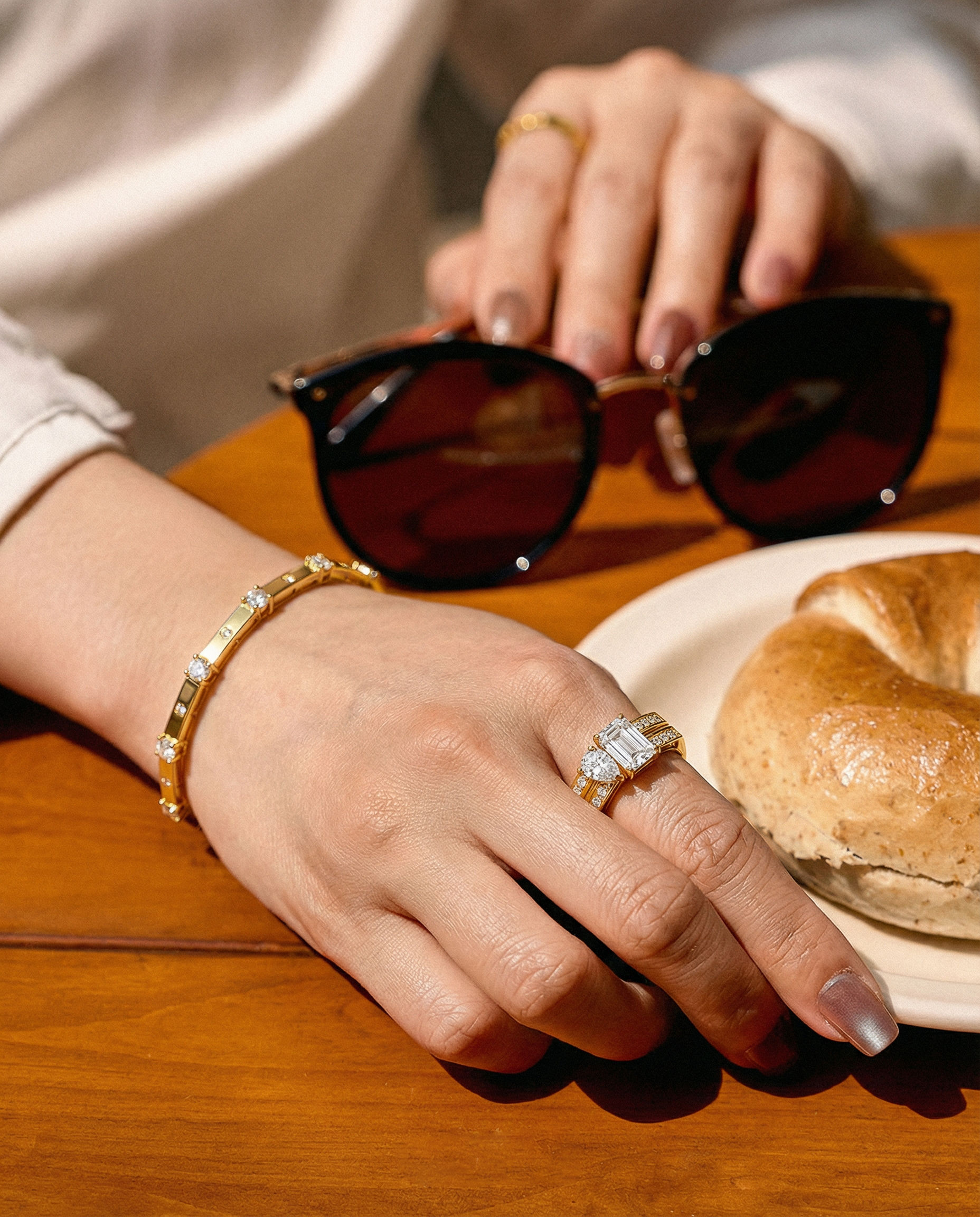
Your good jewellery won’t become more meaningful by spending most of its life inside a box. The best everyday jewellery is the jewellery you love enough to wear on an ordinary workday, with yesterday’s kurta, an unfinished coffee and absolutely no dinner reservation.
Many of us were taught that fine jewellery belongs to weddings, festivals and the occasional very fancy meal. Diamonds came out when the silk did. Everything else stayed safely wrapped in tissue, waiting for a day important enough to deserve it.
But jewellery doesn’t gather memories while sitting in a locker. It becomes yours through repetition. The ring you twist during a difficult meeting, the pendant that appears in every holiday photograph and the earrings you put on without checking the mirror will eventually mean more than the piece you wore once because the invitation said “formal”.
Everyday jewellery isn’t wasted on ordinary days
Everyday jewellery earns its place by being worn regularly rather than being reserved for rare occasions.
The idea of “saving” something good usually begins with care. You don’t want to damage it, lose it or make it feel less special. Yet when that instinct becomes a habit, beautiful jewellery slowly turns into something you own but don’t really live with.
Wearing a diamond pendant to work doesn’t reduce its importance. It gives it a history. It becomes part of the presentation you were nervous about, the promotion lunch, the first day in a new city and the Tuesday when nothing dramatic happened but you felt particularly good in your clothes.
There’s also a quiet confidence in wearing fine jewellery without waiting for permission from the calendar. You’re not dressing for an audience or proving the day is significant. You simply like the piece, so you’ve put it on.
That may be the most sensible definition of personal style.
The “special occasion” rule is mostly inherited
The habit of reserving fine jewellery often comes from a time when jewellery was heavier, more ceremonial and less suited to daily life.
Traditional sets were frequently bought for weddings, family functions and milestone events. They were designed to be seen across a room and worn with clothing that could carry their scale. Naturally, they weren’t the pieces you reached for before catching the metro.
Modern fine jewellery works differently. Smaller diamonds, lighter settings and cleaner designs make it easier to wear valuable pieces without feeling overdressed. A slim diamond ring doesn’t need a lehenga behind it. A pair of studs doesn’t need an invitation.
The emotional rule, however, has been slower to change. You may own jewellery that fits your present-day wardrobe while still treating it according to old instructions.
There’s nothing wrong with keeping certain pieces ceremonial. A bridal necklace may genuinely belong to bigger occasions. The problem begins when every diamond, gold bracelet and carefully chosen ring gets classified as “too good” for real life.
At that point, special has quietly become inaccessible.
Jewellery for everyday wear should fit your actual routine
The right jewellery for everyday wear is comfortable, secure and easy to pair with the clothes you already own.
Start with your day rather than the jewellery box. Do you spend hours typing? Travel by public transport? Wear headphones? Carry a toddler? Change from office clothes into evening plans without going home?
Your routine will tell you what works.
Your usual day | Jewellery that fits naturally | What to avoid |
Long office hours | Studs, slim rings, a short pendant | Heavy earrings or rings that interfere with typing |
Frequent travel | Secure hoops, bezel-set pendants, close-fitting bracelets | Loose clasps and long chains that tangle |
Work-from-home days | Small earrings or one visible pendant | Pieces that feel fussy with relaxed clothes |
Social plans after work | Stackable rings, huggies, a tennis-style bracelet | Jewellery that only works with one outfit |
Hands-on work | Low-profile rings and secure earrings | High settings that catch on fabric |
Busy family days | Studs, short chains and smooth bangles | Long drops or delicate open designs |
Comfort isn’t a dull practical detail. It’s what decides whether you wear a piece forty times or four.
A ring that catches on every knit will eventually be left behind. Earrings that feel heavy by lunchtime won’t make it into your regular rotation. The best daily wear diamond jewellery has enough personality to feel considered and enough ease to disappear into your day.
Start with one piece rather than wearing the whole box
One well-chosen piece can make an ordinary outfit feel finished without making you look dressed for an event nobody else knows about.
This is especially useful when you’re trying to wear fine jewellery more often. You don’t need to go from bare ears to a full diamond stack by Monday morning. Choose one piece and let it do the work.
A pendant adds light near the face without changing the entire mood of an outfit. Stud earrings make even a plain shirt look intentional. A slim ring can become part of your hands rather than an accessory you consciously manage.
Once one piece feels normal, add another. Perhaps the studs stay constant while the ring changes. Perhaps the pendant becomes your daily base and a bracelet appears when the outfit needs more.
The point isn’t minimalism for its own sake. It’s removing the mental drama around wearing something valuable.
Fine jewellery becomes much easier to use once you stop treating every outing as a styling examination.
Everyday diamond earrings are the easiest place to begin
Everyday diamond earrings are usually the simplest fine jewellery pieces to wear regularly because they require little styling and don’t interfere with most routines.
Classic studs work because they sit close to the ear and move comfortably between western wear, kurtas, sarees and the clothes you put on when you’re officially not making an effort. They catch light without taking over your face.
Small huggies offer a little more presence. They sit close to the earlobe like compact hoops, which makes them easier to wear than larger designs. Bezel-set studs, where a metal rim surrounds the diamond, feel smooth and modern while offering extra protection around the stone.
You don’t have to choose the most neutral design available. Floral outlines, geometric clusters and tiny drops can still work daily when the scale is right.
Ethera’s lab grown diamond earrings include studs, huggies and compact drops designed for regular wear. The diamonds are IGI certified, and the gold is BIS hallmarked.
The useful question isn’t, “Will these match everything?” Very little matches literally everything. Ask whether they’ll work with most of what you wear and whether you’ll still find them interesting after the fifth outing.
A daily wear diamond pendant can replace the “special” necklace
A daily wear diamond pendant gives you visible sparkle without the weight or formality of a larger necklace.
The easiest designs sit around the collarbone on a fine chain. Solitaires feel clean and familiar, while small geometric, floral or symbolic pendants add more character without becoming difficult to style.
Chain length matters. A shorter chain usually works well with shirts, round necks and kurtas because the pendant remains visible rather than disappearing beneath the fabric. Slightly longer chains sit nicely over higher necklines but may move around more during the day.
You can also layer a fine diamond pendant with a plain gold chain. Keep some distance between the lengths so the two pieces don’t spend the afternoon becoming a tiny metallic puzzle.
Astra-style, celestial or initial-inspired designs make useful everyday choices because they carry a clear idea without demanding a particular occasion. Ethera’s broader lab grown diamond jewellery collection includes pendants alongside rings, earrings, bracelets and necklaces, so you can build around pieces you already wear.
Everyday rings should survive your hands, not just photograph well
Everyday rings need a secure setting, a comfortable profile and a design that works with how you use your hands.
A low-profile setting keeps the diamond closer to the finger, reducing the chance of it catching on sleeves, hair or bag straps. Bezel and flush settings are especially practical because more of the diamond’s edge is protected by metal.
Slim bands are easy to wear alone or stack with plain gold rings. Cluster rings give you more visible sparkle without relying on one raised centre stone. Eternity-style bands add a continuous line of diamonds, though full eternity designs can be harder to resize, so check the construction before buying.
Don’t dismiss a ring because it isn’t dramatic from every angle. Daily jewellery should look good while typing, holding a cup and existing at your side. It doesn’t spend the day posed under showroom lighting.
You can also move a dressier ring away from its expected context. Wear it with a crisp white shirt, a plain knit dress or a solid kurta. The contrast often makes the ring look more modern than pairing it with an equally elaborate outfit.
Bracelets and bangles work best when they don’t fight your watch
Everyday bracelets and bangles are easiest to wear when their shape, width and movement suit the watch or wristwear you already use.
A fine chain bracelet can sit beside a watch without making the wrist feel crowded. A slim diamond bangle creates a cleaner line and can be worn alone when you want the jewellery to be more visible. Tennis-style bracelets offer continuous sparkle, but secure clasps and proper sizing become particularly important for regular wear.
Leave a little breathing room between a watch and a delicate bracelet so metal surfaces don’t rub constantly. If you like stacking, combine pieces with different textures rather than piling several equally sparkly designs together.
Ethera’s everyday diamond bracelets are made with lab grown diamonds and pass a multi-stage quality process, including the brand’s stated quality checks.
A bracelet should move enough to feel comfortable, but not so much that it slides over your hand whenever you reach for something. Elegance loses some of its charm when you’re fishing it out of your sleeve every six minutes.
Lab grown diamonds make everyday sparkle easier to justify
Lab grown diamonds can make fine jewellery more accessible for regular wear because they usually offer more design or diamond presence within the same budget.
They’re real diamonds with the same chemical composition and visual properties as mined diamonds. They’re created in a controlled environment rather than extracted from the earth. This difference in origin often means you can choose a more distinctive design, additional stones or a larger-looking diamond without directing the entire jewellery budget towards one piece.
That flexibility matters when you’re building a wearable collection rather than buying a single ceremonial item.
A pair of diamond studs, a slim ring and a pendant may serve you more often than one elaborate necklace at a similar total spend. You gain more combinations, more use and fewer reasons to wait for a “proper” occasion.
The lower price relative to comparable mined diamonds doesn’t make lab grown diamonds disposable. They still need secure settings, thoughtful care and proper certification. Ethera works with IGI-certified lab grown diamonds and BIS-hallmarked gold across its jewellery.
You don’t need to make every piece look casual
Wearing good jewellery every day doesn’t mean flattening its personality until everything looks tiny and discreet.
A statement ring can work with a plain outfit. Diamond drop earrings can turn a simple black dress into the whole plan. A bold pendant can sit beautifully over a white T-shirt or monochrome kurta because there’s nothing else competing with it.
The trick is to create contrast.
When the jewellery is detailed, let the clothes stay uncomplicated. When the neckline is busy, move the sparkle to your hands or wrists. If the earrings are large, skip the necklace rather than trying to build a complete “set”.
You’re allowed to be slightly overdressed for coffee. The world will continue rotating.
What usually makes fine jewellery feel too formal isn’t the jewellery itself. It’s wearing several formal signals at once. Separate the piece from its expected companions and it often becomes surprisingly easy to use.
Wearing fine jewellery regularly still requires sensible care
Fine jewellery can handle regular wear, but it should be cleaned, stored and checked rather than treated as indestructible.
Remove rings and bracelets before intense workouts, cleaning with strong chemicals or activities where they may receive a hard knock. Put jewellery on after perfume, lotion and hair products, since residue can gather around the settings and temporarily reduce sparkle.
Clean most diamond jewellery with mild soap, warm water and a soft brush, then dry it carefully with a lint-free cloth. Store pieces separately so diamonds and metal edges don’t scratch softer jewellery.
Check clasps and prongs occasionally. If a stone feels loose or a clasp has become unreliable, stop wearing the piece until it’s repaired.
This isn’t a reason to return everything to the locker. It’s the jewellery equivalent of caring for good shoes. Use them, look after them and don’t wear them into situations clearly designed to cause trouble.
What should you wear today?
What you should wear today is the piece you keep postponing because the day doesn’t seem important enough.
Try the diamond studs with your office shirt. Wear the pendant over a cotton kurta. Put the ring on with denim. Add the bracelet beside your watch and see whether the combination feels like you.
No ceremony is required.
The strange thing about special occasions is that you usually remember the event whether or not you wore diamonds. Ordinary days need more help. Jewellery gives them a small marker, a glint in the photograph, a detail you associate with a particular phase of your life.
You bought the piece to belong to you. Let it.
Frequently asked questions
What is the best everyday jewellery to wear daily?
The best everyday jewellery is comfortable, secure and easy to pair with your usual clothes. Diamond studs, short pendants, slim rings and close-fitting bracelets are reliable starting points. Choose designs that suit your routine rather than pieces that only look impressive when you’re standing still.
Can diamond jewellery be worn every day?
Yes, diamond jewellery can be worn every day when the setting is secure and the design suits your lifestyle. Diamonds are highly resistant to scratching, but they can still chip after a hard impact. Remove your jewellery during strenuous exercise, household cleaning or activities likely to damage the setting.
Which daily wear diamond jewellery is easiest to style?
Diamond studs and a small pendant are the easiest daily wear diamond jewellery pieces to style. They work with office clothing, casual western wear, kurtas and occasion outfits without requiring much coordination. Neutral metal colours and compact designs make them even easier to repeat throughout the week.
How do I make special jewellery look suitable for everyday wear?
Pair special jewellery with simple clothing and wear one noticeable piece at a time. A bold ring works with a plain shirt, while diamond drops can sit comfortably with a clean neckline. Removing the matching necklace or bangles often makes an ornate piece feel less ceremonial and more contemporary.
Is lab grown diamond jewellery good for everyday wear?
Yes, lab grown diamond jewellery is suitable for everyday wear because lab grown diamonds have the same essential hardness and visual properties as mined diamonds. Look for independent certification, strong craftsmanship and a secure setting. The design’s height, weight and comfort matter more than the diamond’s origin.
How often should everyday diamond jewellery be cleaned?
Everyday diamond jewellery can be gently cleaned every few weeks, or whenever oils and residue begin to dull its surface. Use mild soap, warm water and a soft brush unless the jeweller gives different instructions. Frequent-wear pieces should also have their clasps and stone settings checked periodically.
Should I save expensive jewellery for weddings and festivals?
No, you don’t need to save all expensive jewellery for weddings and festivals. Keep truly ceremonial pieces for larger events, but wear smaller rings, earrings, pendants and bracelets regularly. Jewellery gains emotional meaning through use, and frequent wear gives you more value from pieces you already own.
How do I start wearing more everyday jewellery?
Start by choosing one piece that requires almost no styling, such as diamond studs or a slim pendant. Wear it several times in one week until it begins to feel natural. Once that habit settles, add a ring or bracelet rather than rebuilding your entire look at once.