
The Ethera customisation guide: every decision you'll make, explained simply
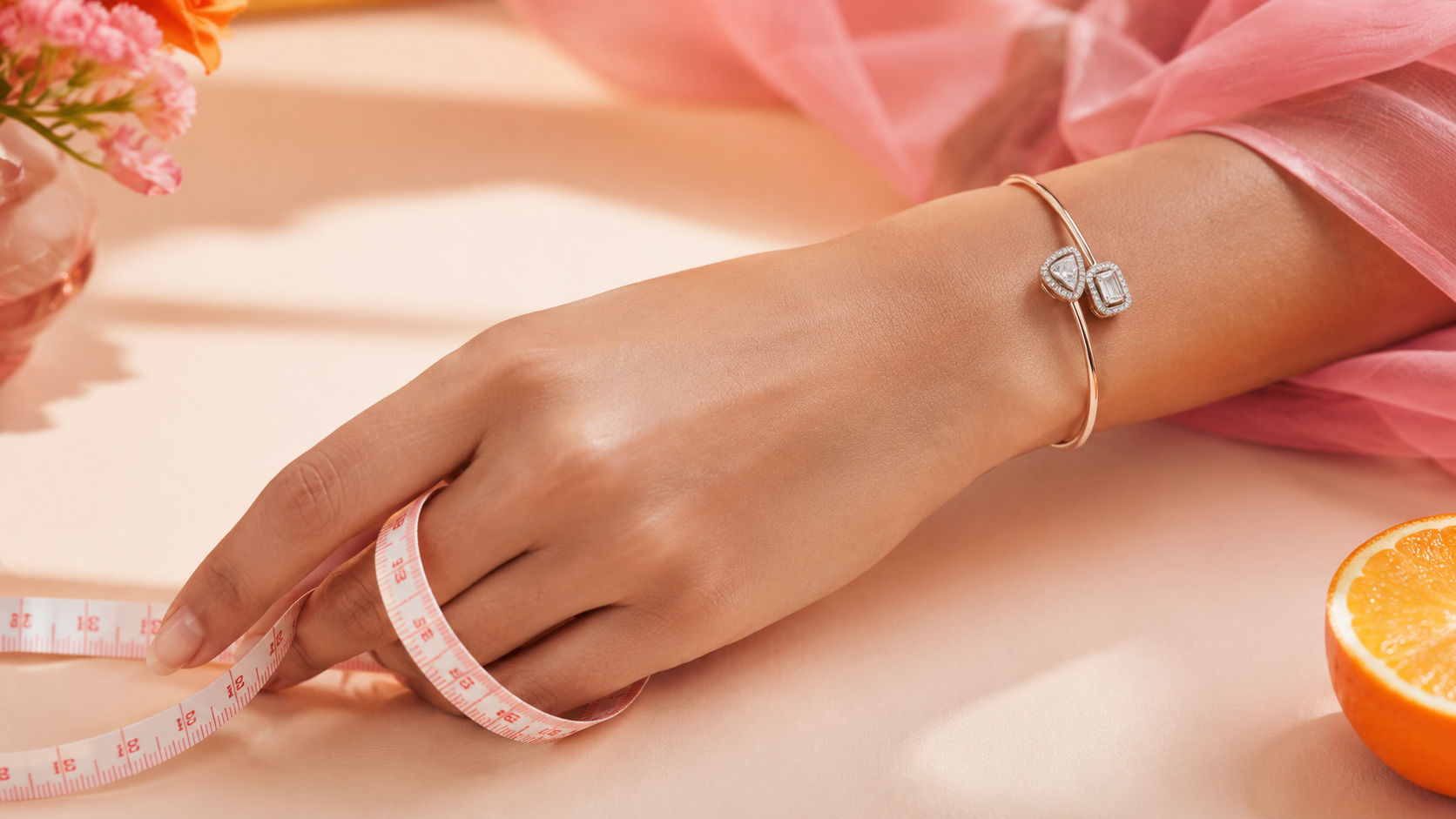
Explore custom diamond jewellery with Ethera. From diamond shape to gold, setting and budget, here’s every customisation decision explained simply.
Custom diamond jewellery sounds complicated until you realise most of the process is just a series of small choices. At Ethera, you can start with an existing idea, a reference image or even a vague description of what you like, then work through the design with the team until the piece feels right for you.
You don't need to know the difference between a cathedral setting and a basket setting before you begin. You don't need a jewellery sketch. You definitely don't need to arrive announcing that you'd like a 1.37-carat elongated cushion with a 1.42 ratio.
If you know that, lovely.
If your brief is, “I want something like this, but less bridal”, that's useful too.
The trick is knowing which decisions genuinely change the finished piece and which ones you can leave to the jewellery experts.
Here's the simple version.
Custom diamond jewellery starts with what you want to change
Custom diamond jewellery can begin either with an entirely new idea or with an existing design that you want to alter.
There are two very different meanings hiding inside the word “custom”.
Sometimes you already love 90% of a ring and want the remaining 10% changed. Maybe you like an Ethera solitaire but want an oval centre diamond instead of a round one. Maybe you'd prefer yellow gold to white. Maybe you want a different diamond specification or a ring made in your size.
Then there are pieces that start much closer to zero. You've saved three screenshots, liked the band from one, the centre stone from another and the side profile from a third.
That's enough to begin.
Ethera's customisation process lets you submit your jewellery type, design description, budget and up to ten reference images before speaking with the design team. The references don't have to be jewellery blueprints. They're there to show what your words sometimes can't.
A good reference says, “This is the direction.”
It doesn't have to say, “Copy this exactly.”
Decision 1: what piece are you actually making?
The first customisation decision is the jewellery category because the way a design is engineered depends on whether it's a ring, earring, pendant, bracelet or another piece.
It sounds like the easy question. Usually, it is.
But sometimes an idea works better in a different format than you first imagined.
A detailed motif might look beautiful as a pendant but become too busy on a small ring. A diamond arrangement that looks balanced on one earring has to be mirrored carefully when it becomes a pair. A bracelet needs to account for movement in a way a pendant doesn't.
Start with how you'll wear the jewellery, not merely how it'll look in a close-up photograph.
If it's a ring you want to wear daily, tell the designer that. If you're creating earrings for occasional evening wear, say so. Jewellery design is partly visual and partly engineering, and the second half becomes much easier when the team knows what your normal day actually looks like.
Decision 2: how much do you want to spend?
Your budget is one of the most useful design decisions because it helps determine where to allocate money across the diamond, gold and complexity of the piece.
Budget shouldn't be the awkward question saved for the end.
It should be near the beginning.
Ethera allows you to include a budget range when submitting a custom design request, and there's a reason for that.
Imagine two custom rings at the same budget.
One could use a larger centre diamond with a clean, minimal band. The other could use a smaller centre stone with multiple side diamonds and more intricate gold work.
Neither is automatically better.
They're simply spending the same money differently.
This is where customisation becomes useful rather than indulgent. You aren't just asking, “What can I afford?” You're deciding, “What do I want my budget to be visible in?”
If you care most about... | You may choose to prioritise... |
A strong centre stone | Diamond size and cut |
Intricate detailing | More gold work and smaller accent diamonds |
Everyday wear | Comfort, setting security and practical proportions |
A very specific aesthetic | Design complexity and unusual stone placement |
Keeping the price controlled | Simpler construction and selective diamond specifications |
A budget gives the design boundaries. Boundaries are often helpful. Otherwise, jewellery Pinterest has a habit of turning into a very expensive rabbit hole.
Decision 3: choose your diamond shape
Diamond shape determines the outline of the stone and has one of the biggest visual effects on a custom piece.
A round diamond feels balanced and familiar. An oval gives you length without sharp corners. An emerald cut is cleaner and more architectural. Pear shapes introduce direction. Marquise diamonds feel sharper and more expressive. Cushion cuts soften the geometry.
There isn't a universally “best” shape.
There is only the shape that makes the rest of your design make sense.
If you're creating a solitaire, the centre stone carries almost the entire visual identity of the ring. Changing a round diamond to an emerald cut can make the same basic setting feel like a completely different piece.
In a multi-stone design, shape becomes even more interesting. You might pair two pear diamonds in a toi et moi ring, use tapered stones around a centre diamond or combine different fancy cuts for deliberate asymmetry.
Fancy cut simply means any diamond shape other than round brilliant.
That's the technical definition. The more useful definition is: this is where things get fun.
Decision 4: decide how large you want the diamond to look
Carat measures diamond weight, but the visible size of a diamond also depends on its shape and proportions.
This catches many first-time buyers.
A one-carat diamond doesn't have one standard visible size across every shape.
Different cuts distribute their weight differently. An elongated oval may appear larger across the finger than a deeper cushion of the same carat weight. An emerald cut may have a broader visual footprint while producing a very different style of sparkle.
So don't choose carat in isolation.
Ask how the stone actually looks in the design.
If your priority is presence, tell the designer that rather than simply asking for the highest carat number within your budget. A well-proportioned diamond that spreads attractively across the finger can often create the visual effect you were after without turning the purchase into a numerical arms race.
Decision 5: choose your diamond quality
Diamond quality is usually assessed through the four Cs: cut, colour, clarity and carat weight.
You don't need to chase the highest possible grade in every category.
Colour describes how colourless a diamond appears. Clarity refers to natural internal or surface characteristics called inclusions and blemishes. Cut, when formally graded for applicable shapes, relates to how effectively a diamond has been proportioned and finished to interact with light.
Ethera offers customisation across diamond colour and clarity combinations. Its jewellery uses lab grown diamonds, which are real diamonds with the same physical, chemical and optical properties as mined diamonds but grown in a controlled environment rather than extracted from the earth.
The useful question isn't, “What's the highest grade?”
It's, “Which differences will I actually notice in this piece?”
An ultra-high clarity grade may matter less to you than a larger stone or a more interesting design. That's exactly the sort of trade-off a custom consultation can help you make.
Decision 6: choose your gold colour
Gold colour changes the personality of a custom piece even when the diamonds and design remain exactly the same.
Yellow gold gives diamonds a warmer frame and tends to feel more distinct against the stone.
White gold visually blends with the diamonds and can make settings, prongs and pavé work recede slightly.
Rose gold creates a softer, pink-toned finish.
There's no need to choose the metal colour that's supposedly “right” for your skin tone. Look at the jewellery you already reach for.
If your watch, rings and earrings are almost all yellow gold, that's useful evidence. If your jewellery box is a peaceful coexistence treaty between three metal colours, you can ignore matching entirely.
The custom piece has to live in your wardrobe, not on a colour-theory chart.
Decision 7: choose the gold karatage
Gold karatage tells you how much pure gold is present in the metal alloy and affects factors such as composition, price and durability.
This is one of the areas where a little technical knowledge genuinely helps.
Pure gold is 24KT. Jewellery is usually made by combining gold with other metals because pure gold is comparatively soft.
For example, 9KT gold contains 37.5% pure gold and is marked 375. Higher karatages contain progressively more gold.
Ethera allows gold karatage to be customised depending on the piece.
You don't need to choose purely on the logic that “higher is always better”. The right karatage depends on your budget, design, intended wear and preference.
This is exactly the sort of decision worth discussing with the team rather than selecting because a number sounded more luxurious.
Decision 8: decide how the diamond should be set
The setting is the structure that holds the diamond in place, and it influences both the appearance and practicality of the finished jewellery.
This is where small changes can have a surprisingly large effect.
Prongs are small metal claws that hold a stone securely. A bezel setting surrounds more of the diamond with metal. A halo places smaller diamonds around a central stone. Pavé uses closely set small diamonds across a surface to create continuous sparkle.
Then there's height.
A higher-set ring can give the centre diamond more visual prominence and may allow another band to sit underneath it more easily. A lower profile may feel more streamlined for frequent wear.
Neither is universally superior.
If your ring catches on every sweater you own, the Instagram-worthy side profile will stop being charming remarkably quickly.
Tell the designer how you use your hands. That's design information too.
Decision 9: decide how simple or detailed you want it
The amount of detailing determines whether the eye goes immediately to one focal diamond or moves across several design elements.
A solitaire gives one principal diamond the starring role.
A halo adds more sparkle around it.
Side stones widen the visual composition.
A toi et moi design gives two stones comparable importance.
A more sculptural design may use unusual curves, negative space or multiple diamond shapes without having a conventional “centre” at all.
If you're struggling to decide, think about what usually attracts you first.
Do you save extremely clean rings with almost no detail?
Or do all your screenshots somehow involve leaves, twisting gold, hidden halos and seventeen tiny diamonds doing choreography underneath the centre stone?
Your saved folder has already answered the question.
Decision 10: think about the side profile
The side profile affects how jewellery sits, feels and looks from angles other than the standard top-down product photograph.
This matters especially with rings.
The gallery is the structure beneath a ring's centre stone. It may be simple and open, highly architectural or decorated with hidden diamonds and other details.
You're the person wearing the ring, which means you'll actually see the side of it quite often.
An engagement ring can look traditional from above and completely unexpected from the side. This is one of the easiest ways to personalise a classic design without making it visually complicated.
So when reviewing your custom design, don't only ask for the hero angle.
Ask to understand the profile too.
Decision 11: get the size right
Correct sizing is part of customisation because a beautiful piece that doesn't sit comfortably won't become the jewellery you reach for.
For rings, especially, size matters beyond basic comfort.
A wide band can feel tighter than a fine one in the same nominal size. A top-heavy design may rotate if the fit is too loose. Stackable rings need to work together without becoming uncomfortable.
It's also worth knowing Ethera's policy before ordering unusual sizes. Women's rings below size 8 or above size 15, and men's rings below size 17 or above size 23, are treated as customised products under Ethera's return policy.
Measure first.
Romance is lovely. Correct circumference is lovelier.
Decision 12: understand what happens after you approve the design
Once a custom design is approved, it moves from an idea into a made-for-you piece, which means the usual return rules can differ from standard jewellery.
This is the point where you want to be certain.
Check the diamond shape. Check the metal colour. Confirm the size. Look at the proportions. Make sure the design you're approving is the design you've actually been imagining.
Ethera's 15-day return policy excludes engraved, customised and bespoke designs.
That's important enough not to hide in the glamorous part of the process.
Custom jewellery is made specifically around your choices, so approval is different from clicking “add to cart” on a standard product.
Take the extra minute.
Zoom in.
Ask the question.
That's what the custom process is for.
How Ethera's customisation process works
Ethera's custom jewellery process begins when you submit your idea and references so the design team can understand the piece you want to create.
You can start through Ethera's customisation page, where you can select the jewellery type, describe the design, upload as many as ten reference images and optionally provide your budget range. You can also connect with the team for design guidance.
From there, the useful part isn't knowing every jewellery term.
It's communicating your non-negotiables.
“I definitely want yellow gold.”
“I love emerald-cut diamonds.”
“I need this low enough for everyday wear.”
“I like this reference, but not the halo.”
“I have this budget and want the diamond to look as prominent as possible.”
Those statements are much more useful than attempting to speak fluent jeweller after forty-five minutes of Googling.
What should you bring to an Ethera customisation consultation?
The most useful things to bring to a custom jewellery consultation are reference images, your approximate budget and a clear idea of how you want to wear the finished piece.
You don't need a finished design.
In fact, arriving with some room to explore can help.
Bring the image you love. Bring the image you almost love and explain what's wrong with it. Bring a photograph of a ring you already wear constantly. Mention that you work with your hands. Mention that you never take jewellery off. Mention that you want something dramatic even though everyone keeps telling you to choose a classic solitaire.
The design team can solve jewellery problems.
They can't solve a preference you never mentioned.
Customisation is less about knowing exactly what you want from the first minute and more about noticing which decisions make you say, “Yes. More like that.”
Eventually, those decisions stop looking like a list of diamond shapes, settings and specifications.
They start looking like your jewellery.
FAQs
Can I get custom diamond jewellery made at Ethera?
Yes. Ethera offers bespoke jewellery design and lets you submit your jewellery type, reference images, design description and optional budget range before working with the team. You can customise elements including gold karatage and diamond colour and clarity combinations, subject to what works technically for the chosen design.
Can Ethera customise an existing jewellery design?
Yes, an existing design can be a starting point for discussing a customised piece. You may want to change details such as the diamond shape, specifications, gold or other design elements. What can actually be altered depends on the structure of the jewellery and whether the revised design can be made securely.
Do I need a jewellery sketch for custom diamond jewellery?
No, you don't need to know how to sketch jewellery before starting a custom piece. Ethera allows you to upload reference images and explain your idea in writing. A few images showing the shapes, settings or overall aesthetic you like can give the design team enough direction to begin the conversation.
How do I choose a diamond for custom jewellery?
Start with diamond shape and the visual size you want, then look at cut, colour, clarity and carat alongside your budget. The highest grade in every category isn't automatically necessary. A better approach is to decide which qualities will noticeably improve the appearance of your particular jewellery design.
Can I choose the gold purity for customised Ethera jewellery?
Ethera states that gold karatage can be customised for bespoke jewellery, depending on the design. Gold karatage refers to the proportion of pure gold in the alloy. Your choice can affect price, composition and how suitable the metal is for the particular piece you're creating.
Are Ethera's lab grown diamonds real diamonds?
Yes. Ethera uses lab grown diamonds, which are real diamonds with the same physical, chemical and optical properties as mined diamonds. The difference is their origin: they're created in a controlled environment rather than extracted from the earth, and Ethera states that its diamonds are IGI certified.
How long does customised jewellery take at Ethera?
Custom jewellery timelines can vary depending on the design and complexity, so it's best to confirm the expected completion date with Ethera's design team before ordering. Ethera currently lists made-to-order products as generally taking 15 to 25 business days, but a bespoke design may require its own timeline.
Can customised Ethera jewellery be returned?
Customised and bespoke Ethera jewellery isn't covered by the standard 15-day return policy. This also applies to certain non-standard ring sizes classified as customisation. Because the piece is being made around your specifications, review the design, size, diamond details and metal choices carefully before giving final approval.