
The engagement ring conversation guide, how to tell your partner exactly what you want
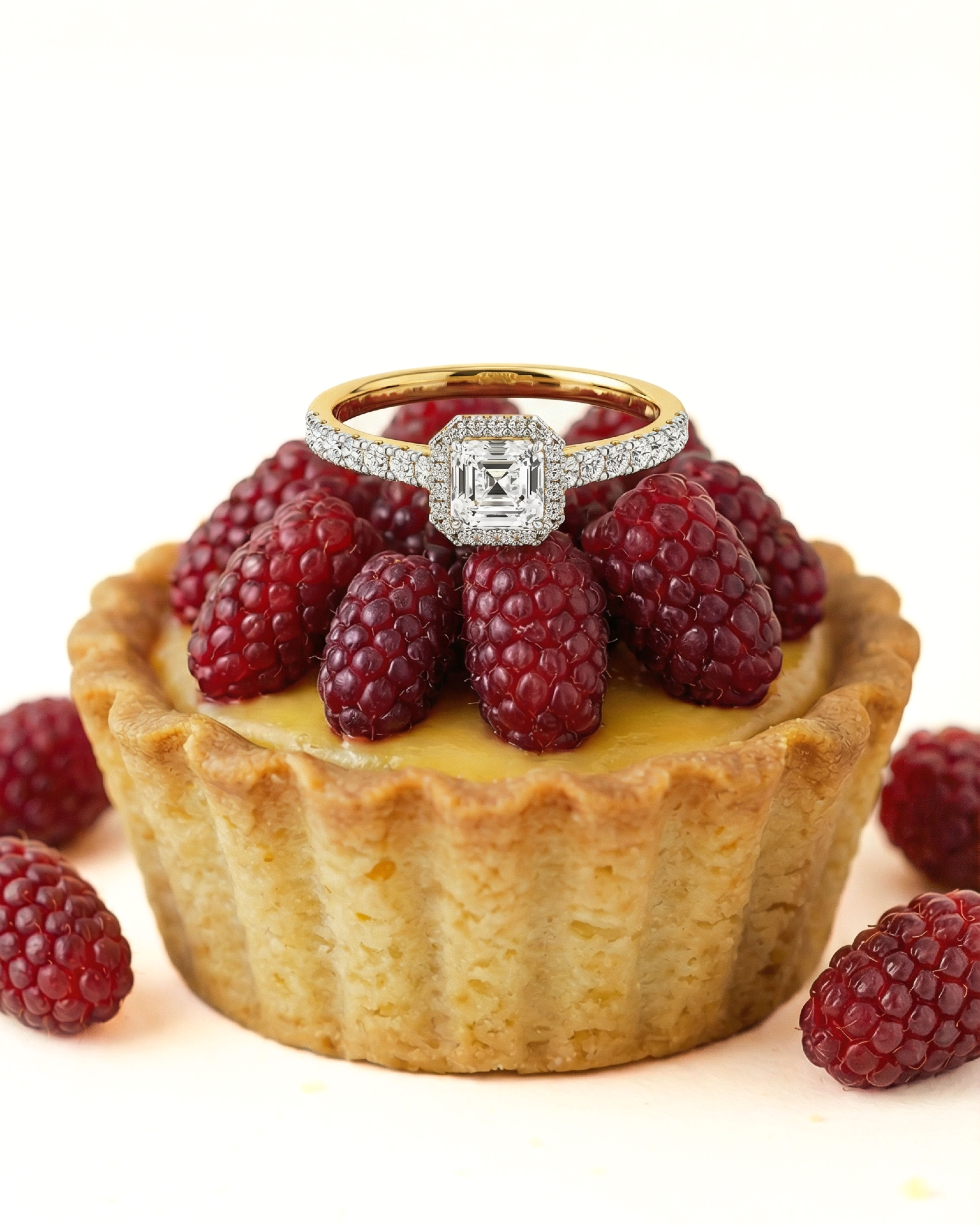
This engagement ring conversation guide from Ethera helps you explain the ring you want clearly, without planning the proposal or spoiling the surprise.
An engagement ring conversation guide should help you say what you want clearly without turning the proposal into a purchase order. Tell your partner the styles you love, the details you dislike and the practical things that matter, then leave enough room for them to choose.
That isn’t unromantic. It’s useful.
An engagement ring may be a surprise, but it’s also a piece you could wear almost every day for years. Hoping your partner correctly interprets six saved posts, one passing comment and the ring you paused beside at a wedding is a charmingly risky system.
You don’t need to select the exact ring together unless that feels right for you. You simply need to replace guesswork with a conversation.
The engagement ring conversation should happen before shopping begins
The best time to discuss an engagement ring is before your partner starts comparing diamonds, contacting jewellers or seeking advice from a friend who last noticed your jewellery in 2019.
You don’t need to open with, “Here is the ring I expect and its stock-keeping unit.” Start with the larger decision. Ask whether you both see engagement in the near future and whether choosing the ring should be part of that discussion.
This gives the conversation emotional context. You’re not bringing up jewellery out of nowhere. You’re talking about a shared future, with one expensive and highly visible object attached to it.
You could say:
“I’d still love the proposal to be a surprise, but I’d like to talk about the kind of ring I’d actually wear.”
That sentence separates the ring from the proposal. Your partner can still decide when, where and how the moment happens. You’re simply making sure the ring doesn’t arrive with a setting you’ll spend the next decade politely resenting.
Decide how much of the ring you want to choose
You can choose everything, choose a few key details or offer broad guidance while leaving the final design to your partner.
There’s no correct amount of involvement. Some couples visit a jeweller together and select the exact ring. Others discuss the shape, metal and budget, then let one partner make the final choice. Some share a folder containing several designs, which gives useful direction without revealing the eventual ring.
Level of involvement | What you decide | What remains a surprise |
Full choice | Exact ring, diamond and setting | Proposal timing and presentation |
Guided choice | Shape, metal, style and budget | Final design and diamond selection |
Shortlist | Three to five rings you genuinely like | Which ring your partner chooses |
Broad direction | General preferences and deal-breakers | Most design details |
Complete surprise | Nothing beyond ring size | The entire ring and proposal |
Choose the approach that matches your relationship. If you make most significant purchases together, selecting an engagement ring together may feel natural. If surprises matter deeply to both of you, a shortlist can preserve that feeling without handing your partner a jewellery-themed escape room.
Start by explaining your style, not diamond terminology
Your partner needs to understand how you want the ring to feel before learning the difference between a cathedral setting and a hidden halo.
Use words connected to your actual style. You might want something minimal, sculptural, vintage-inspired, delicate, bold, symmetrical or slightly unusual. These descriptions give the jeweller a clearer direction than saying you want something “beautiful but not too much”.
Show examples from your current wardrobe and jewellery. If you wear clean gold hoops, plain bands and sharp tailoring, a highly ornate ring may not feel natural. If your jewellery box is full of motifs, coloured stones and layered pieces, a very traditional solitaire might feel too cautious.
You can also describe what you don’t want. Sometimes that’s easier.
Perhaps you dislike very thin bands, square diamonds, elaborate halos or settings that sit high above the finger. A short list of deal-breakers prevents your partner from choosing a ring that is objectively lovely and completely wrong for you.
Be specific about the diamond shape
The diamond shape has the strongest influence on an engagement ring’s overall appearance, so it’s worth discussing clearly.
A round diamond feels familiar and balanced. An oval has a softer, elongated outline and can appear larger from the top than some other shapes of the same carat weight. An emerald cut uses long step-like facets, producing broad flashes of light rather than intense glitter.
A pear combines a rounded end with a pointed tip. A cushion has softened corners and a more compact outline. A princess cut is square with sharper geometry. Marquise diamonds are long and pointed at both ends, creating a distinctive, dramatic silhouette.
You don’t need to memorise the entire family tree. Identify two or three shapes you’d happily wear and say whether you have a clear favourite.
Avoid sending one example of an oval ring when what you actually love is the band, not the diamond. Tell your partner what you’re pointing to:
“I like the oval shape in this one, but I’d want a simpler setting.”
That one sentence can prevent weeks of enthusiastic research in the wrong direction.
Talk about the setting as well as the centre diamond
The setting determines how the diamond sits on the finger, how secure it feels and how easily the ring fits into your daily routine.
A solitaire places one main diamond at the centre. A halo surrounds the centre stone with smaller diamonds, increasing its visual presence. A three-stone ring places a diamond on either side of the centre. A toi et moi design features two stones positioned together, traditionally symbolising “you and me”.
The height matters too. A high setting can make the centre diamond more prominent and may allow a wedding band to sit flush beside it. It can also catch more easily on hair, clothing and bags. A low-profile setting sits closer to the finger, which may be more comfortable if you use your hands constantly.
Think about your real day. Do you type for hours? Wear gloves at work? Exercise regularly? Handle fabrics, children or equipment? The most beautiful setting on a velvet tray may become irritating when it joins your routine.
This is the practical part of romance. Your ring should survive your life rather than requiring your life to reorganise around it.
Tell your partner which metal you actually wear
The engagement ring’s metal should work with your skin, current jewellery and personal preference rather than a generic rule about what suits you.
Yellow gold brings warmth and has a traditional feel that also works beautifully in modern settings. White gold creates a cooler, seamless background around colourless diamonds. Rose gold has a softer pink tone and tends to make the ring feel more romantic.
Look at the jewellery you already repeat. If nearly everything you own is yellow gold, mention that. If you mix metals constantly, you may be comfortable with any of them or interested in a two-tone design.
Gold purity also affects colour, durability and price, so it’s worth discussing with the jeweller. For an engagement ring, 14KT and 18KT gold are common choices, Ethera also had a 9KT option. The right option depends on the desired colour, design and how the ring will be worn.
Don’t assume your partner has noticed your metal preference. They may love you deeply and still think rose gold is a lighting effect.
Discuss the budget without turning it into a test
An engagement ring budget should reflect your shared finances and priorities, not an outdated salary formula or a hidden measure of commitment.
Talk about a comfortable range before shopping. You don’t need to agree on an exact rupee amount, but both of you should understand what feels sensible. The ring shouldn’t begin your engagement with debt, resentment or a payment plan nobody fully discussed.
You can frame the conversation around priorities. Perhaps you care more about the design than carat weight. You may prefer a smaller diamond with a distinctive setting, or a larger-looking shape with a simple band. You might value customisation more than an extremely high clarity grade.
Lab grown diamonds can give you more flexibility within the budget. They’re real diamonds, chemically and visually identical to mined diamonds, made in a controlled environment rather than extracted from the earth. This can allow you to consider a larger diamond, a more detailed design or supporting stones without spending the amount required for a comparable mined diamond.
Ethera’s engagement rings use IGI-certified lab grown diamonds set in BIS-hallmarked gold, with options for customisation when an existing design is close but not quite yours.
Explain what “big enough” means to you
Carat is a measurement of diamond weight, but the shape, proportions and setting determine how large the diamond looks when worn.
You may not care about carat weight at all. Say that. You may want visible presence without a very high setting. Say that too.
A one-carat oval can appear different from a one-carat round because its weight is distributed across a longer surface. A halo can increase the overall visual spread without increasing the centre diamond’s carat weight. A bezel setting may create a stronger outline around the stone, while a fine prong setting can make the diamond appear lighter and more exposed.
Try rings on whenever possible. Product photographs are useful, but hands vary. A diamond that looks delicate on one finger may feel substantial on another.
Avoid speaking only in numbers unless you’ve seen those numbers worn. “I want a two-carat ring” is less useful than “I want the centre diamond to look noticeable but still comfortable for daily wear.”
Share references without creating a puzzle
A useful engagement ring reference folder contains a small number of designs with clear notes about what you like in each one.
Five examples are usually enough. Fifty-seven begins to look like an unsolved jewellery thesis.
Include designs you would genuinely be happy to receive, not aspirational images that represent completely different tastes. Beside each one, explain the relevant detail. You might like the oval centre in one, the band width in another and the setting height in a third.
Keep the references visually consistent enough to reveal a pattern. If the folder contains a minimalist solitaire, a vintage emerald-cut halo, a heart-shaped ring and a black diamond cluster, your partner may leave with more questions than they brought.
You can also send links directly to a trusted friend or sibling. They can help during the purchase, but brief them properly. “She likes diamonds” is not intelligence. It’s the beginning of the category.
Give clear deal-breakers without apologising
You’re allowed to be firm about features you’ll be wearing on your own hand.
A deal-breaker might be a particular shape, a very thin band, a high setting, coloured stones or an elaborate halo. It could also concern sourcing, certification or whether the ring can be resized.
State these preferences plainly rather than softening them until they disappear.
Instead of saying, “I’m not sure I’m really a yellow-gold person, but anything is fine,” say, “I’d strongly prefer white gold because that’s what I wear every day.”
This doesn’t make you demanding. It makes you understandable.
The cost and emotional weight of an engagement ring justify honesty. Pretending to have no opinion may feel easy during the conversation, but it places the entire responsibility on your partner and leaves you with fewer options if the result doesn’t suit you.
Kindness doesn’t require vagueness.
Keep the proposal separate from the jewellery decision
Knowing what the ring may look like doesn’t have to remove the surprise from the proposal.
The date, place, speech and circumstances can remain completely unknown. Even the exact ring can stay secret if you’ve shared a shortlist or discussed only the essential design details.
In fact, removing anxiety about the ring may allow your partner to put more thought into the proposal itself. They’re no longer decoding Pinterest behaviour while simultaneously planning an important moment.
You can say:
“I’d like to have some input on the ring, but I don’t want to know when you buy it or when you’re planning to propose.”
That boundary is clear and easy to follow.
You’ll know an engagement is likely because you’ve discussed marriage. That’s healthy. The surprise should be how the proposal unfolds, not whether you agree about the future.
A custom engagement ring works best as a shared brief
A custom engagement ring gives you control over the details, but the process works best when both partners agree on the budget, design direction and practical requirements.
Custom doesn’t have to mean inventing a ring from nothing. You can begin with an existing design and change the diamond shape, band width, metal colour or setting height. This is often easier than attempting to combine seven unrelated references into one tiny piece of architecture.
Ask to see drawings, renders or samples before the ring is made. Check the measurements and understand which design changes affect the price. Customised rings may also have different return, exchange and resizing conditions, so discuss those before approving the order.
The most successful brief is specific without becoming overloaded:
“An oval lab grown diamond on a medium-width yellow-gold band, set low enough for everyday wear, with no halo and a wedding band that can sit beside it.”
That gives the jeweller something far more useful than “simple, but special”.
Say what you want before the ring has to say it for you
An engagement ring shouldn’t be a test of whether your partner knows you well enough to identify a hidden diamond preference.
Knowing you means listening when you explain what matters. It doesn’t mean developing supernatural expertise in prong arrangements.
Talk about the ring with the same honesty you’d bring to any other shared decision. Be clear about the things you care about and relaxed about the things you don’t. Leave room for your partner to choose, but don’t leave them alone inside an endless jewellery catalogue armed only with love and unstable Wi-Fi.
The proposal can still surprise you.
The ring should simply feel like it was always meant to find your hand.
Frequently asked questions
How do I tell my partner what engagement ring I want?
Tell your partner the diamond shapes, metal colours and settings you genuinely like, then share a small folder of reference images. Explain exactly what appeals to you in each design. Include practical details such as ring size, preferred setting height and any features you strongly want to avoid.
Is it okay to choose an engagement ring together?
Yes, choosing an engagement ring together is completely normal and can reduce sizing, budget and style mistakes. You can select the exact ring or agree on the main features before your partner makes the final choice. The proposal timing and presentation can still remain a surprise.
How do I bring up the engagement ring conversation naturally?
Bring it up during a broader conversation about marriage and your shared future. Say that you’d like the proposal to remain surprising but want some input on a ring you’ll wear regularly. This keeps the discussion honest without making it sound like you’re demanding an immediate proposal.
What details should I include in an engagement ring conversation guide?
Include your preferred diamond shapes, metal colour, setting style, band width, ring size and budget range. Mention your lifestyle and whether you need a low-profile design. You should also explain any deal-breakers, such as halos, coloured stones, very thin bands or high settings.
How many engagement ring options should I send my partner?
Send three to five engagement ring options that you would genuinely be happy to wear. Choose designs with enough similarities to show a clear preference. Add a note explaining what you like in each ring so your partner doesn’t confuse the diamond shape with the setting or metal.
Can I ask for a lab grown diamond engagement ring?
Yes, you can ask for a lab grown diamond engagement ring. Lab grown diamonds are real diamonds, chemically and visually identical to mined diamonds, created in a controlled environment instead of being extracted from the earth. They can offer greater flexibility in diamond size and design within your budget.
Does discussing the ring ruin the proposal surprise?
No, discussing the ring doesn’t ruin the proposal surprise because the timing, location and exact plan can remain unknown. You can share general preferences or a shortlist without knowing which ring your partner chooses. Clear communication protects the surprise from becoming an expensive style mismatch.
What should I do if my partner has already bought a ring I don’t like?
Respond kindly, but be honest before resizing or wearing the ring extensively. Explain which design elements don’t suit your style and ask whether the jeweller allows exchanges or modifications. Focus on finding a solution together rather than pretending to love a piece you’ll be expected to wear regularly.