
Fine jewellery for the Indian monsoon: what holds up, what doesn’t, and what to reach for
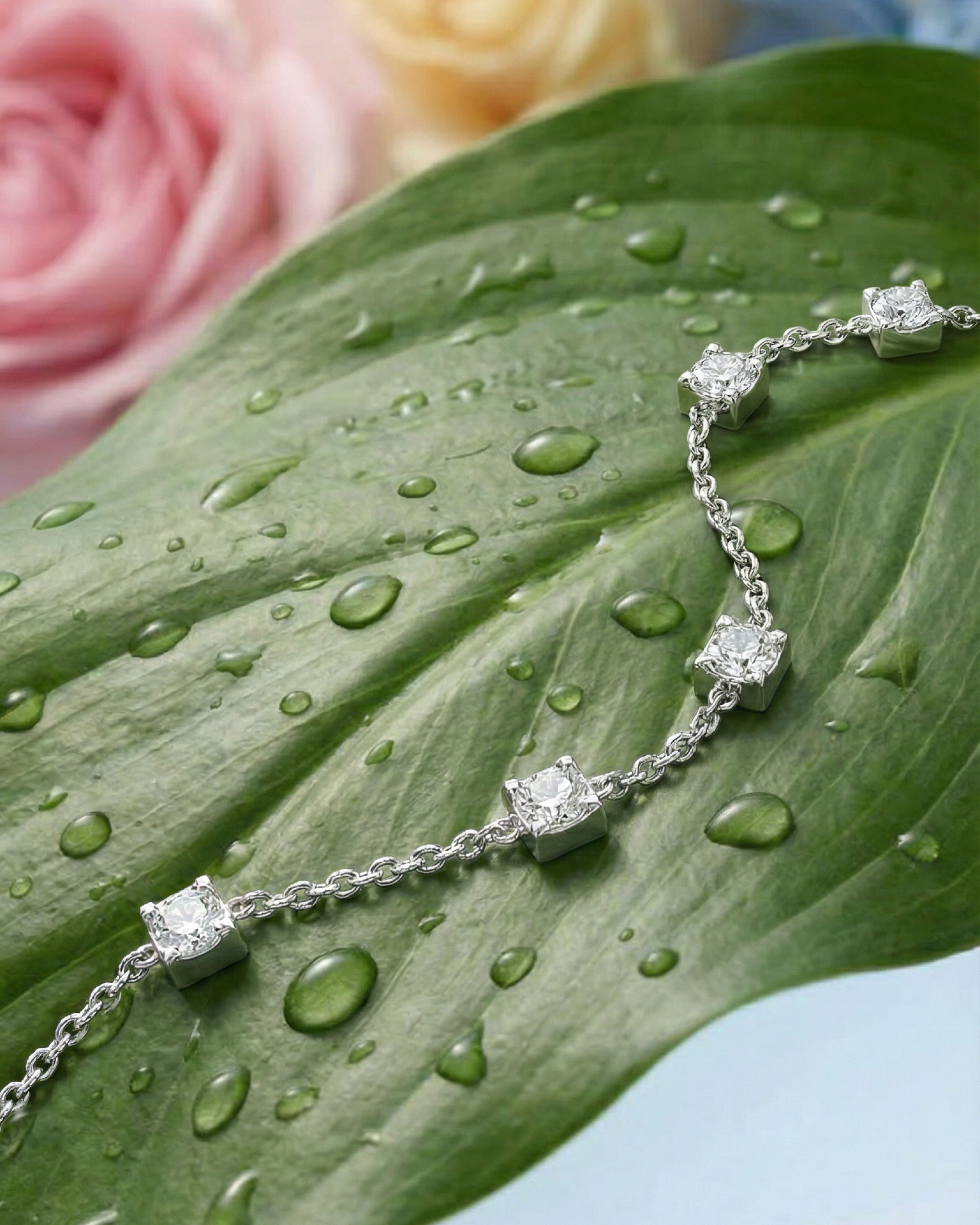
Fine jewellery for the Indian monsoon needs smarter styling, not less sparkle. Ethera explains what survives humidity, rain and daily wear.
Fine jewellery for the Indian monsoon holds up best when it’s made from solid gold, set securely and cleaned after exposure to sweat, rain or skincare. Diamonds themselves aren’t harmed by humidity, but the metal, setting and way you wear the piece can determine whether it stays bright or starts looking tired.
That doesn’t mean packing your jewellery away until October. It simply means choosing pieces that can handle crowded commutes, damp hair, sudden rain and the peculiar monsoon habit of making everything feel slightly sticky.
Some jewellery barely notices the weather. Some demand more babysitting than it’s worth.
Does monsoon weather damage fine jewellery?
Monsoon weather doesn’t usually damage diamonds or solid gold directly, but humidity, sweat, pollution and trapped moisture can dull jewellery and affect delicate components.
A diamond is hard enough to withstand ordinary exposure to rain and humidity. The cloudiness you may notice during the monsoon is usually a film of oil, moisturiser, soap or perspiration sitting on the stone’s surface rather than damage to the diamond itself.
Gold is also resistant to rust, which makes solid gold jewellery more dependable than fashion jewellery during humid weather. Still, gold alloys contain other metals that may react to sweat, chemicals or prolonged moisture. The lower the gold purity, the greater the proportion of alloyed metals, though the final durability also depends on how the jewellery is made and cared for.
The setting matters just as much as the material. Water trapped beneath a closely set diamond, around a clasp or inside a hollow design can collect residue. Over time, that can make a piece look less brilliant and create a cosy little home for grime.
Rain is rarely the villain working alone. It brings accomplices.
Monsoon factor | What it can do |
Humidity | Encourages moisture and residue to remain on the jewellery |
Sweat | Leaves salts and oils on gold and diamonds |
Rainwater | Can carry dust, pollution and contaminants |
Skincare | Forms a film that reduces diamond sparkle |
Damp storage | Encourages tarnishing in alloyed metals and weakens threads or adhesives |
Frequent wiping | Can scratch surfaces if done with a rough cloth |
What holds up best in the Indian monsoon?
Solid gold jewellery with secure diamond settings and uncomplicated construction is the most practical choice for the Indian monsoon.
The easiest monsoon jewellery doesn’t have too many places for water, lotion or dust to settle. Smooth gold surfaces, bezel settings, sturdy prongs and well-made clasps tend to cope better with regular wear than intricate pieces filled with tiny cavities.
A bezel setting surrounds the edge of a diamond with metal. This gives the stone a clean, low-profile frame and reduces the number of exposed edges that can catch on wet clothing or hair. Prong settings can also work well when the claws are properly finished and checked for security.
Stud earrings, small hoops, solitaire pendants and low-profile rings are particularly useful during rainy months because they stay close to the body and are less likely to swing, snag or collect moisture.
Ethera’s lab grown diamonds are real diamonds, chemically and visually identical to mined diamonds, made in a controlled environment rather than extracted from the earth. Their ability to handle ordinary monsoon conditions is the same as that of mined diamonds. The practical difference comes from the piece’s setting, construction and maintenance.
Which jewellery should you avoid in heavy rain?
Delicate chains, porous materials, fabric components and jewellery that depends on glue are more vulnerable during heavy rain.
Fine chains can knot more easily when they’re damp, especially if they’re worn under wet collars, dupattas or scarves. Long earrings may catch in rain jackets, umbrellas or freshly washed hair. Hollow jewellery can hold water internally if its construction allows moisture to enter.
Pearls, opals and other delicate gemstones need more caution than diamonds. Pearls are organic gems with a sensitive surface that can be affected by chemicals, sweat and rough handling. Opals contain water within their structure and are more vulnerable to sudden temperature changes and harsh cleaning methods.
Jewellery incorporating silk thread, enamel, fabric, leather or adhesive-set components may also need to stay indoors on days when the weather forecast looks like a threat.
Jewellery type | Monsoon suitability |
High | |
High | |
High | |
High | |
Long layered chains | Moderate |
Intricate openwork designs | Moderate |
Pearl jewellery | Low to moderate |
Thread-based jewellery | Low |
Glue-set fashion jewellery | Low |
This doesn’t make delicate jewellery unwearable for the entire season. It simply means it’s better suited to indoor events, short journeys and dry storage afterwards.
The best earrings for monsoon weather
Diamond studs and small gold hoops are the easiest earrings to wear through humidity, wind and sudden rain.
Stud earrings don’t compete with damp hair, umbrella handles or high collars. They also have fewer moving parts, which means fewer places for moisture to collect.
A solitaire diamond stud is particularly practical because the design remains visible without needing length or movement. Cluster studs can offer a fuller look while staying close to the ear. Small huggie hoops work well too, provided their hinges and clasps close securely.
Long drop earrings can feel heavier when wet hair rests against them. They may also collect hair products and moisture, especially if you’re travelling through rain. Save them for days when the journey involves more car door than puddle.
After wearing earrings in humid weather, wipe the post and back gently with a soft, dry cloth. The earring back deserves attention too. It sits directly against the skin and tends to collect more residue than the decorative front.
The best necklaces and pendants for the monsoon
Short, lightweight necklaces with secure clasps are more comfortable and manageable than long or heavily layered styles during the monsoon.
A pendant that sits near the collarbone is less likely to swing into damp clothing or disappear beneath layers. It’s also easier to wipe down after wear.
The chain should be strong enough for the pendant but not unnecessarily heavy. Very fine chains can twist when exposed to moisture and friction, while broad or complex chains may trap sweat at the neckline.
If you wear perfume, body lotion or sunscreen, apply it before putting on your necklace and allow it to dry. Diamonds attract grease, so a clean-looking pendant can lose its sparkle quickly when it rests against freshly moisturised skin.
Layering still works during the monsoon, but restraint helps. Two short chains with different lengths are easier to manage than a full stack of necklaces moving through wet hair and sticky weather.
The best rings for rainy-season wear
Low-profile rings with secure settings are the most reliable choice for rainy-season wear.
A low-profile ring keeps the diamond closer to the finger, which reduces snagging and makes the piece easier to wear while carrying bags, holding an umbrella or travelling in crowded spaces.
Bezel-set rings are particularly practical, but well-made prong-set solitaires can also perform well. Check that the diamond doesn’t move and that the prongs don’t catch on fabric.
Wide bands may feel tighter when fingers swell in humid weather. Heat, salt intake and water retention can all affect finger size temporarily. If a ring suddenly feels uncomfortable, don’t force it on. Let your hands cool and dry before trying again.
It’s also worth removing rings before applying hand cream, sanitiser or mosquito repellent. These products don’t usually damage diamonds, but they can build up around the setting and reduce brilliance.
Are bracelets and bangles suitable for the monsoon?
Solid gold bangles and secure diamond bracelets can be worn during the monsoon, but loose, highly articulated designs require more care.
A slim gold bangle is usually simple to wipe clean and doesn’t contain many joints. Tennis bracelets, which feature a continuous line of diamonds, can also work well when the links and clasp are secure.
The main risk comes from movement. A loose bracelet may strike hard surfaces more often when you’re carrying an umbrella, rushing through public transport or juggling a wet bag. Water can also remain inside complex clasps and hinges.
Choose a fit that allows movement without sliding too far down the hand. After wear, open the clasp and allow the piece to dry fully before putting it away.
Avoid stacking too many bracelets on days when they’re likely to stay damp against each other. Constant friction can scratch polished gold, even though the jewellery may otherwise be structurally sound.
How gold purity affects monsoon wear
Gold purity affects colour, softness and alloy composition, but craftsmanship and maintenance are equally important during humid weather.
Pure 24KT gold is naturally resistant to corrosion but too soft for many everyday diamond settings. Fine jewellery therefore uses gold alloyed with other metals to improve strength and create colours such as white gold and rose gold.
18KT gold contains more pure gold and is generally richer in colour. 14KT and 9KT gold contain a higher proportion of alloyed metals and are often harder, making them useful for everyday jewellery. Ethera offers designs across gold purities, including 9KT, depending on the collection and piece.
9KT gold can make sense for everyday monsoon jewellery because its harder alloy composition can handle regular wear well. The trade-off is that any gold alloy may need cleaning when exposed repeatedly to sweat, skincare and humidity.
BIS hallmarking confirms the declared gold purity. It doesn’t make a piece rainproof, but it does give you clarity about what you’re wearing.
How to clean diamond jewellery during the monsoon
Diamond jewellery should be cleaned regularly during the monsoon because oils and residue accumulate faster in humid weather.
For routine home cleaning, place the jewellery in a bowl of lukewarm water with a small amount of mild dishwashing liquid. Let it soak briefly, then use a soft-bristled brush to clean around the back of the diamond and beneath the setting. Rinse carefully and dry with a soft, lint-free cloth.
Avoid cleaning jewellery over an open sink. A small bowl is safer.
Don’t use toothpaste, baking soda, bleach or harsh household cleaners. Toothpaste is abrasive and can scratch gold. Chlorine and strong chemicals may affect metal alloys and weaken jewellery over repeated exposure.
Not every piece should be soaked. Jewellery with pearls, porous gemstones, enamel, thread, glue or delicate components may require specialist care. When you’re uncertain, ask the jeweller before trying a home remedy supplied by a well-meaning relative or an overconfident reel.
How to store jewellery in humid weather
Jewellery should be completely dry before it’s stored in a cool, low-humidity space during the monsoon.
The bathroom is not a jewellery cabinet, no matter how convenient the mirror makes it feel.
Store each piece separately in a soft-lined compartment or pouch to prevent scratching and tangling. Keep chains fastened so they’re less likely to knot. Earrings should be stored with their backs attached, while rings and bracelets should have enough space to avoid rubbing against each other.
Silica gel packets can help control moisture inside a jewellery box, provided they’re kept away from children and replaced when necessary. Anti-tarnish strips may also be useful for certain alloyed metals, though solid gold jewellery shouldn’t be stored with damp or tarnished fashion jewellery.
Open the jewellery box occasionally during prolonged humid periods. A closed box can trap moisture if the jewellery went in even slightly damp.
When should you take jewellery off?
Fine jewellery should be removed when you’re swimming, showering, exercising heavily or handling strong cleaning products.
Ordinary rain is less concerning than chlorinated pools, salt water and chemicals. Chlorine can affect gold alloys over time, while swimming also increases the chance of losing jewellery as fingers shrink in cool water.
Remove jewellery before washing your hair, especially when using heavy conditioners or anti-dandruff treatments. Rings should come off before cleaning the house, and necklaces are best removed before applying hair colour or strong skincare products.
You don’t need to remove every diamond stud at the first sign of a cloud. The useful distinction is between brief contact with rain and prolonged exposure to water, chemicals or friction.
Wear the jewellery. Just don’t make it join you for every activity.
What to reach for when it’s pouring outside
The best monsoon jewellery combines a secure fit, simple construction and enough presence to work without excessive layering.
On a workday, a pair of diamond studs and a slim ring can carry the entire look. For dinner, add a short pendant or a structured bracelet. For an Indian outfit, small hoops, a close-fitting necklace or a clean bangle stack can feel polished without becoming difficult to manage.
The pieces that earn their place during the monsoon tend to share a few qualities:
They sit close to the body.
They have secure clasps and settings.
They’re easy to wipe and clean.
They don’t rely on glue, thread or fragile surface treatments.
They work alone, so you don’t need several layers.
If you’re choosing new jewellery for regular wear, Ethera’s lab grown diamond studs, solitaire pendants, low-profile rings and streamlined bracelets are sensible places to start. The goal isn’t to buy “rain jewellery”. It’s to choose well-made pieces that don’t become impractical the moment the sky changes its mind.
Jewellery that suits the season doesn’t have to look seasonal
Monsoon dressing is already full of compromises. Shoes become strategic. Hemlines move upwards. Hair develops its own constitutional rights.
Your jewellery doesn’t need to join the chaos.
Choose pieces that are secure, easy to clean and close enough to your usual style that you’ll keep wearing them once the clouds clear. Fine jewellery should belong to your actual life, including the wet, humid, umbrella-losing parts of it.
Frequently asked questions
Can you wear fine jewellery during the Indian monsoon?
Yes, you can wear fine jewellery during the Indian monsoon if it’s made from solid gold, securely set and dried after exposure to rain or sweat. Diamonds aren’t damaged by humidity, but moisture and skincare residue can dull their surface, so regular cleaning and careful storage become more important.
Does rainwater damage diamond jewellery?
Rainwater doesn’t normally damage diamonds, but it may carry dust, pollution and minerals that leave residue on the jewellery. Water can also settle around settings and clasps. Wipe the piece dry after exposure and clean it gently if the diamond appears cloudy or less brilliant.
Which jewellery is best for humid weather?
Diamond studs, small hoops, short pendants, low-profile rings and solid gold bangles are good choices for humid weather. These designs sit close to the body, have fewer delicate moving parts and are easier to clean. Secure settings and clasps matter more than choosing a particular diamond shape.
Can I wear lab grown diamonds in the rain?
Yes, lab grown diamonds can be worn in the rain because they’re real diamonds with the same chemical and visual properties as mined diamonds. The rain won’t harm the stone, but the gold setting may collect moisture, sweat or residue, so dry and clean the piece after wear.
Is 9KT gold suitable for monsoon jewellery?
Yes, 9KT gold can be suitable for monsoon jewellery because its higher proportion of alloyed metals makes it harder and practical for regular wear. It should still be cleaned after contact with sweat, rain or skincare. Look for BIS hallmarking and choose well-made settings with secure clasps or prongs.
How often should diamond jewellery be cleaned in the monsoon?
Diamond jewellery worn frequently may need a gentle clean every one or two weeks during the monsoon, depending on exposure to sweat, lotion and pollution. Wipe it after wear and clean it with lukewarm water, mild dishwashing liquid and a soft brush when the sparkle begins to look muted.
How should fine jewellery be stored during humid weather?
Fine jewellery should be stored only when it’s completely dry, ideally in separate soft-lined compartments. Keep the box away from bathrooms and damp cupboards. Silica gel packets can help manage moisture, while fastening chains and separating pieces reduces tangling, scratching and friction between polished gold surfaces.
What jewellery should I avoid during heavy rain?
Avoid delicate long chains, thread-based jewellery, glue-set designs, pearls and highly intricate pieces during heavy rain. These materials and constructions can trap moisture, snag more easily or require specialised care. Choose solid gold pieces with secure settings when you expect prolonged exposure to wet weather.