
CVD vs HPHT: What's the Difference?
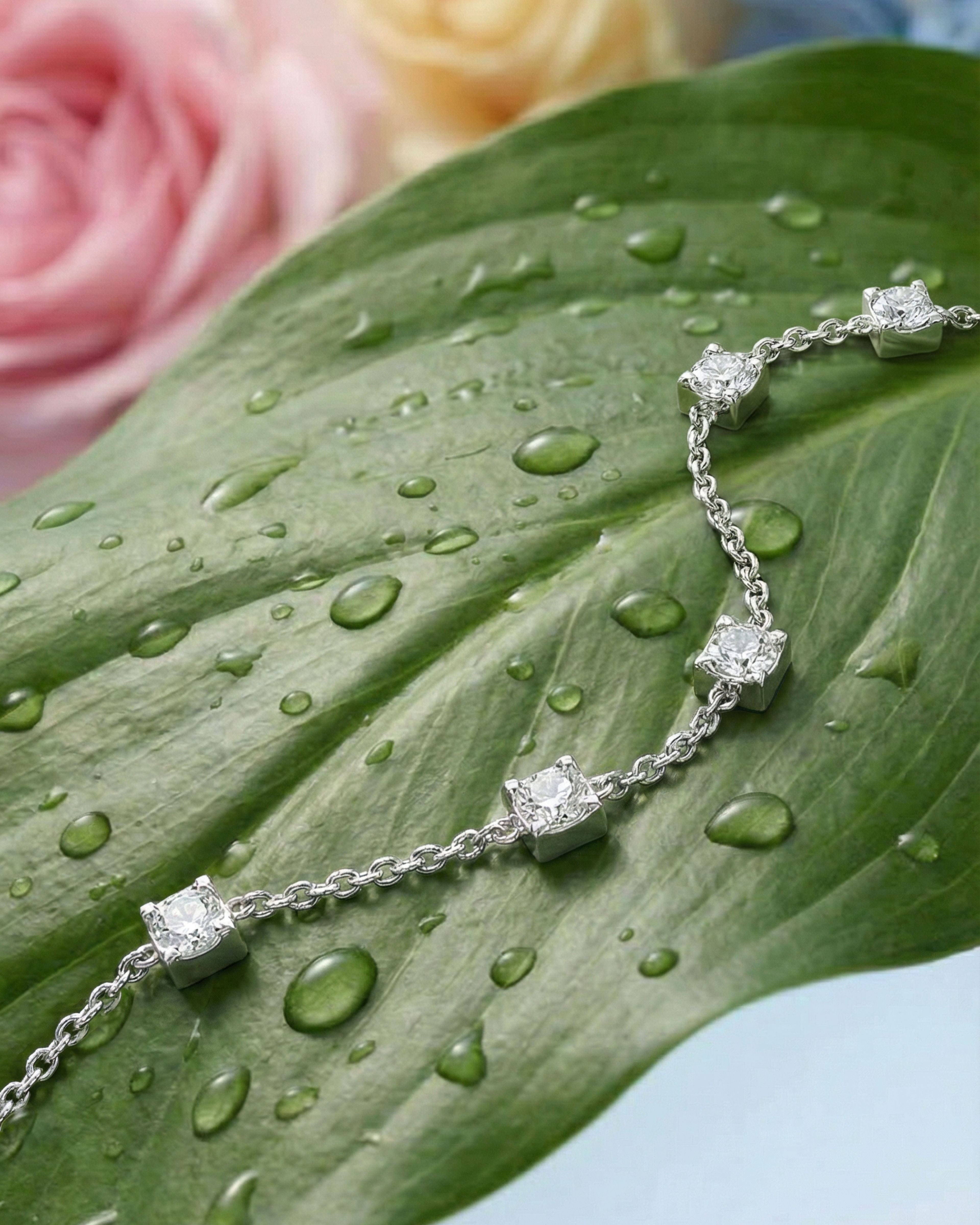
CVD vs HPHT isn't a battle of better or worse. Here's what actually separates these lab grown diamond methods, with insights from Ethera.
CVD and HPHT diamonds are both real diamonds. The difference is simply how they grow. One mimics the conditions deep inside the earth using extreme heat and pressure, while the other builds a diamond layer by layer inside a specialised chamber.
That's it.
Yet if you've spent even ten minutes researching lab grown diamonds, you've probably come across forum threads and videos making it sound like one process is dramatically superior to the other. Some claim HPHT diamonds sparkle more. Others insist CVD diamonds are purer. A few make it sound like choosing between them is as important as choosing the diamond itself.
It usually isn't.
Understanding the difference matters because it helps you read certificates, ask better questions, and feel more confident about what you're buying. But once a diamond reaches your finger, the growth method is rarely the thing you'll notice.
CVD And HPHT Are Two Different Ways To Grow A Real Diamond
CVD and HPHT are manufacturing methods, not different kinds of diamonds.
A lab grown diamond is a real diamond that is chemically, physically, and visually identical to a mined diamond. The carbon atoms are arranged in exactly the same crystal structure. The only difference is where the diamond was formed.
HPHT stands for High Pressure High Temperature. The process recreates the intense heat and pressure found deep within the earth where natural diamonds originally formed.
CVD stands for Chemical Vapour Deposition. This method grows a diamond inside a chamber filled with carbon-rich gases that slowly build the crystal layer by layer.
The finished result from both methods is still a diamond.Not a substitute. Not a lookalike. A diamond.
HPHT Diamonds Are Created By Recreating The Conditions Found Deep Inside The Earth
HPHT diamonds grow inside machines that generate extraordinary levels of pressure and heat.
Here's how it works.
A tiny slice of diamond called a seed is placed inside a press with a carbon source. Temperatures can exceed 1,500 degrees Celsius while pressure reaches millions of pounds per square inch. Under these conditions, carbon melts and attaches itself to the seed, causing the diamond crystal to grow.
HPHT was actually the first commercially successful method of creating diamonds in laboratories. Scientists developed the technology decades ago, long before lab grown diamond jewellery became mainstream.
Many coloured lab grown diamonds, especially yellow diamonds, are produced using this method because certain trace elements can influence colour during growth.
CVD Diamonds Grow Layer By Layer Inside A Vacuum Chamber
CVD diamonds are formed through a process that resembles building a crystal, one microscopic layer at a time.
A small diamond seed is placed inside a sealed chamber. Carbon-rich gases are introduced and heated until they become plasma, which is an ionised gas containing energetic particles.
As the carbon atoms separate, they gradually settle onto the seed and form a larger diamond crystal. This means the diamond grows slowly and with remarkable control.
Because the process allows for precise adjustments during growth, many colourless lab grown diamonds are produced using CVD technology. However, both methods can create high-quality colourless diamonds depending on how the process is managed.
The Difference Between CVD And HPHT Is Mostly About Production Rather Than Appearance
The difference between CVD and HPHT is rarely visible to the naked eye.
If someone handed you two diamonds of identical cut, colour, clarity, and carat weight, you would not be able to identify which one was grown using HPHT and which one came from CVD.
Their sparkle is determined primarily by cut quality. Their appearance is determined by factors like colour and clarity. The growth method sits unnoticed in the background.
This is why experts generally advise focusing on the diamond's overall quality rather than becoming overly attached to one production method.
HPHT And CVD Diamonds Can Have Different Growth Characteristics
HPHT and CVD diamonds sometimes develop different internal characteristics during the growth process.
For example, certain HPHT diamonds can contain tiny metallic inclusions because metals are occasionally used as catalysts during production.
Some CVD diamonds may display growth patterns that differ from those found in natural diamonds.
These characteristics are usually microscopic and detectable only with specialised equipment. Gemological laboratories identify these growth features because they help determine a diamond's origin and production method.
For everyday wear, however, these distinctions rarely have any practical effect.
CVD vs HPHT at a Glance
Feature | CVD | HPHT |
Full form | Chemical Vapour Deposition | High Pressure High Temperature |
Growth method | Layer by layer from carbon gases | Extreme heat and pressure |
Typical growth environment | Vacuum chamber | High-pressure press |
Common use | Colourless diamonds | Colourless and coloured diamonds |
Visible difference | None | None |
Durability | Identical to natural diamonds | Identical to natural diamonds |
Both CVD And HPHT Diamonds Often Receive Post Growth Treatment
Both CVD and HPHT diamonds can undergo additional treatment after they are grown.
This sometimes surprises buyers.
A diamond grown through one process may later receive an HPHT treatment to improve its colour. Certain diamonds are annealed, which means they're heated under controlled conditions to alter or reduce colour tints.
These treatments are not unusual.
Natural diamonds also receive various treatments in the jewellery industry.
What matters is disclosure. Reputable grading laboratories note significant treatments on the diamond's certificate so you understand exactly what you're buying.
Certification Matters More Than Whether A Diamond Is CVD Or HPHT
A grading report tells you more about a diamond than its growth method ever will.
Certificates from respected laboratories evaluate the qualities you'll actually notice, including cut, colour, clarity, and carat weight.
They may also identify whether the diamond is lab grown and whether it originated through CVD or HPHT production.
For most buyers, this information is useful but not decisive.
A beautifully cut CVD diamond will almost certainly look better than a poorly cut HPHT diamond. The reverse is equally true.
Growth method doesn't automatically determine quality.
Craftsmanship does.
Why Do Some Buyers Prefer One Method Over The Other?
Personal preference often plays a larger role than objective differences.
Some buyers appreciate that HPHT mimics the geological conditions of natural diamond formation. Others like the technological precision associated with CVD growth.
Neither preference is wrong.
The conversation occasionally becomes more passionate online than it needs to be because people are searching for a simple answer to a complex topic.
The truth is less dramatic.
Both methods can produce exceptional diamonds. Both methods can produce average diamonds. The final result depends on the individual stone.
What Matters Most When Buying Lab Grown Diamond Jewellery
The qualities that influence beauty are the same whether a diamond is natural, CVD, or HPHT.
You'll notice brilliance before you notice the production method.
You'll notice proportions before you notice growth characteristics.
You'll notice whether the diamond catches your eye.
That's why experienced buyers spend more time evaluating cut quality, shape, setting, and overall design than debating manufacturing techniques.
If you're shopping for lab grown diamond jewellery, the growth process should be part of the conversation, not the entire conversation.
At Ethera, that's usually how we approach it too. The technology behind a diamond is fascinating, but the question you'll care about years later is much simpler.
Do you still love looking at it?
That's the one detail that never goes out of style.
FAQs
Is HPHT better than CVD diamonds?
No, HPHT diamonds are not automatically better than CVD diamonds. Both methods produce real diamonds that are chemically and visually identical to mined diamonds. The quality of an individual diamond depends far more on its cut, colour, and clarity than on how it was grown.
Can you tell the difference between CVD and HPHT diamonds by looking at them?
No, you can't tell the difference between CVD and HPHT diamonds with the naked eye. Gemological laboratories use specialised equipment to identify growth patterns and characteristics, but visually identical diamonds can come from either process.
Are HPHT diamonds real diamonds?
Yes, HPHT diamonds are real diamonds. They have the same chemical composition, crystal structure, and physical properties as mined diamonds. The only difference is that they're created in a controlled environment rather than formed naturally underground.
Are CVD diamonds real diamonds?
Yes, CVD diamonds are real diamonds. They are chemically, physically, and visually identical to mined diamonds and are created by gradually depositing carbon atoms onto a diamond seed inside a specialised chamber.
Which is more expensive, CVD or HPHT diamonds?
There isn't a universal price difference between CVD and HPHT diamonds. Pricing depends on factors such as carat weight, cut quality, colour, and clarity. Two otherwise identical diamonds grown using different methods may be priced very similarly.
Do lab certificates mention whether a diamond is CVD or HPHT?
Yes, many grading reports for lab grown diamonds indicate whether the diamond originated through CVD or HPHT production. This information helps identify the diamond's growth history but doesn't automatically determine its beauty or value.
Should I choose CVD or HPHT for lab grown diamond jewellery?
You should choose the individual diamond rather than the production method alone. If a diamond has excellent cut, appealing proportions, and a look you genuinely love, whether it was grown through CVD or HPHT becomes much less important.