
A bride's complete guide to lab grown engagement rings: finding your perfect finger, style & look
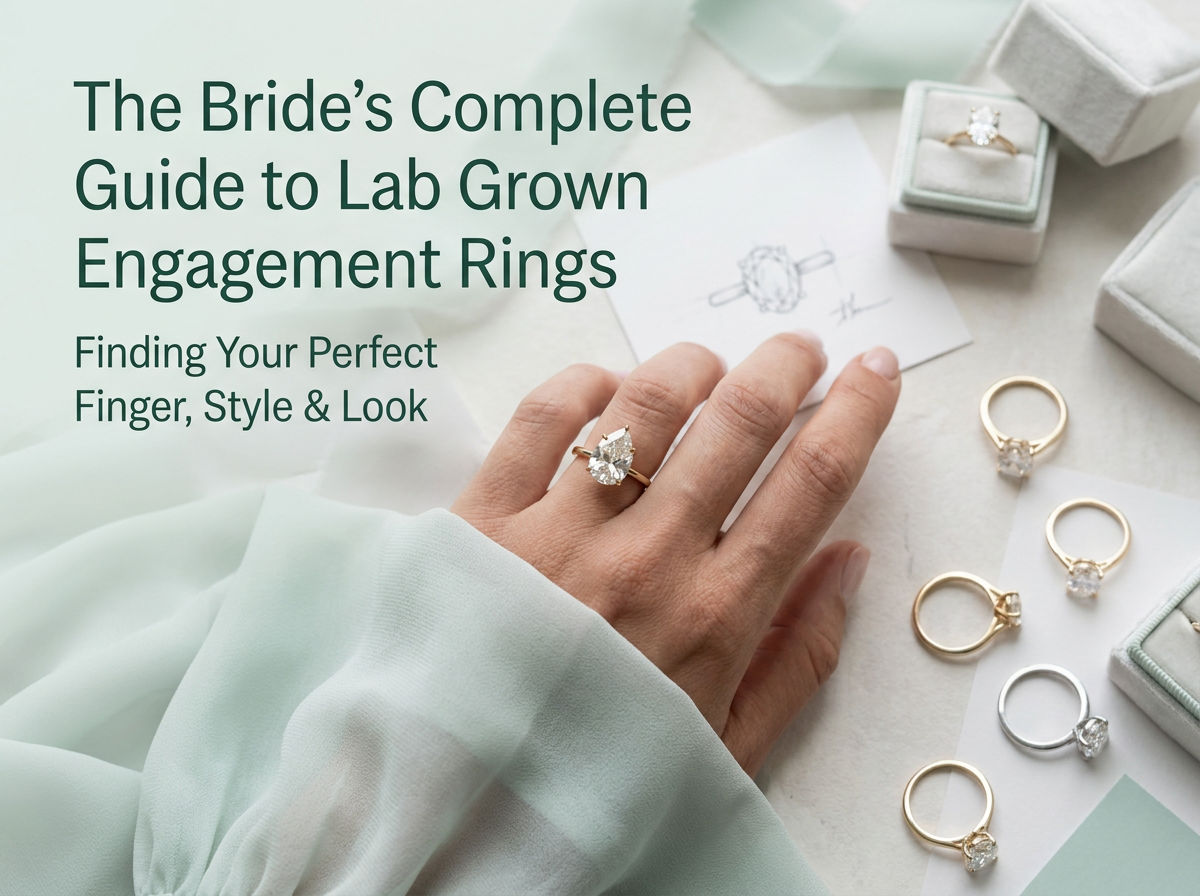
From finger to style to setting, Ethera's complete guide to lab grown engagement rings to help you find your perfect engagement look
You don’t need to compromise to get the ring you actually want. A lab grown diamond engagement ring gives you the same brilliance, durability, and presence as a mined diamond, just made differently. That one choice opens up more freedom in how your ring looks, how it fits your hand, and how it becomes part of your overall engagement bride look.
What matters more than the diamond itself is how everything comes together on you. The finger you wear it on, the shape that flatters your hand, the setting that suits your lifestyle, these decisions quietly define how your ring feels every day.
1: Why Lab Grown Diamonds Are Every Modern Bride's First Choice
Lab grown diamonds are real diamonds, chemically and visually identical to mined ones, created in a controlled environment instead of being extracted from the earth.
That single difference changes everything. You’re no longer choosing between size and quality, or between aesthetics and ethics. You can go bigger, explore unusual cuts, or invest in a more intricate setting without feeling like you’ve stretched too far.
For many brides, this shift isn’t just practical. It feels more intentional. You’re choosing something that reflects your values without giving up the emotional weight of a diamond. And because these diamonds are graded the same way as mined ones, you still get clarity, cut, colour, and carat working in your favour.
2: The Bride's Guide to the Engagement Ring Finger: Traditions, Rules & What Actually Matters
The engagement ring finger is traditionally the fourth finger of the left hand, based on the ancient belief in the vena amoris (Latin for “vein of love”), once thought to connect directly to the heart.
That tradition still holds in most cultures, including India, but it’s not a rule you have to follow. Some brides prefer the right hand, especially if they plan to wear marriage bands alongside the engagement ring later. Others choose based on comfort, work habits, or even how the ring photographs.
The difference between a fiance ring finger and a wedding ring placement is subtle but practical. Engagement rings are often worn first and then paired with marriage bands after the wedding, sometimes on the same finger, sometimes shifted.
What actually matters is how the ring sits on your hand. Does it feel natural? Does it move too much? Does it align with how you use your hands every day? These are the details that decide whether your ring becomes part of you or something you constantly adjust.
If you’re still unsure how different styles look on different fingers, it helps to explore engagement ring styles before committing to placement.
3: Finding Your Engagement Ring Style as a Bride: From Classic to Unique
Your engagement ring style is the visual language of your entire engagement look, it sets the tone before anything else does.
Some styles feel timeless because they don’t try too hard. A solitaire with a round brilliant cut diamond is still the most recognisable choice for a reason. It’s clean, balanced, and works across almost every hand shape.
Then there are styles that quietly stand out. A three stone ring, for example, adds depth without feeling busy. The side stones draw your eye inward, making the centre diamond appear larger and more dimensional.
If you’re leaning toward something less expected, shapes like pear cut or hexagon diamonds change the entire personality of the ring. They don’t just sit on your finger, they shape how your hand looks. These fall under what’s often called fancy cut diamonds, meaning any shape that isn’t round.
Settings also play a role in defining style. A cathedral setting lifts the diamond slightly above the band, giving it more presence. A shank ring, where the band itself has design detail or width variation, adds structure and weight to the look.
If you want to explore how different ring styles translate into actual pieces, browsing curated collections can give you a clearer sense of what feels like “you.”
If you want to see how this actually come together in finished jewellery, this collection of lab grown diamond engagement rings is a good place to start: LINK
4: The Best Lab Grown Diamond Cuts for Your Finger Shape
The best diamond cut for your finger shape is the one that balances proportions and enhances how your hand naturally looks.
If your fingers are shorter, elongated shapes like oval cut engagement rings or pear cuts help create the illusion of length. They draw the eye vertically, making your fingers appear more slender.
For longer fingers, broader shapes like cushion cut or round brilliant cut diamonds bring balance. They add width, preventing the ring from looking too narrow or stretched out.
If your fingers are wider, shapes with softer edges, like oval or cushion cuts, tend to feel more flattering than sharp geometric cuts. On the other hand, if your fingers are slim, you can experiment with bold shapes like hexagon diamonds or tapered baguette settings that add structure.
Here’s how it works in practice: the cut of the diamond doesn’t just define sparkle, it defines proportion. That’s why two rings with the same carat weight can look completely different on different hands.
Trying on different cuts, even virtually, often changes your decision faster than reading about them ever will.
5: Ring Settings and Choosing the Right Gold & Band for Your Lab Grown Engagement Ring
The setting and band of your engagement ring determine how the diamond is held, how secure it feels, and how it fits into your daily life.
A cathedral setting lifts the diamond, giving it prominence and allowing more light to pass through. This enhances brilliance but also makes the ring slightly more noticeable in everyday wear.
A low-set ring sits closer to your finger, which feels more practical if you use your hands often. It’s less likely to snag, and it tends to feel more integrated into your routine.
The band itself matters more than most people expect. A thinner band makes the diamond appear larger, while a thicker shank ring adds weight and presence. Tapered baguette accents can subtly guide the eye toward the centre stone without overwhelming it.
When it comes to gold, many brides consider 14k gold engagement rings for their balance between durability and colour richness. The choice between yellow, white, or rose gold often comes down to your skin tone and personal style rather than any fixed rule.
If you’re pairing your engagement ring with marriage bands later, it’s worth thinking about how the two will sit together. Some settings leave space for a band to sit flush, while others create a slight gap that becomes part of the design.
6: Building the Complete Engagement Bride Look: Ring, Style & Beyond
Your engagement bride look is built around the ring, but it doesn’t stop there—it influences everything from your jewellery to your overall styling.
A bold ring naturally becomes the focal point, which means your other jewellery can stay minimal. A more delicate ring gives you room to layer with earrings, chains, or even a subtle nuptial chain if that’s part of your personal or cultural style.
The connection between your ring and your outfit is often understated. Cooler-toned rings in white gold generally complement cooler skin undertones, which have hints of pink or blue, while yellow gold tends to suit warmer undertones with golden or olive hues. If your undertone is neutral, both metals usually work well, and the choice comes down to personal preference rather than strict rules.
Your nails, your hand movements, even how you hold a phone or a glass, these small details suddenly feel more intentional once you’re wearing an engagement ring. That’s why the best engagement bride looks don’t feel styled. They feel aligned.
If you’re building out your full jewellery look, it helps to explore beyond just rings and see how different pieces work together.
7: The Bride's Final Checklist for Buying a Lab Grown Engagement Ring
Buying a lab grown engagement ring comes down to clarity on your priorities, not just the diamond’s specifications.
Start with what matters most to you. Is it size, cut, or overall design? Once that’s clear, everything else becomes easier to filter.
Pay attention to how the ring feels on your finger, not just how it looks. A design that seems perfect visually can feel slightly off after a few hours of wear. Comfort is often the deciding factor in the long run.
Certification is non-negotiable. Lab grown diamonds should come with grading from recognised labs, just like mined diamonds. This ensures you know exactly what you’re buying. For instance, all diamonds at Ethera have IGI and BIS certification.
If you’re exploring options, Ethera does this particularly well. Their lab grown diamond pieces are designed with a focus on wearability and balance, which becomes clearer once you explore them closely, whether that’s trying them on or seeing them online.
You’ll remember how the ring looked the first time you wore it. But what stays with you longer is how it fits into your life after that moment. The right ring doesn’t just mark the engagement. It becomes part of how you move through everything that comes next.
FAQs
1. Which is the correct engagement ring finger for male and female in India?
The engagement ring finger for both male and female in India is usually the fourth finger of the left hand. This follows the traditional vena amoris belief. Some couples choose the right hand instead based on comfort or cultural preference, and both options are widely accepted today.
2. What is the difference between a fiance ring finger and a wedding ring finger?
The fiance ring finger typically refers to where the engagement ring is worn, usually before marriage. After the wedding, the same finger often holds both the engagement ring and marriage bands, though some brides switch hands or stack them depending on comfort and style.
3. Are lab grown diamond engagement rings a good diamond alternative?
Lab grown diamond engagement rings are not an alternative in terms of appearance or composition, they are real diamonds. The only difference is how they are made. This means you get the same brilliance and durability, often with more flexibility in price and design.
4. How do I choose the best engagement ring style as a bride?
The best engagement ring style depends on your personal aesthetic and daily lifestyle. Start by noticing what jewellery you already wear. If you prefer minimal pieces, a solitaire works well. If you like detail, explore three stone or unique bridal rings with distinctive cuts or settings.
5. Which diamond cut is most flattering for short fingers?
Elongated shapes like oval cut engagement rings or a pear cut work best, they draw the eye vertically and make fingers appear longer and more slender.
6. What's the difference between a cathedral setting and a low-set ring?
A cathedral setting lifts the diamond higher, giving it more presence and allowing more light through. A low-set ring sits closer to the finger, more practical for everyday wear and less likely to snag.
7. Is a lab grown diamond a real diamond or just an alternative?
A lab grown diamond is a real diamond both chemically and visually identical to a mined one. The only difference is how it's made. It's graded the same way, using the same cut, clarity, colour, and carat standards.
8. Which engagement ring finger is traditionally worn in India?
In India, the engagement ring is traditionally worn on the fourth finger of the left hand, based on the ancient vena amoris belief. However, wearing it on the right hand is also widely accepted today, depending on personal or cultural preference.